Understanding where suspension came from helps you appreciate where it is now.
Ancient Innovation: Tutankhamun's Chariot (1300s BCE)
Even 3,300 years ago, ancient Egyptians understood the need for shock absorption. King Tut's chariot used flexible wood and leather components to cushion the ride over rough desert terrain. It was primitive suspension, but the core idea—isolating the rider from road shocks—was already there.
Early Motorcycles (Late 1800s - 1930s)
The first motorized two-wheelers? Basically bicycles with engines bolted on. No suspension at all—just rigid metal frames. The only cushioning came from spring-mounted saddles (basically, a spring under your seat). Imagine riding over cobblestones at 30 mph with no shock absorption. Ouch.
By the 1930s, manufacturers started adding basic front suspension using "girder forks" (parallel metal arms with springs)—a huge improvement, but still crude.
Post-World War II Revolution (1940s-1950s)
After WWII, two major innovations became standard:
- Telescopic forks up front (sliding tubes with oil and springs)
- Twin shock absorbers in the rear (two shocks, one on each side)
This combination became the blueprint for modern motorcycles and is still used in many bikes today.
Modern Era (1980s - Present)
Suspension got seriously sophisticated:
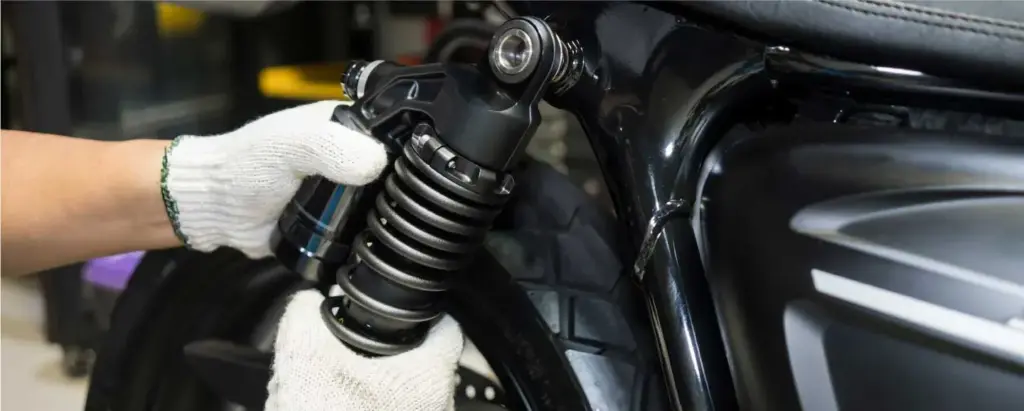
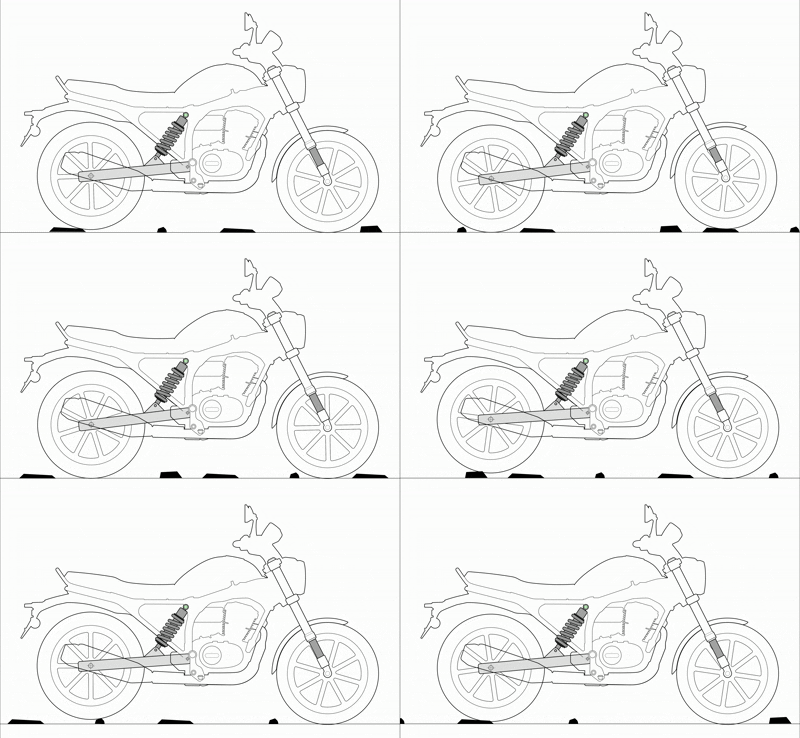
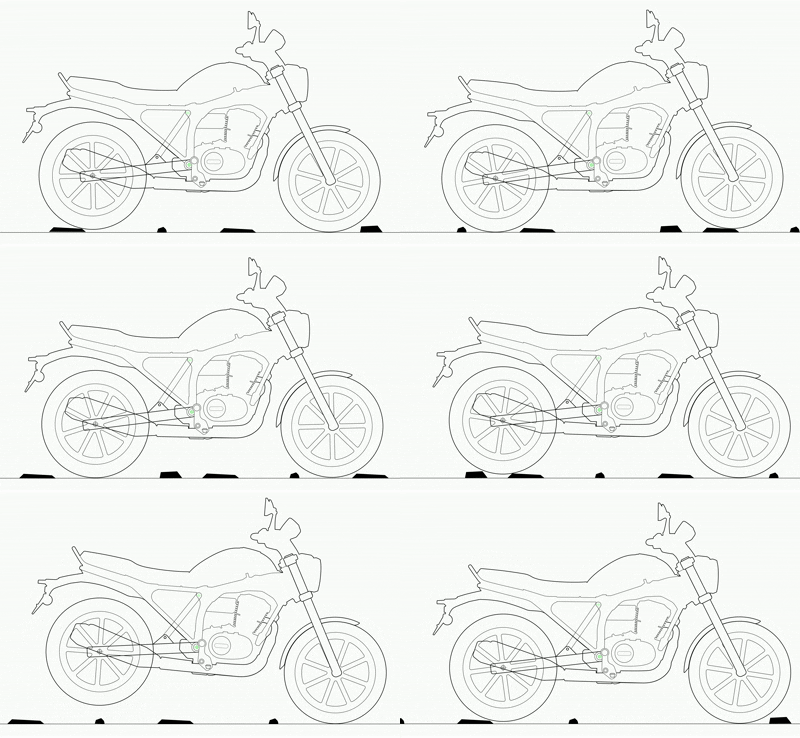
- Monoshock systems (single rear shock) replaced twin shocks
- USD (Upside-Down) forks made front ends stiffer and more precise
- Electronic damping allowed real-time adjustments based on riding conditions
- Semi-active and fully active systems can now sense road conditions and adjust automatically
Today's high-end bikes have suspension that would seem like science fiction 50 years ago.