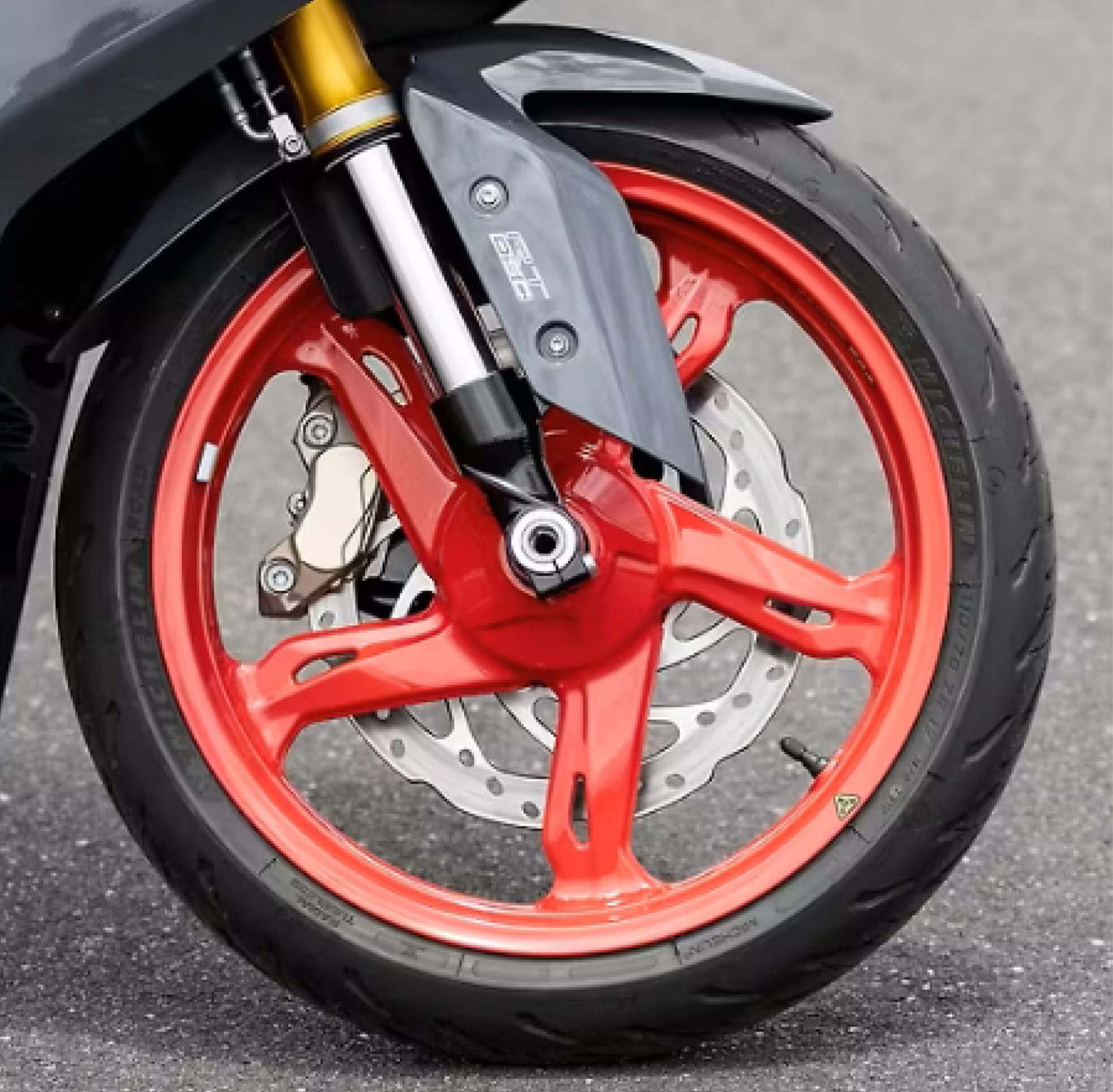
The wheel along with the tyre, supports the weight of the vehicle and absorbs the shock from the ride and transmits motor power from the engine to the road. Wheels act as "unsprung mass," handling radial and axial forces, and mounting critical braking and drivetrain components.
Wheels
A
A
Overview
Though Tyres and wheels have evolved independently, there are multiple types of tyres as well as wheels exist in the market at present. Hence Tyre and wheel combinations involve matching rubber tyres with metal rims, essential for vehicle safety, performance, and handling.
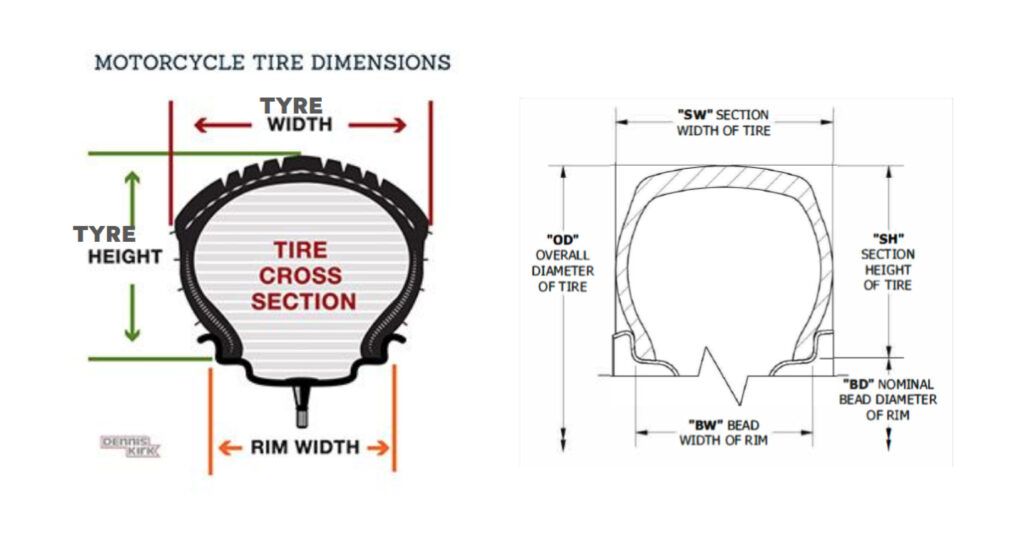
Key components include tyre width, aspect ratio, construction type (radial), and diameter, which must precisely match the wheel's diameter and width. Using correct combinations ensures proper tire fit, preventing leaks or blowouts.
Historical Perspective
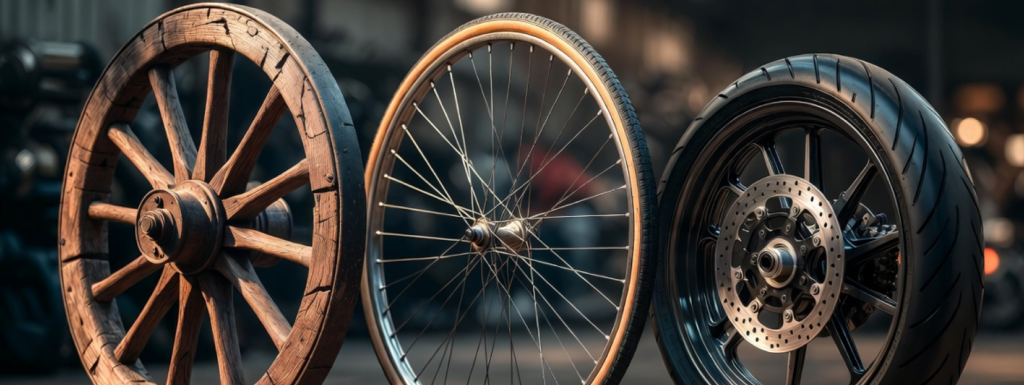
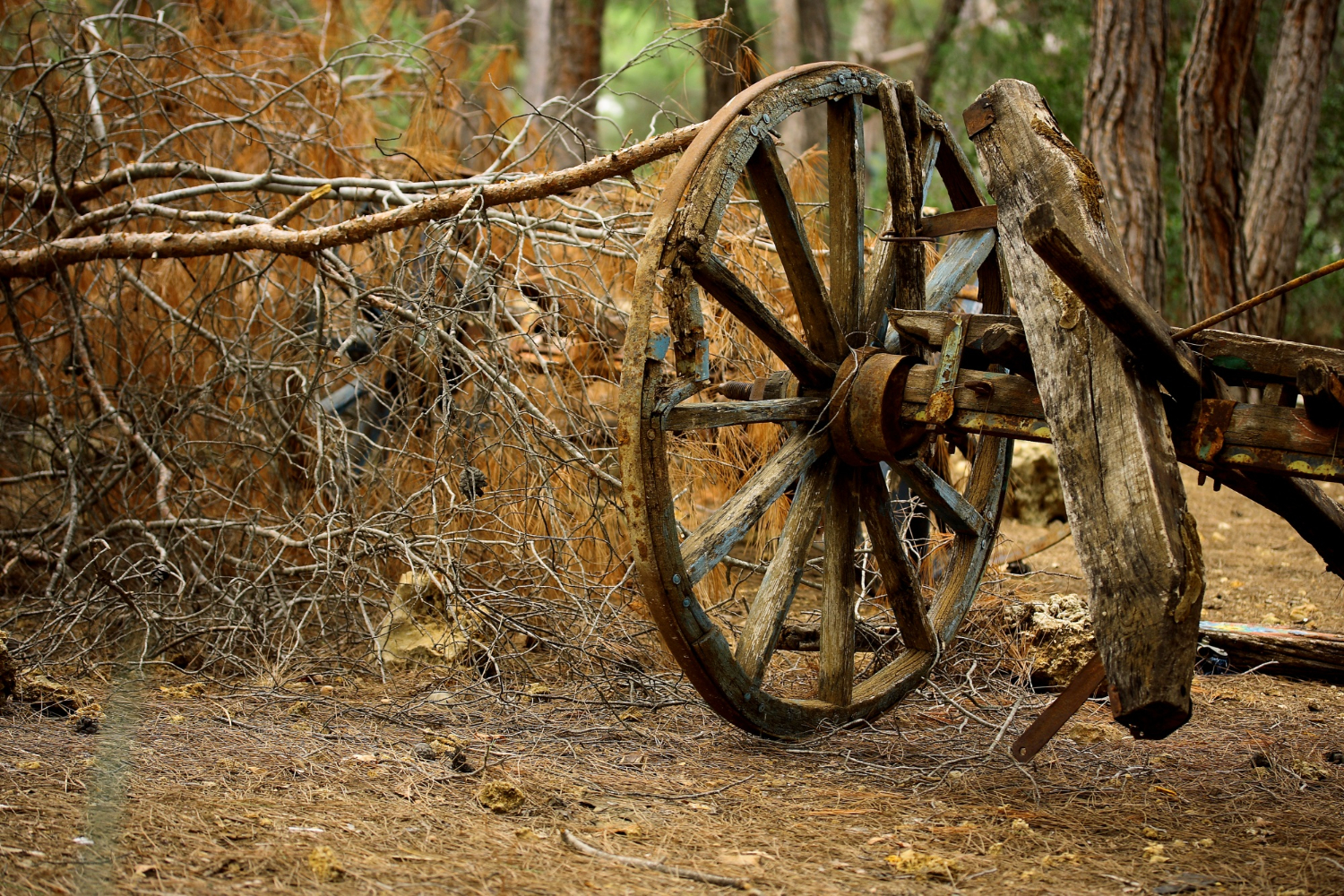
Early 1900s: THE BICYCLE INFLUENCE
Early motorized bicycles used wire-spoked wheels with wood or steel rims, modeled directly from bicycle technology.
1920s: ALUMINUM RIMS
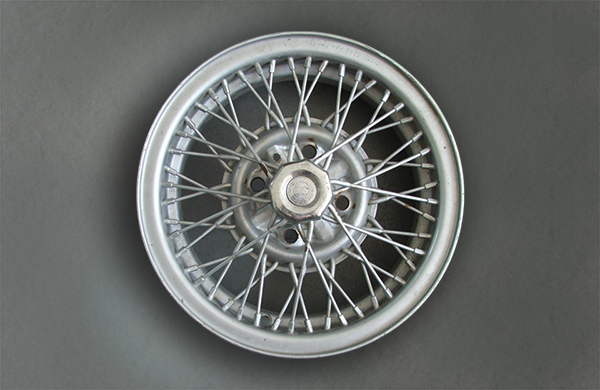
Borrani began producing aluminum rims in 1922, offering a lighter alternative to steel.
1930s - 1950s: ENHANCED DURABILITY
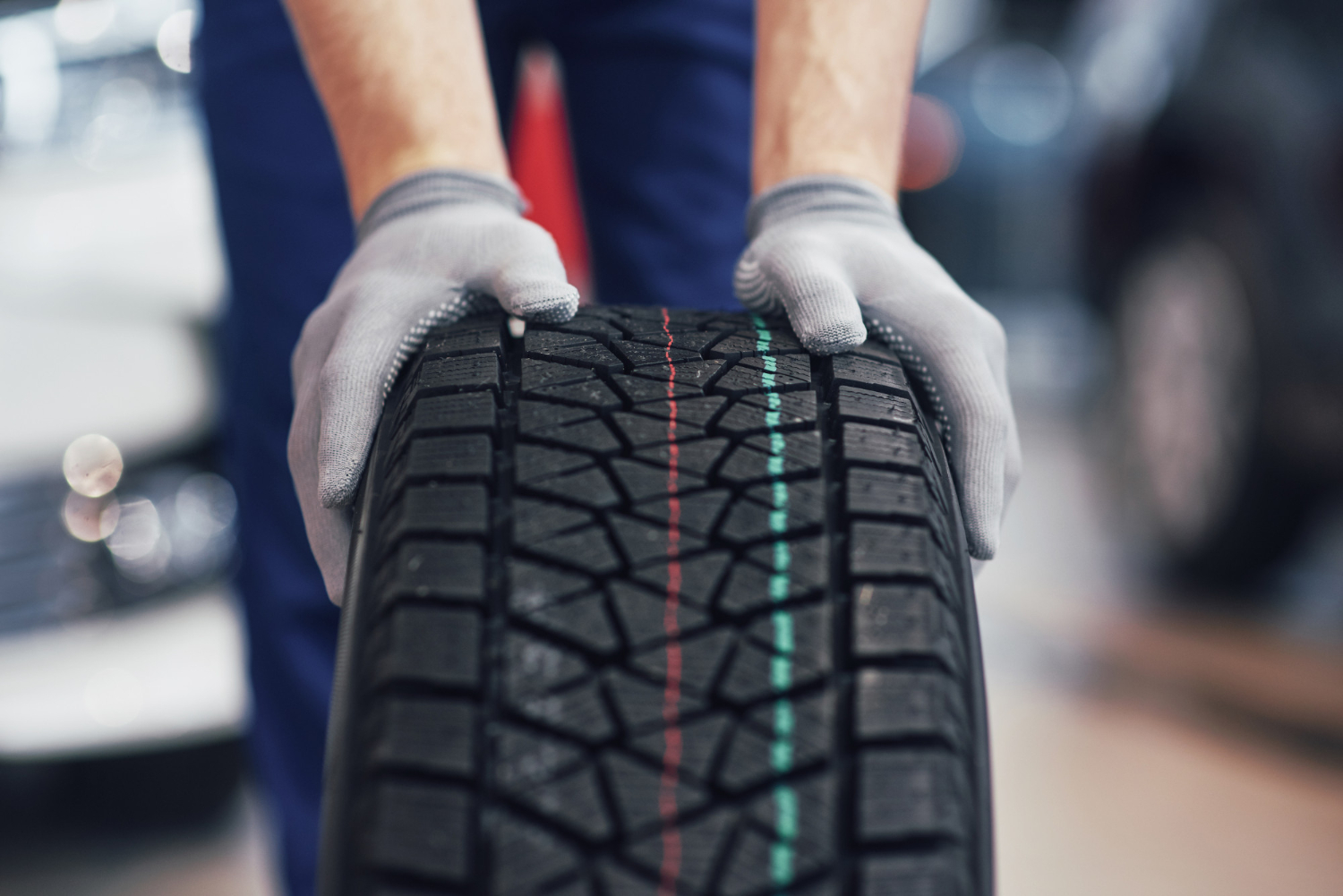
The introduction of bias-ply tires, with their criss-cross fabric patterns, improved durability and allowed for wider tires.
1970s: THE SHIFT TO CAST WHEELS
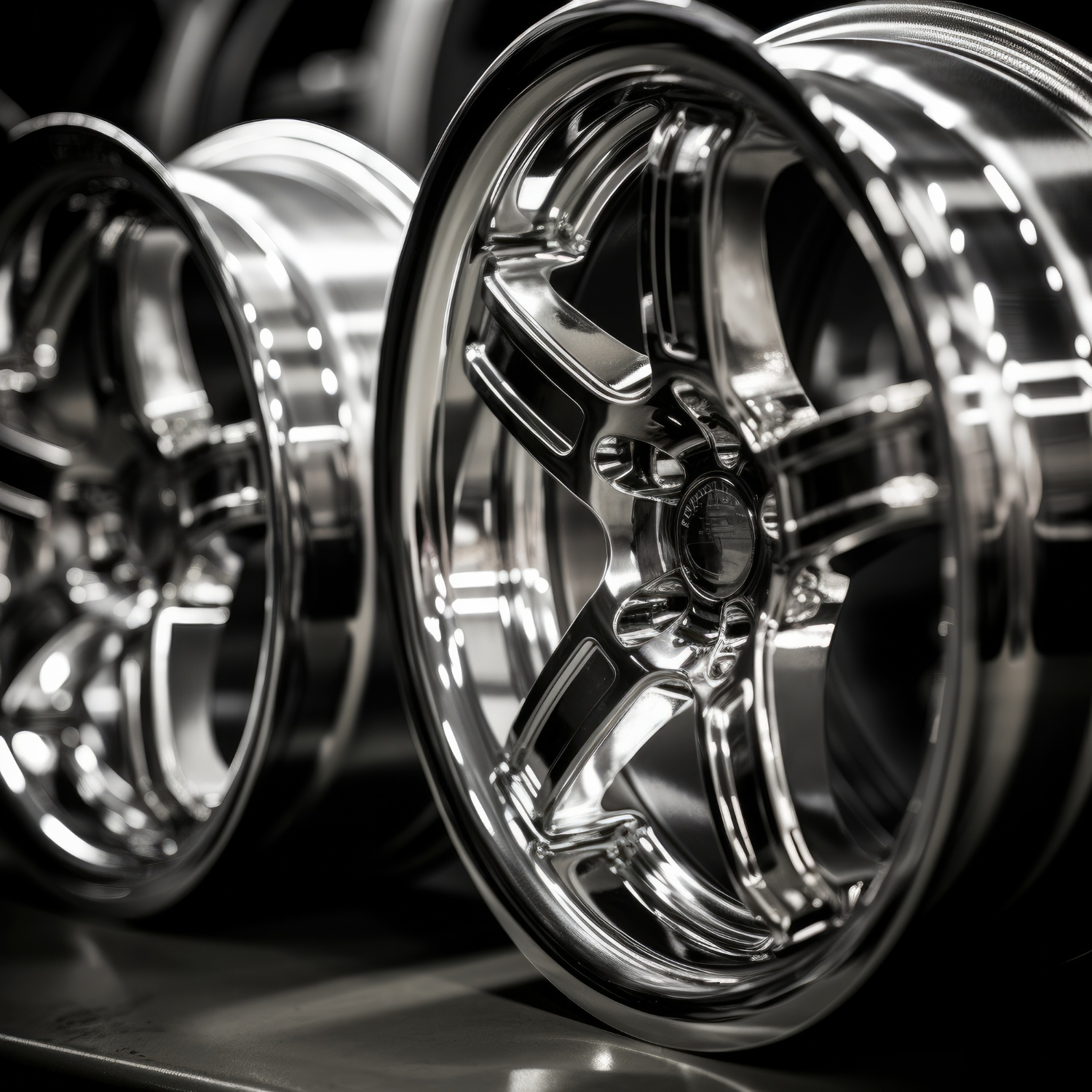
The industry saw a major shift towards cast aluminum or magnesium wheels, replacing spokes with solid construction for greater strength and enabling tubeless tire adoption.
MODERN ERA: COMPOSITE MATERIALS
Modern, high-performance bikes now utilize forged aluminum, magnesium, or carbon fiber wheels, balancing strength, weight, and performance.
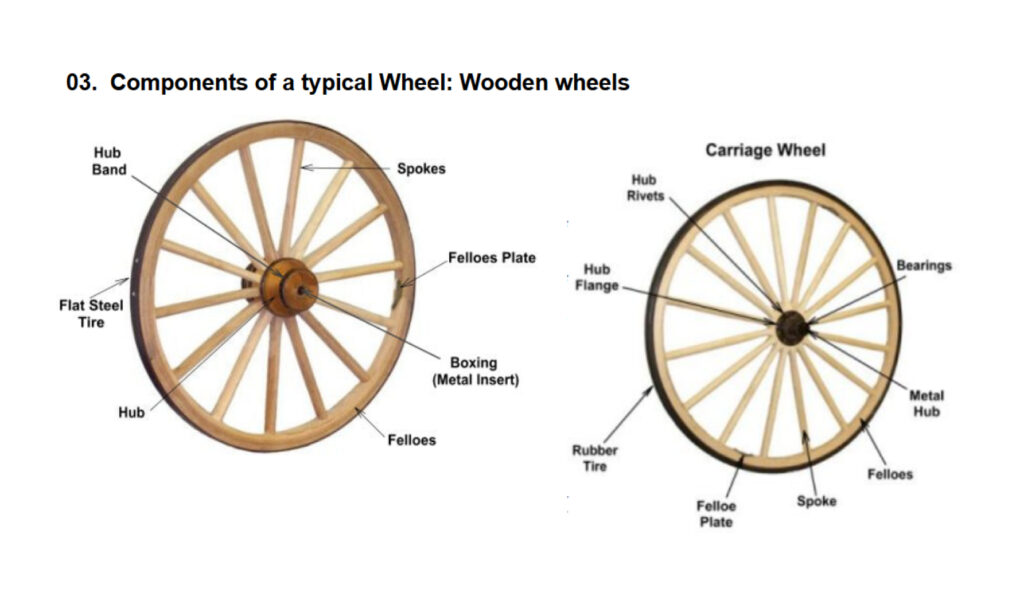
Components of a typical Wheel: Wooden wheels
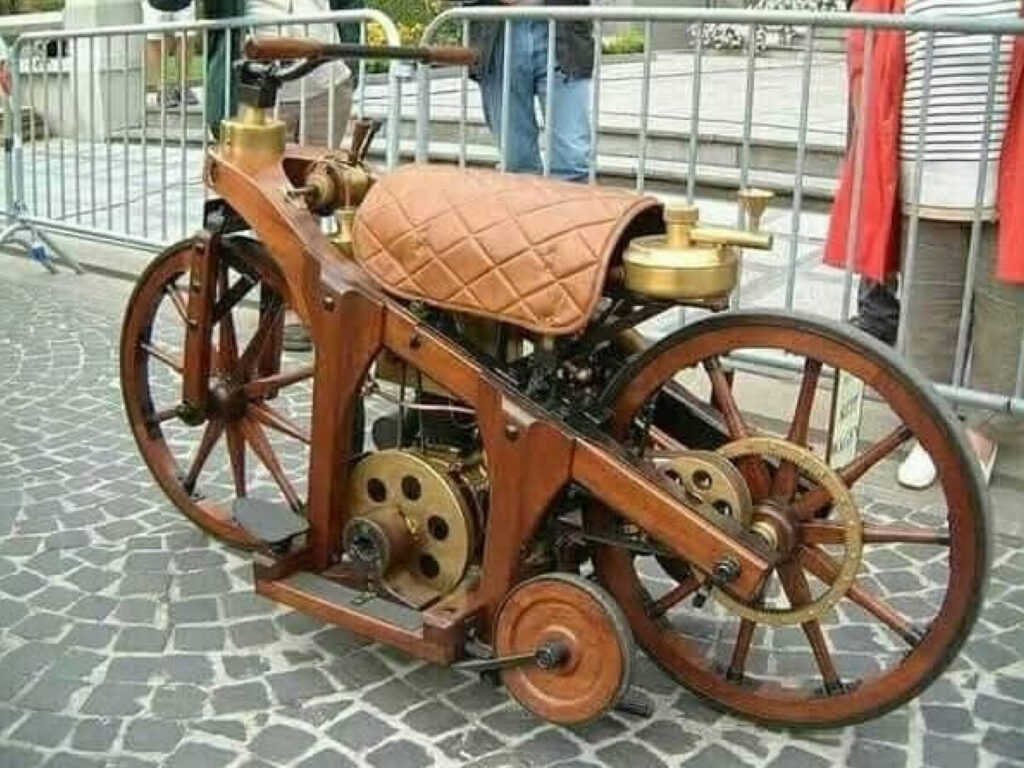
The Daimler Reitwagen
Daimler Reitwagen / Einspur from 1885
The Daimler Reitwagen ("riding car") or Einspur ("single track") was a motor vehicle made by Gottlieb Daimler and Wilhelm Maybach in 1885. It is widely recognized as the world’s first motorcycle.
It had a 264-cubic-centimetre (16.1 cu in) single-cylinder Otto cycle four-stroke engine mounted on rubber blocks, with two iron tread wooden wheels and a pair of spring-loaded outrigger wheels to help it remain upright. Its engine output of 0.37 kW (0.5 hp) at 600 rpm gave it a speed of about 11 km/h (6.8 mph). Daimler's 17-year-old son, Paul, rode it first on November 18, 1885, going 5–12 kilometres (3.1–7.5 mi), from Cannstatt to Untertürkheim, Germany. The seat caught fire on that excursion, the engine's hot tube ignition being located directly underneath.Over the winter of 1885–1886 the belt drive was upgraded to a two-stage, two-speed transmission with a belt primary drive and the final drive using a ring gear on the back wheel. By 1886 the Reitwagen had served its purpose and was abandoned in favor of further development on four wheeled vehicles.
Wheel-Tyre interface
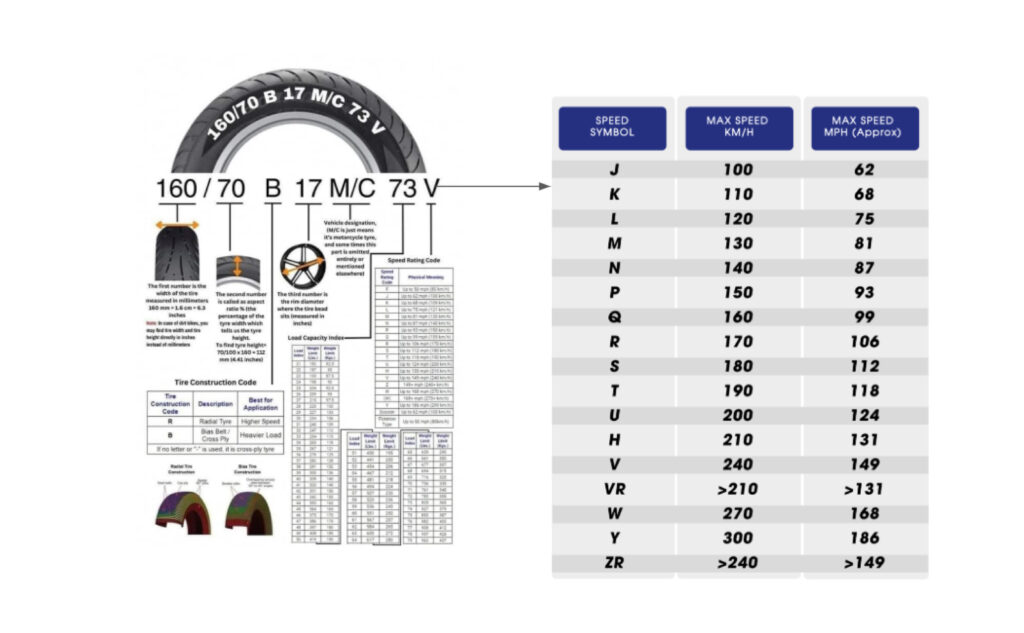
Wheel-Tyre Specification format
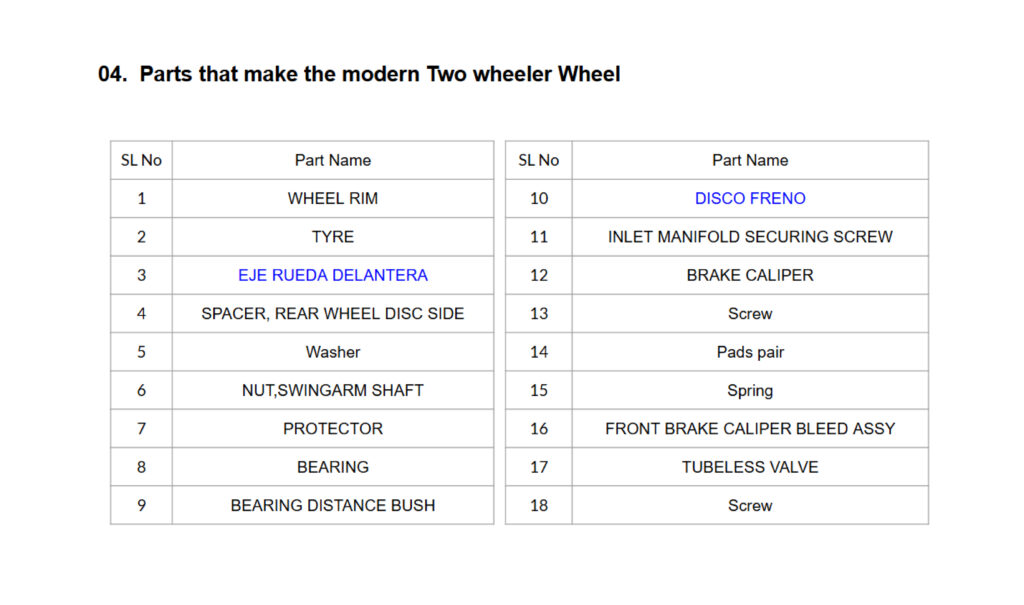
Parts that make the Modern Two Wheeler
Image description
Tube vs Tubeless Tyres: What’s the Difference?
Since tyres are the only crucial parts that come in contact with wheels and also with the road on the other side, they have a major impact on driving behaviour and handling. Choosing the right tyre for your applications, depends on some requirements. Apart from the structure of a tyre, size and profile, tyres can also be distinguished by whether they are tube type (TT) or tubeless (TL) tyre or Solid type.
Solid rubber tyres, known for being puncture-proof and durable, are primarily used on slow-moving industrial and heavy-duty vehicles, including forklifts, skid steer loaders, airport baggage trailers, mining equipment, platform trucks, container handlers, and some types of agricultural machinery. They are designed to withstand harsh, rough terrain without needing air pressure.
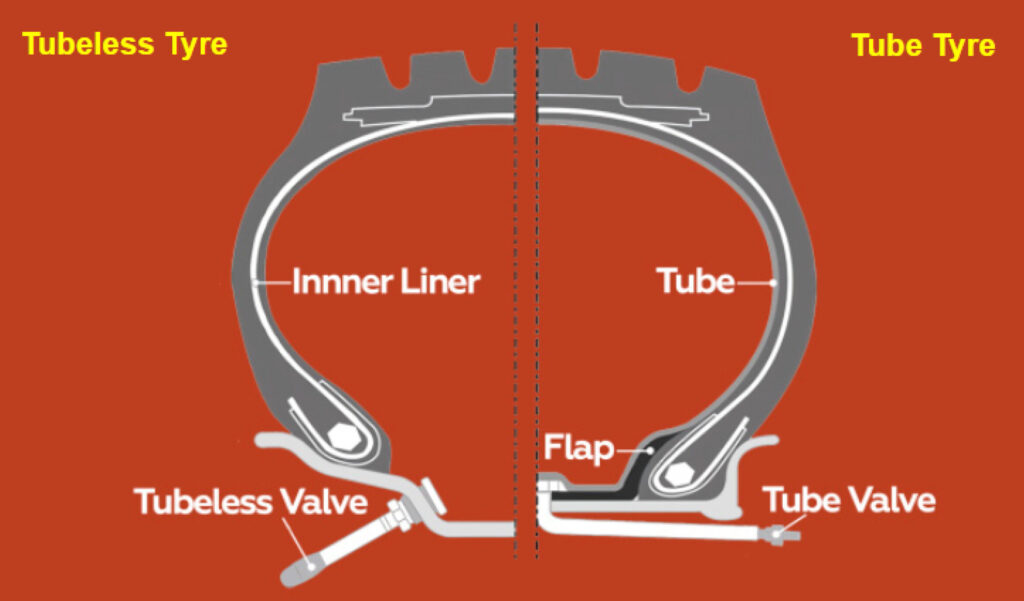
Comparison of tubeless and tube tyre
TUBELESS TYRE
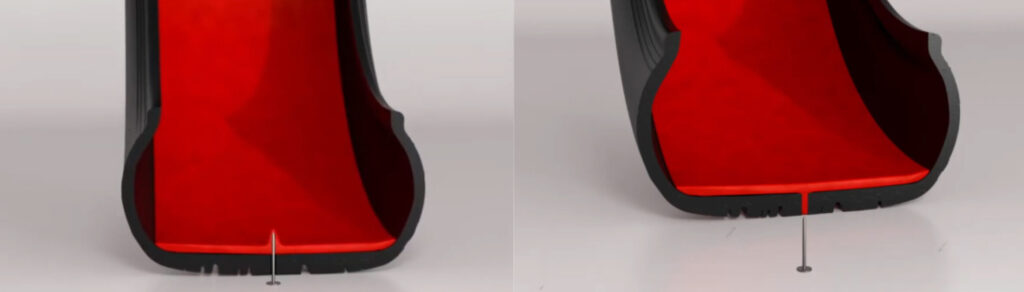
A tubeless tyre does not contain an inner tube. Instead, the tyre and rim form a sealed air chamber. The inner wall of the tyre is coated with an airtight membrane called the inner liner. It is used to keep the air inside. If punctured, air escapes slowly, giving the driver time to respond before the tyre deflates completely.
Tubeless tyres deliver excellent traction on rough terrain, such as sandy surfaces, and offer high stability with minimal ground disturbance—perfect for heavy-duty applications. Most of the current scooter and motorcycles use tubeless tyres.
TUBE TYRES
A tube tyre contains an inner tube filled with air, placed between the rim and the tyre. The valve is attached to the rim hole and used to inflate the tyre through the tube. When a sharp object pierces the tyre, the air escapes quickly through the tube, often causing the tyre to burst due to sudden pressure loss.
Tube tyres are ideal for use in ports and terminals, offering excellent comfort, high heat resistance, and protection for equipment and payload.
Self-Sealing Tyres
How self sealing tyres work
These tyres feature an inner lining of viscous, sticky material that instantly plugs tread punctures up to 6mm in diameter, preventing air loss and allowing drivers to continue without stopping for a spare. These tires eliminate the need for roadside assistance for most punctures (nails/screws) and are ideal for maintained tire pressure and improved safety.
Wheel Balancing
Image description
Regularly checking wheel balance is particularly important in regions with poor road conditions, as hitting potholes can cause imbalances.
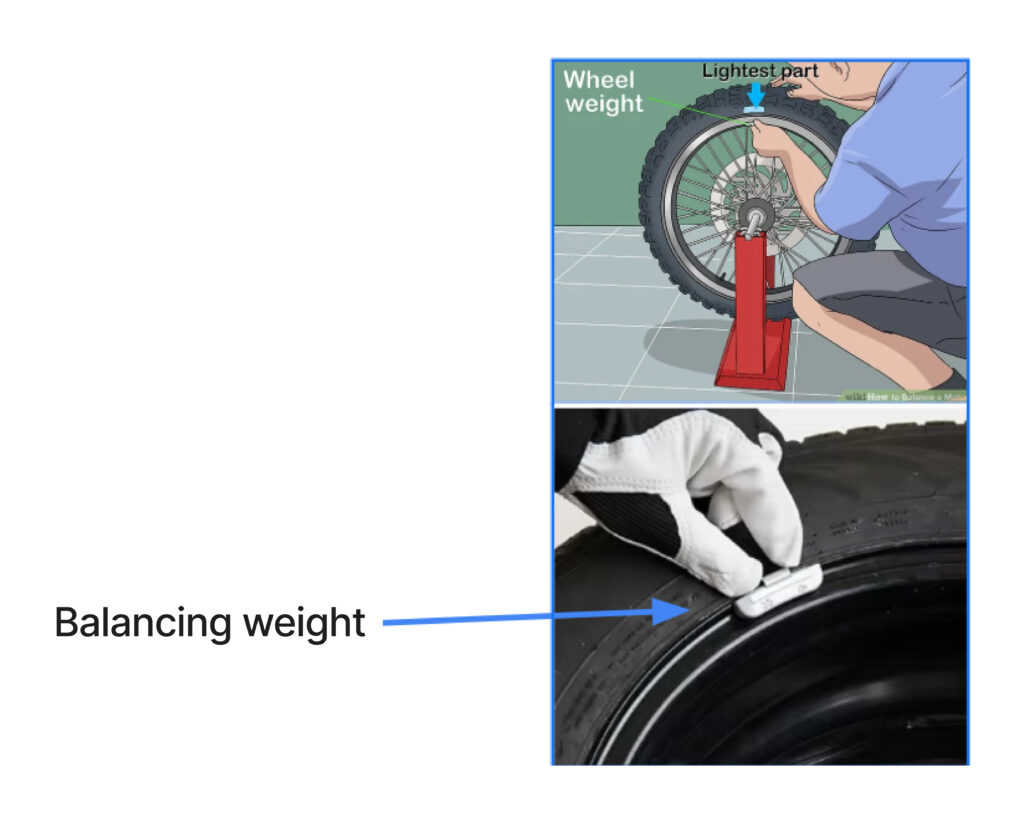
Motorcycle wheel balancing is the process of ensuring the weight of the tyre and wheel assembly is evenly distributed, typically by adding small weights to the rim to counteract heavy spots. This crucial maintenance reduces vibrations, prevents premature tire wear, and ensures stable handling, safety, and comfort at high speeds
Key Aspects of Wheel Balancing
WHEN TO BALANCE
Wheels should be balanced whenever a new tyre is fitted, after repairing a flat, if weights are lost, or if you feel vibrations in the handlebars or footrests.
METHODS OF BALANCING
- Static Balancing: The most common method for motorcycles, where the wheel is placed on a stand to find the heaviest point, which then settles at the bottom.
- Dynamic Balancing: Used for high-speed bikes, addressing both vertical and lateral imbalance.
PROCESS
- Identify the Heavy Spot: Place the wheel on a balancer and allow it to rotate freely; the heaviest point will settle at the bottom.
- Add Weights: Attach balancing weights (stick-on for alloy, spoke weights for wire wheels) opposite the heavy spot (at the top).
- Verify: The wheel should stay in any position it is rotated to, indicating a balanced state.
SYMPTOMS OF IMBALANCE
Vibrations at certain speeds, premature/uneven tyre wear, or a noisy/bumpy ride.
Types of Motorised Two Wheeler Wheels
Wheels are primarily categorized by material and construction, with the main types being aluminum alloy, steel, chrome, and carbon fiber. Alloy wheels offer better performance and aesthetics, while steel wheels are more durable and cost-effective. Key manufacturing methods include casting (pouring liquid metal into a mold) for affordability and forging (shaping solid metal) for superior strength and lighter weight.
STEEL WHEELS
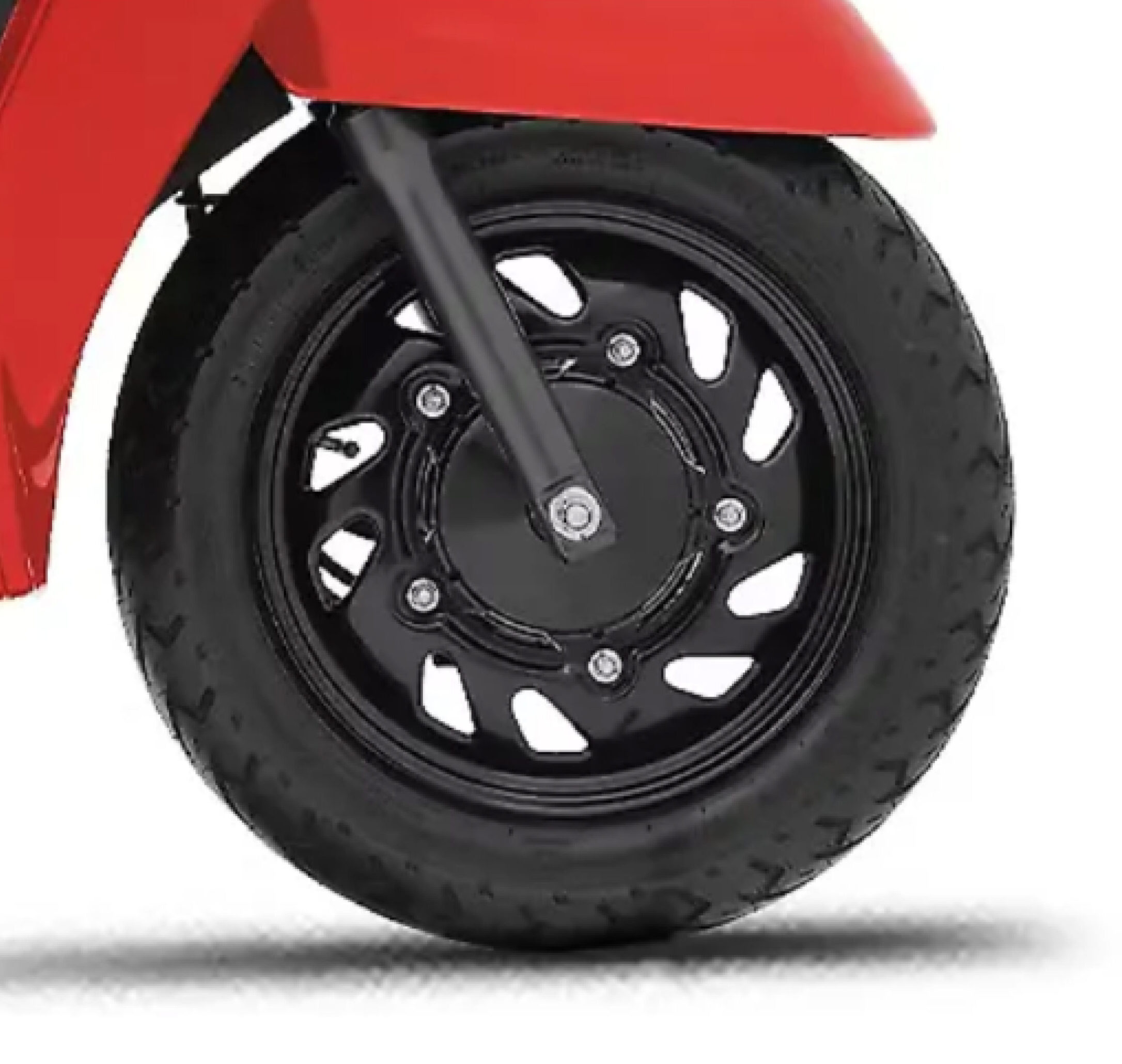
Known for durability and affordability, these are heavier and often found on base-model vehicles
CAST WHEELS
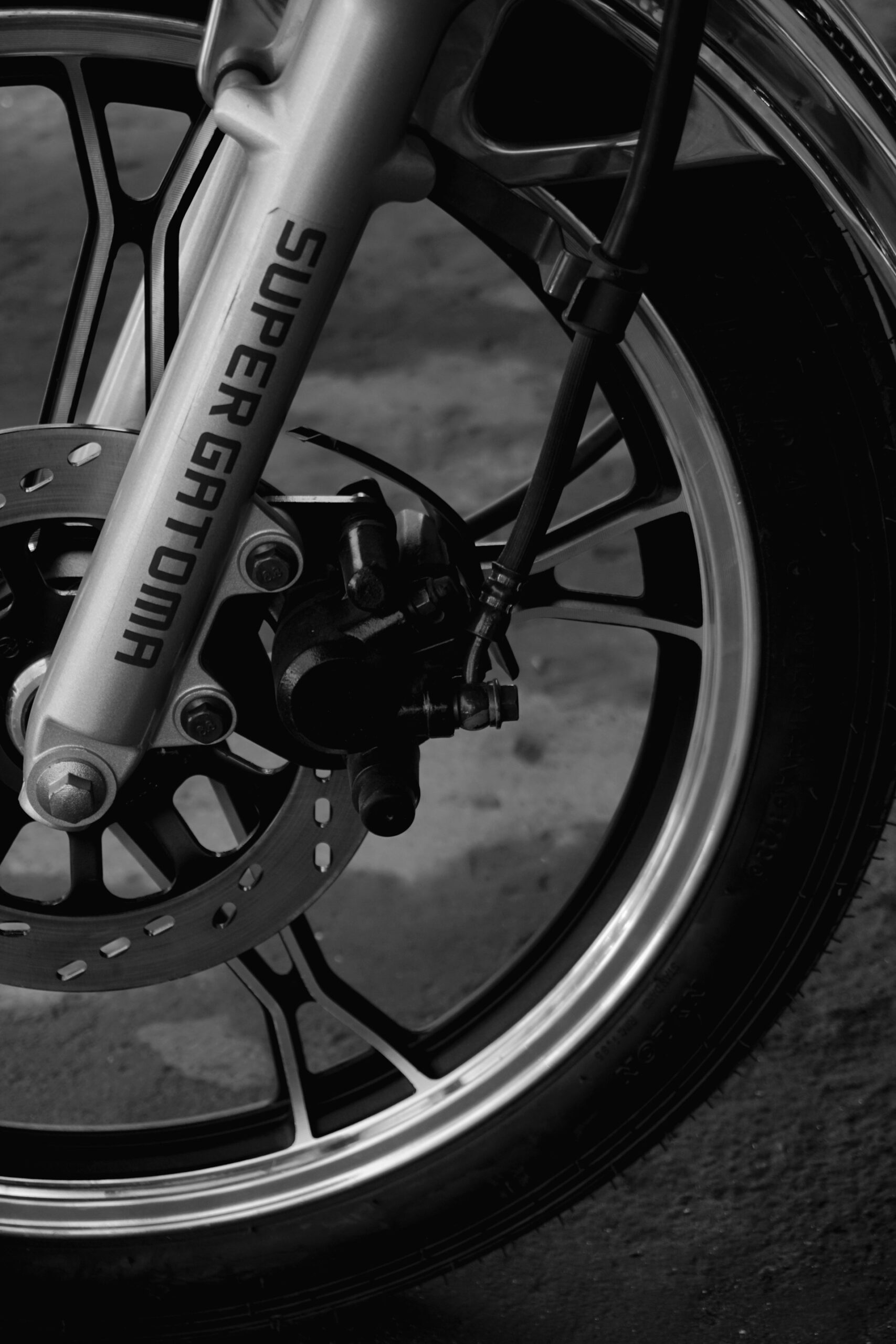
Cast wheels are typically made from poured aluminum or magnesium alloy, offer a rigid, durable, and cost-effective solution for street, sport, and touring bikes. They are generally designed for tubeless tires, require minimal maintenance, and provide precise handling due to their high stiffness, provide better heat dissipation for brakes, though they are more susceptible to cracking upon high-impact than flexible spoked wheels.
FORGED WHEELS
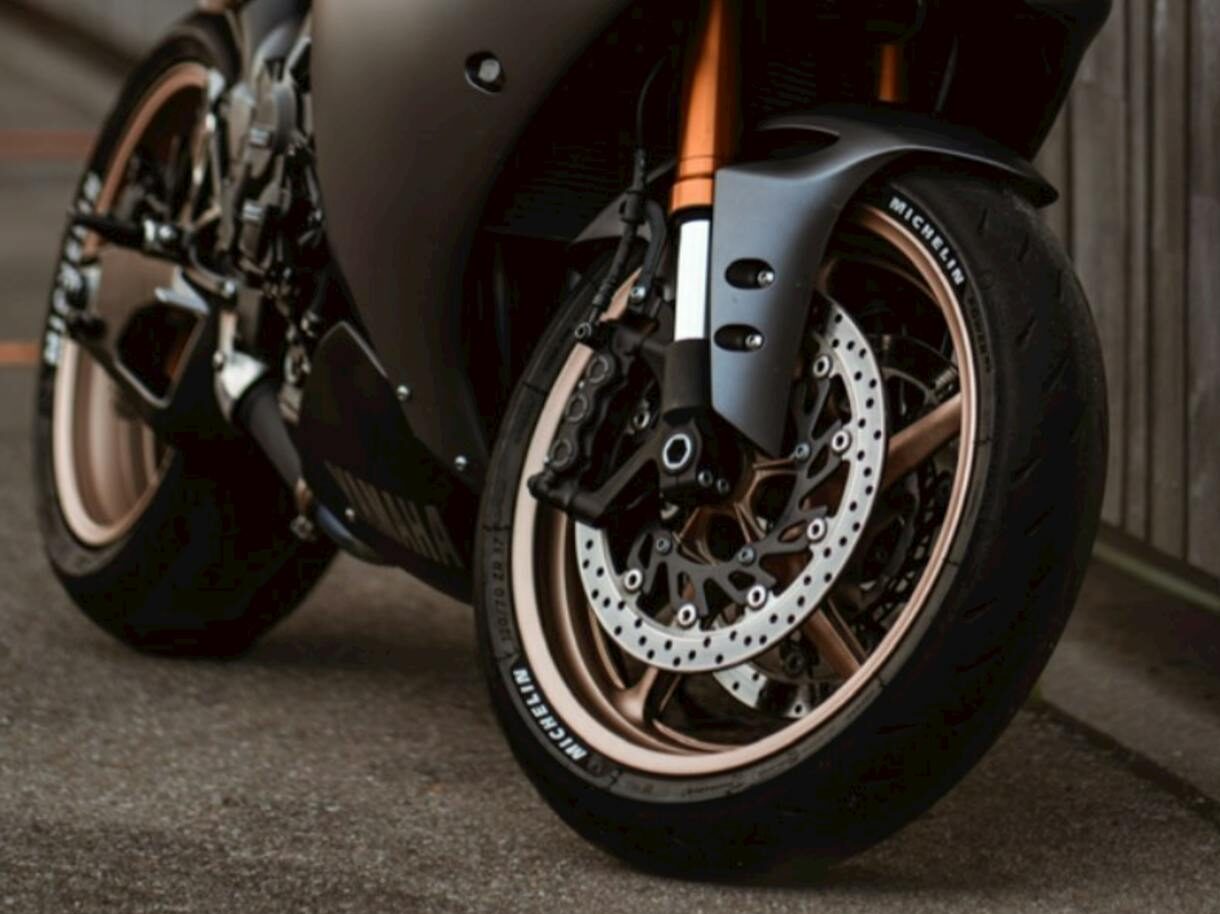
Forged wheels, known for being stronger and lighter than cast wheels, are typically used on high-performance superbikes, premium adventure bikes, and luxury cruisers to improve handling, acceleration, and suspension response. Since these wheels are stiffer and stronger yet lighter than the cast wheels, they reduce the unsprung mass which in turn leads to quicker acceleration, quicker braking, better agility and handling.
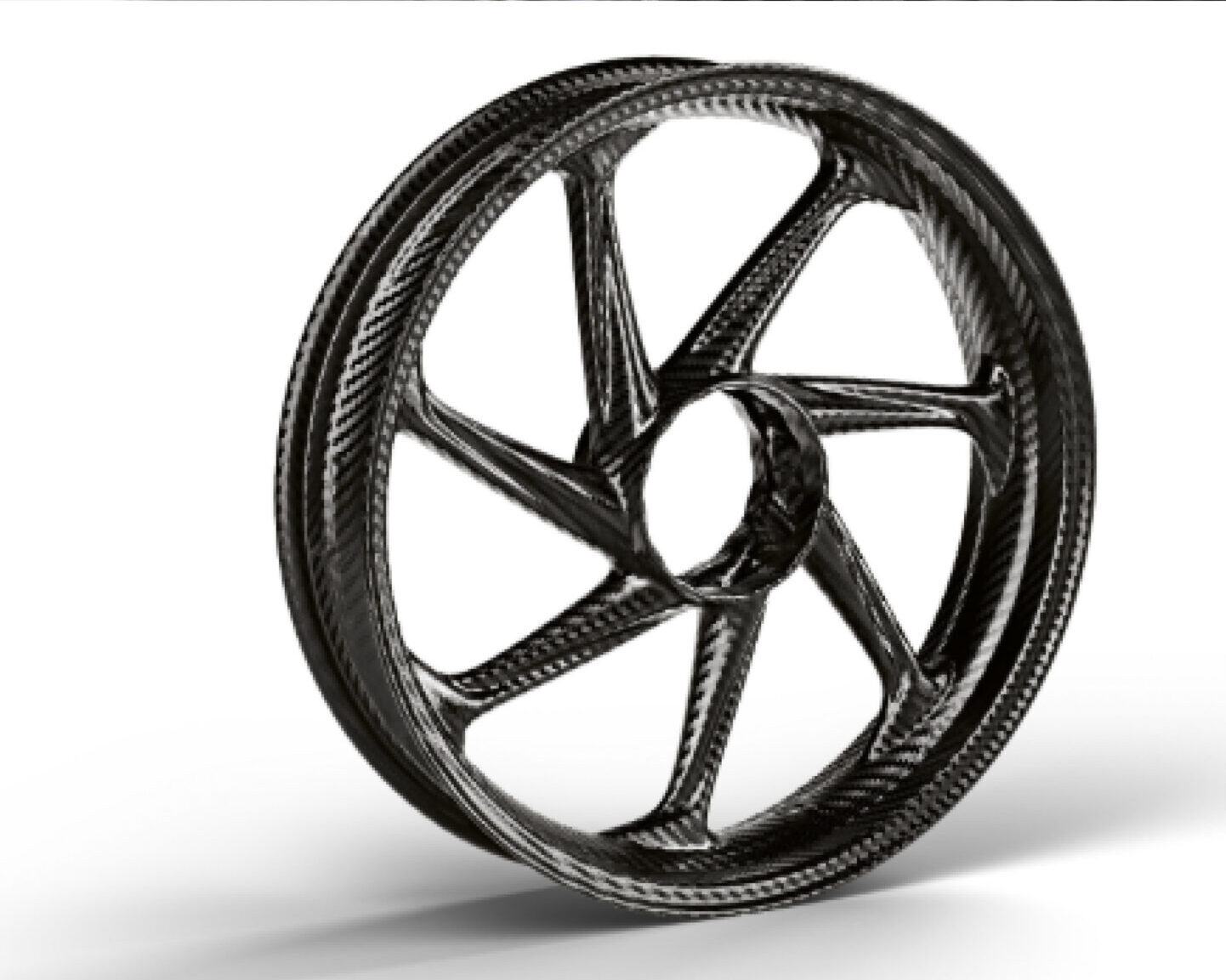
CARBON FIBER WHEELS
Extremely lightweight and durable, typically used for high-performance or luxury vehicles.
FLOW FORMED WHEELS
Flow formed wheels are high-performance, lightweight alloy wheels produced by heating, spinning, and stretching the barrel of a cast wheel, resulting in a stronger, more durable, and 15-25% lighter product than traditional cast wheels. This hybrid process offers a cost-effective middle ground between cast and forged wheels, improving shock resistance and handling, making them ideal for spirited driving.
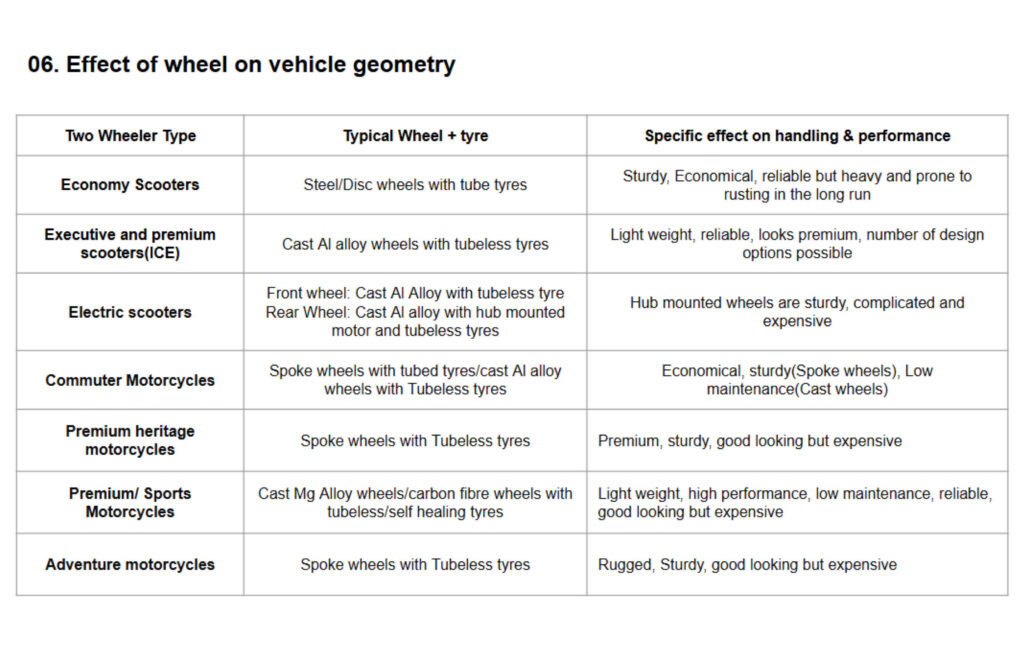
Effect of Wheel on Vehicle Geometry
Advanced Topics on Detailed Wheel Design
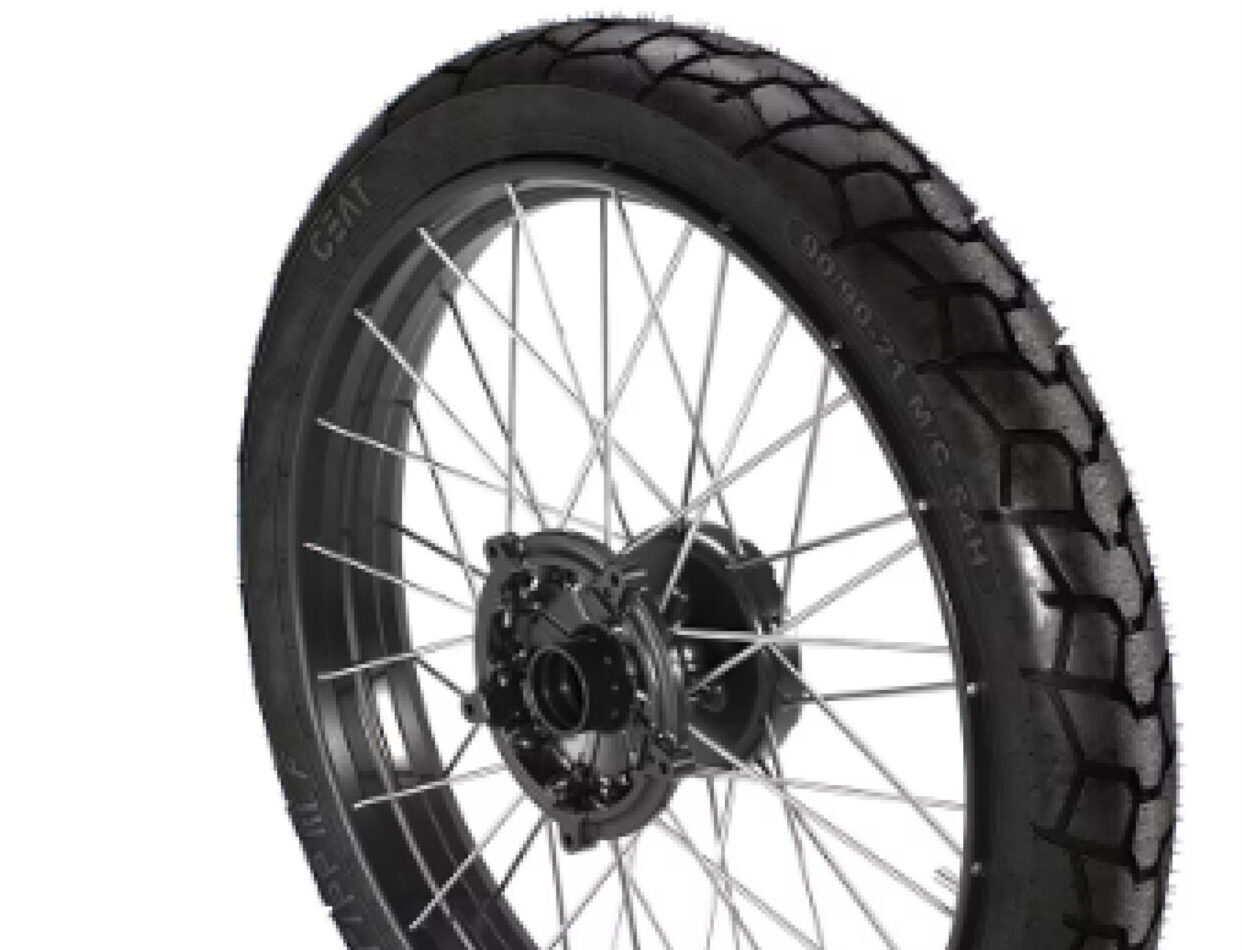
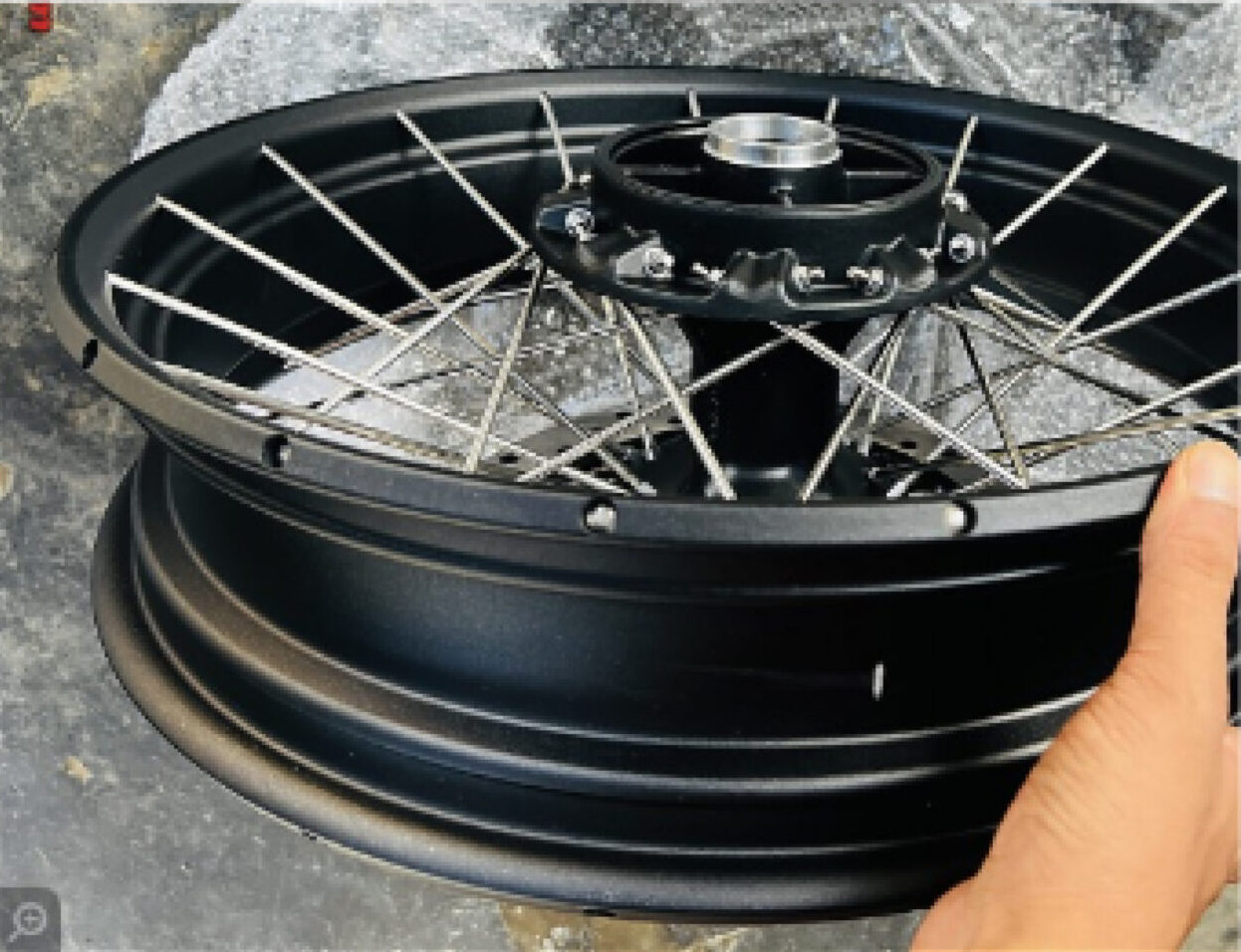
Spoke wheels with Tubeless tyres: The tubeless spoked wheels provide greater versatility for the adventures ahead. With externally laced spokes, this not only allows for a tubeless set-up, which makes fixing a puncture on the roadside quicker & simpler, it also provides increased torsional rigidity.
Tubeless tyres feature a specialized, airtight bead profile that locks onto a designed rim, often with safety humps to prevent air loss, providing a lighter, cooler-running, and more puncture-resistant setup. Conversely, tubed tyres rely on a separate inner tube, allowing for more flexible, often spoked, wheel profiles but with higher risk of rapid air loss.
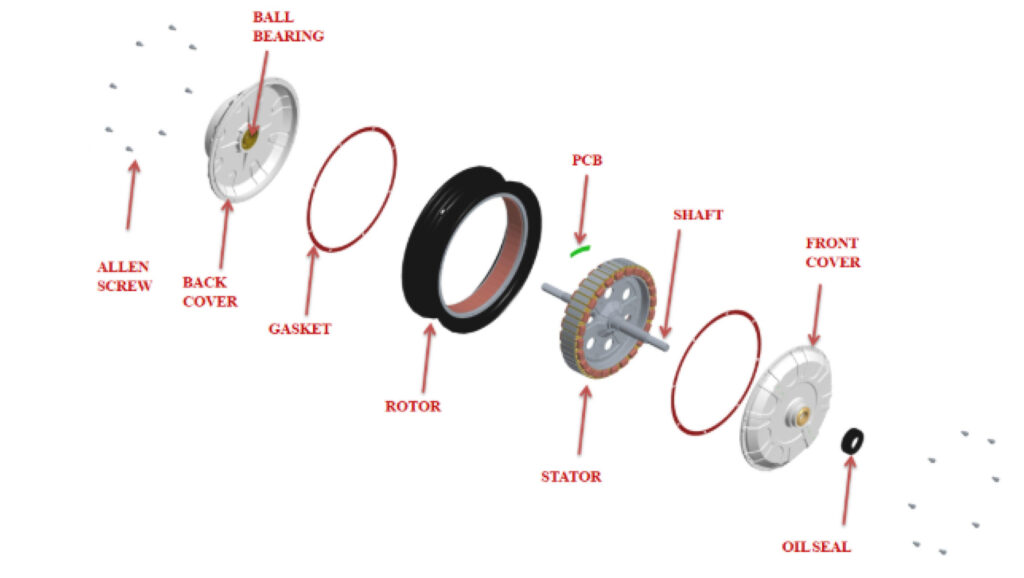
Hub Motored Wheels: A hub motor wheel for electric scooters is a self-contained unit combining a brushless DC (BLDC) electric motor directly into the wheel hub. It consists of a fixed inner stator with copper windings and an outer rotor with permanent magnets, encased within an aluminum housing that rotates with the attached tire.
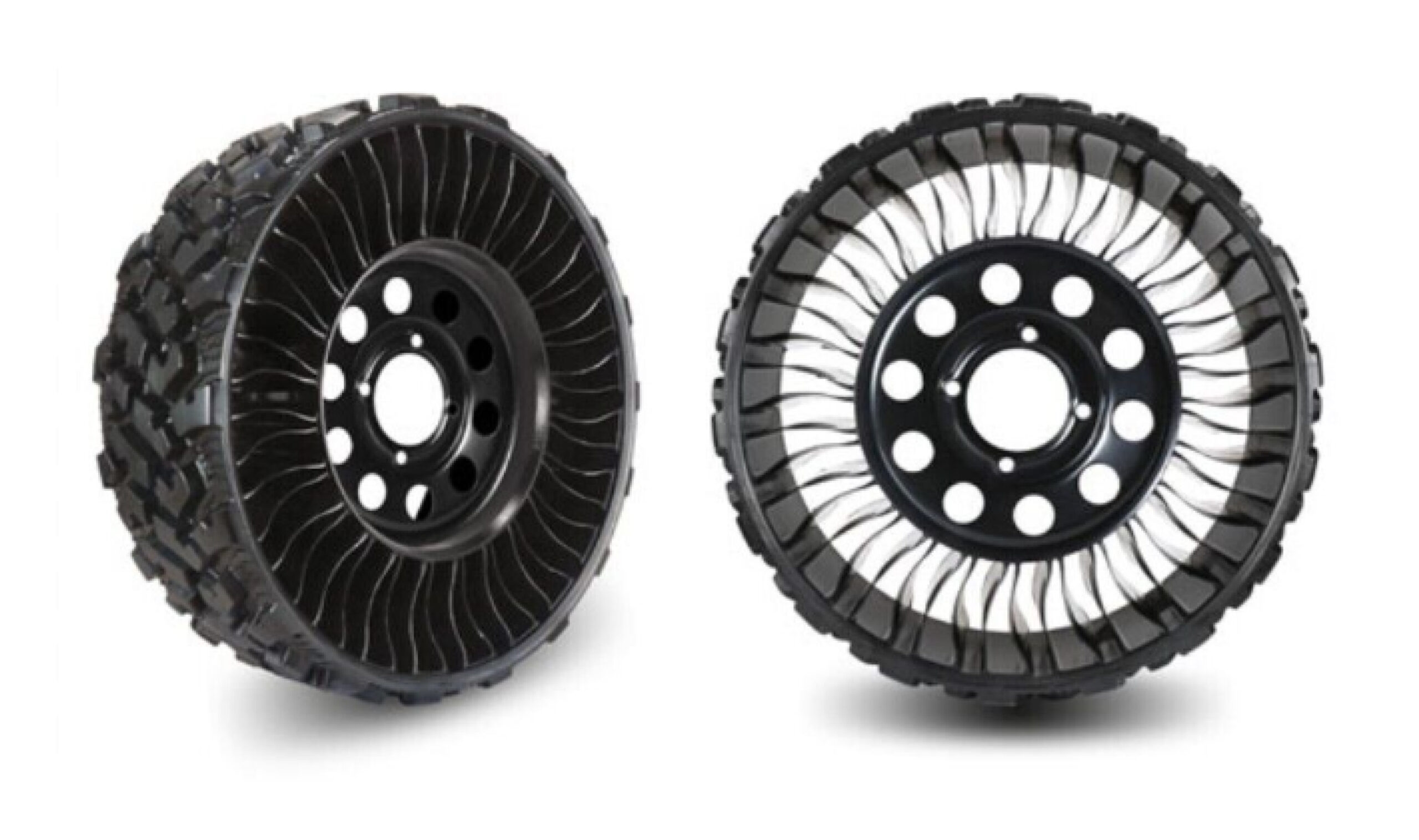
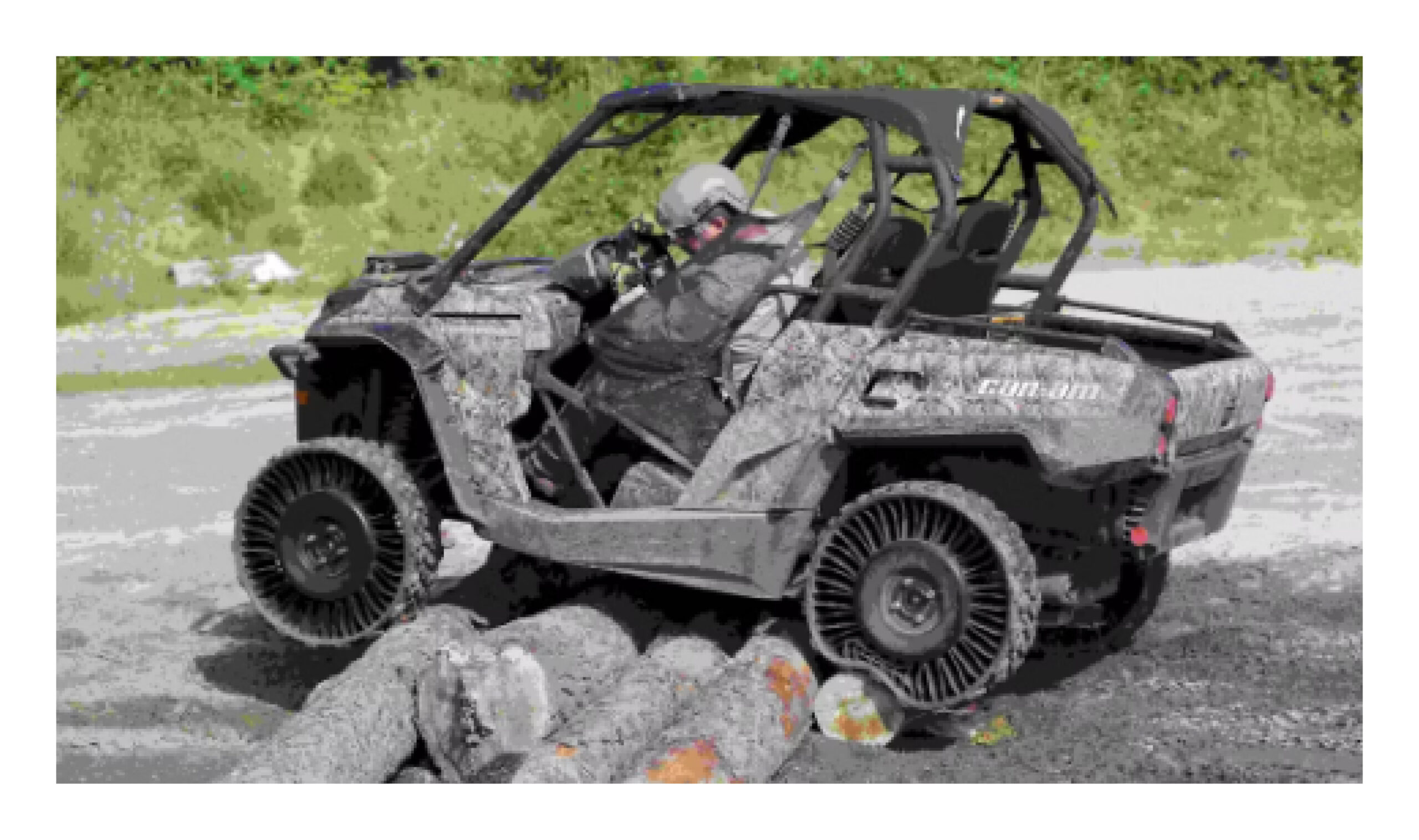
A Michelin X Tweel Airless Radial Tyre: A single unit that replaces the current tire and wheel assembly. There is no need for complex mounting equipment and once they are bolted on, there is no air pressure to maintain. The unique energy transfer within the poly-resin spokes helps reduce the “bounce” associated with pneumatic tires, while providing outstanding handling characteristics. They are designed to perform like pneumatic tires, without the inconvenience and downtime caused by flat tires.