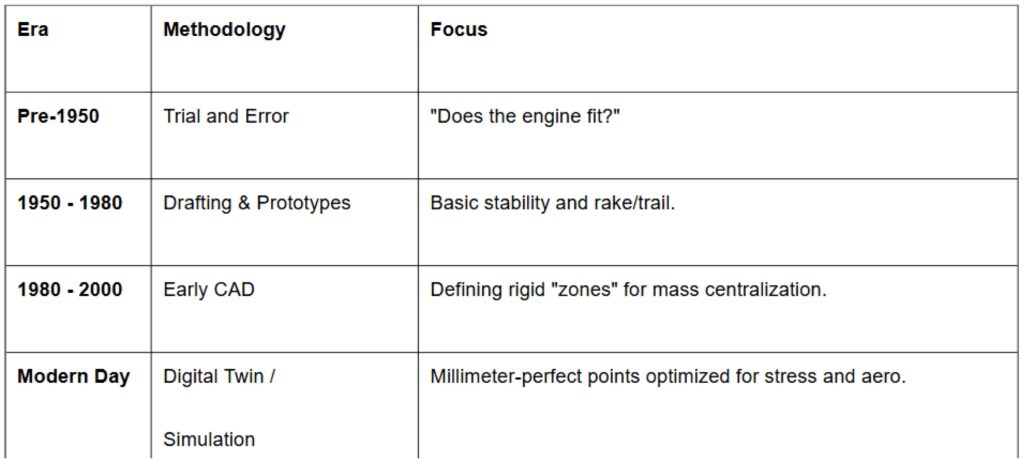
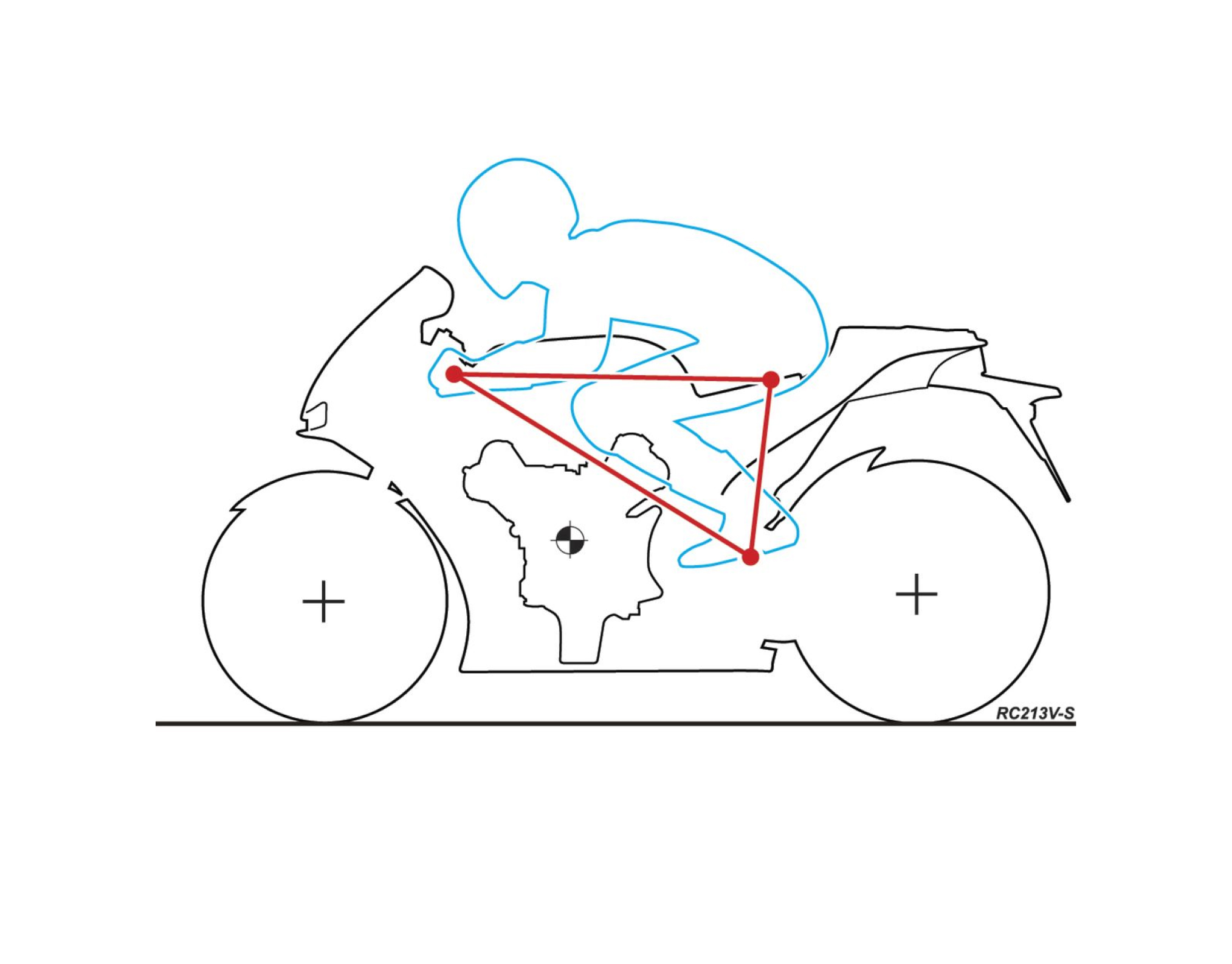
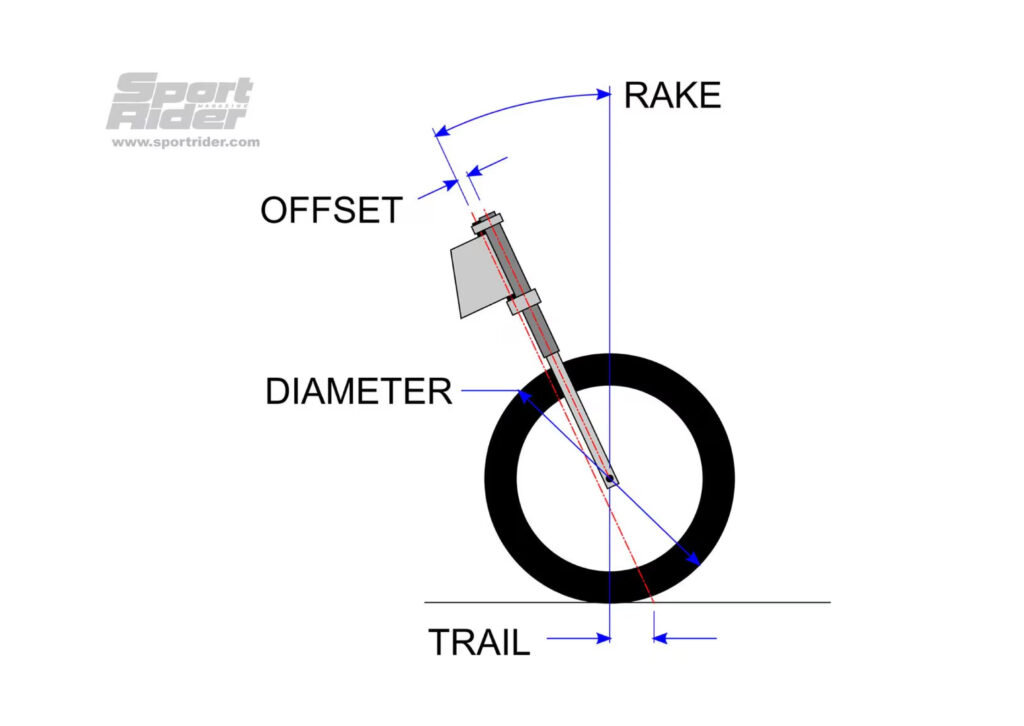
Hard points in two-wheeler design are ‘Anchors’ or fixed, critical 3D coordinate locations (X,Y,Z) on the chassis or frame that dictate geometry, ergonomics, and structural integrity. Key examples include engine mounting points, steering head bearings, suspension pivot points, and wheel centers. Since These points dictate the vehicle's physic they are "hard" because they are difficult (and expensive) to change once the frame design is finalized.
- Suspension Hardpoints: These are "pick-up points" where suspension arms, dampers, springs, and links connect to the chassis.
- Structural Hardpoints: High-strength locations, such as reinforced areas in a frame for mounting the engine, which handle significant stress and loads.
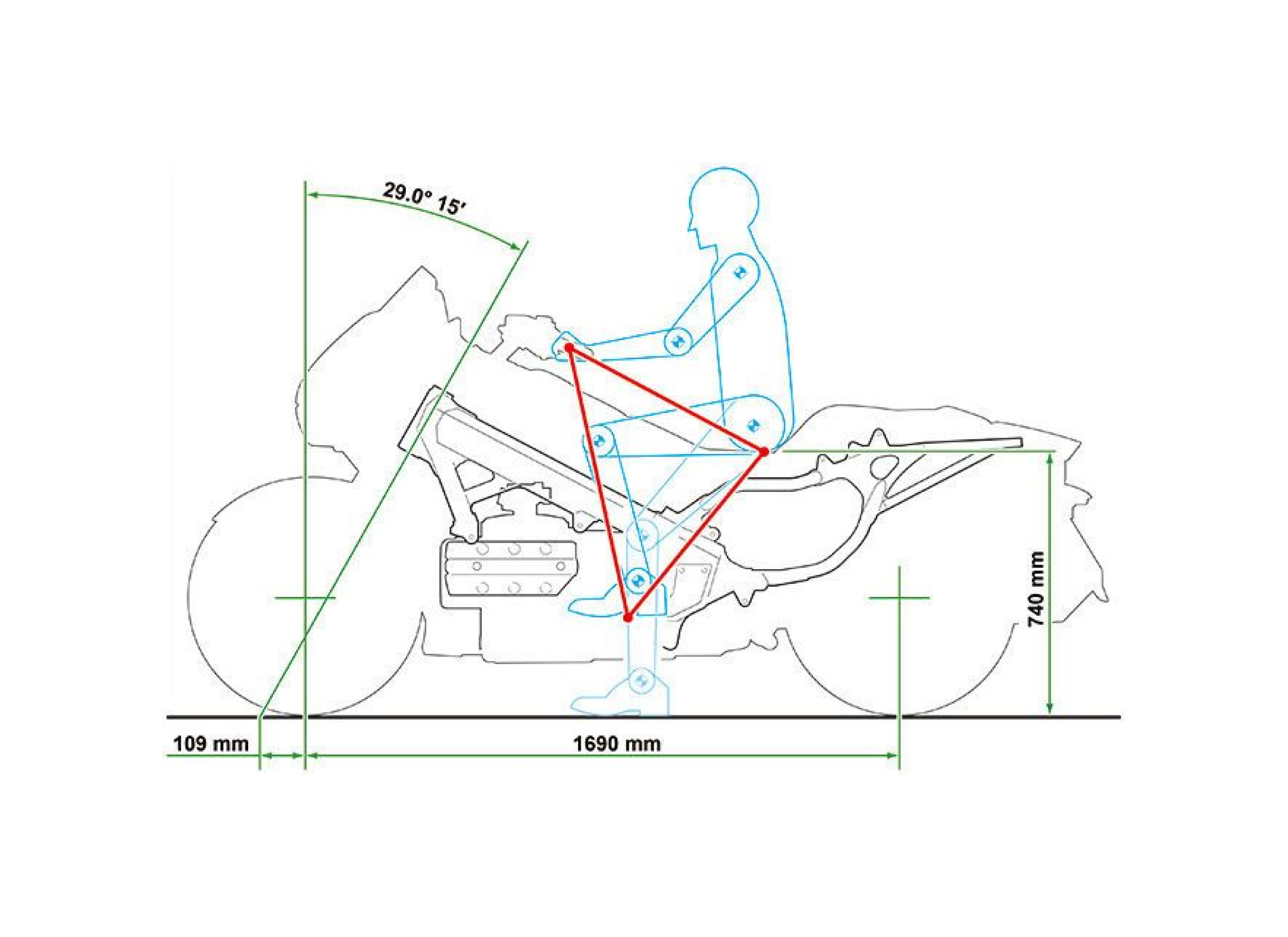
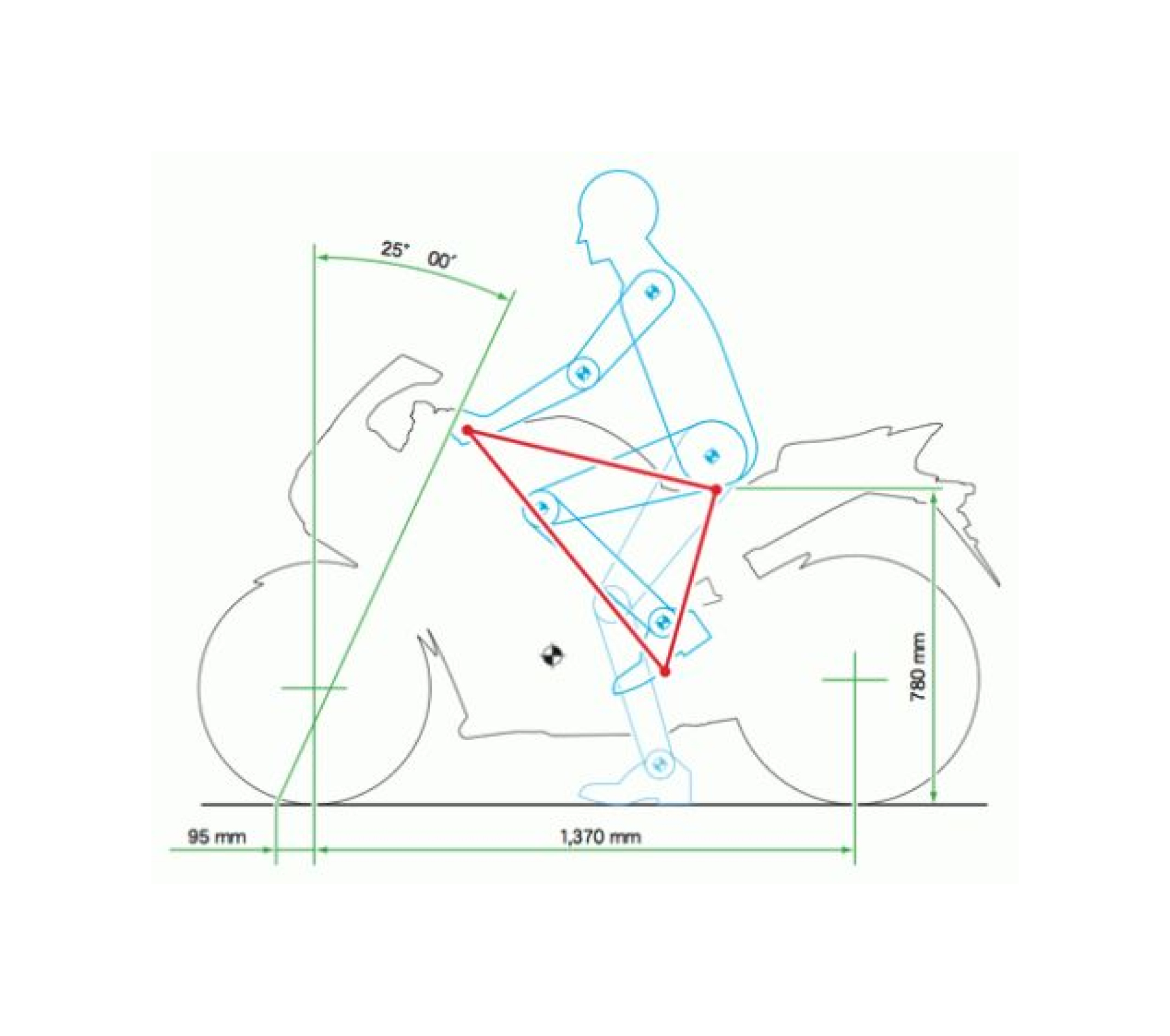
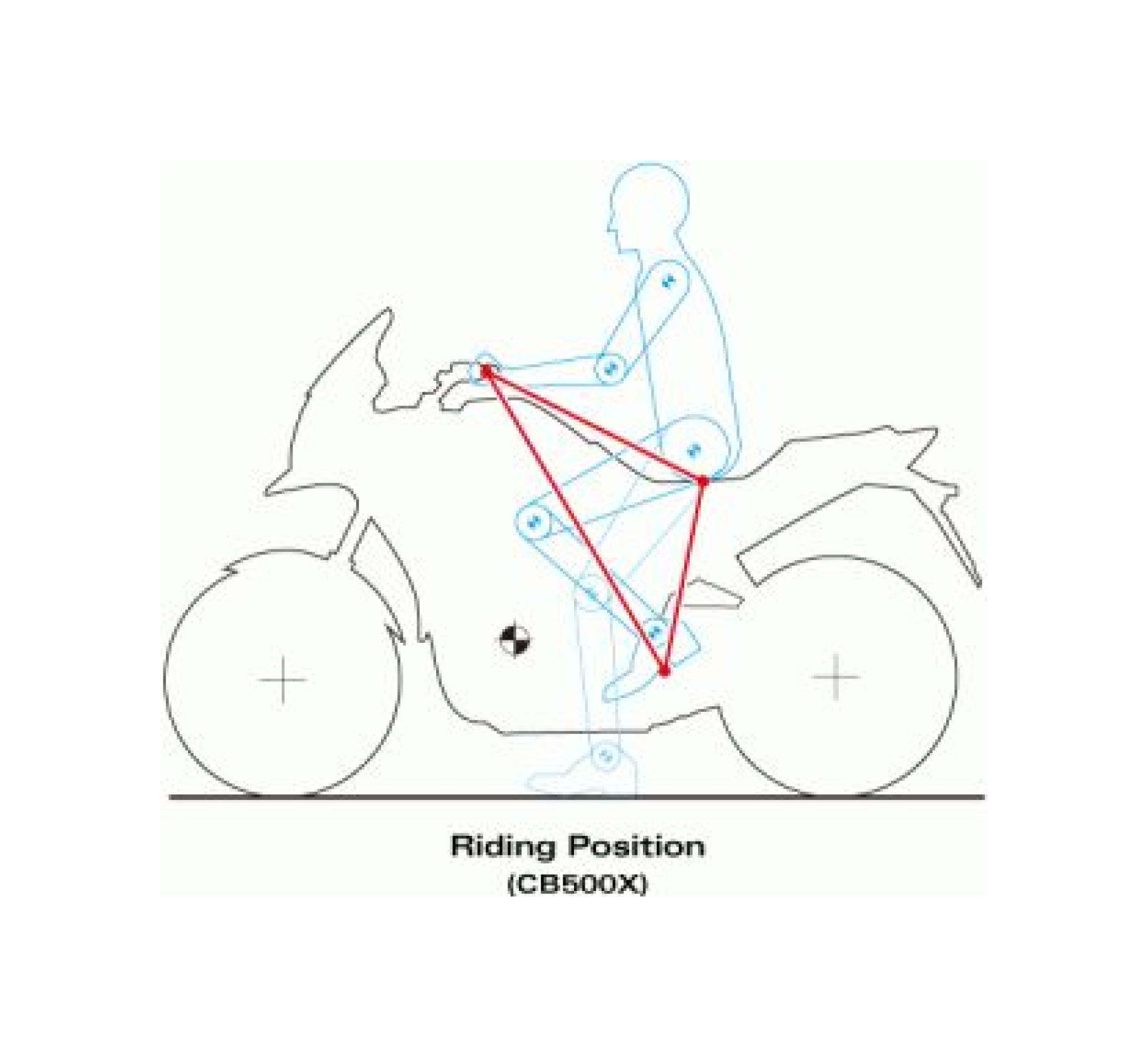
- Ergonomic Hardpoints (H-Point or hip point): The pivot center of a rider's torso and thigh, crucial for determining seat position, handlebar reach, and footrest location.
- Geometry Hardpoints: Key reference points that define steering rake, trail, and wheelbase, directly impacting handling and stability
- Component Mounting Points: Fixed locations for attaching essential functional components like pannier racks, engine guards, or protective grills.
These points define the fundamental behavior, comfort, and durability of the motorcycle.
The H-point (or hip-point) is the theoretical, relative location of an occupant's hip: specifically the pivot point between the torso and upper leg portions of the body—as used in vehicle design, automotive design and vehicle regulation as well as other disciplines including chair and furniture design.
Technically, the H-point measurement uses the hip joint of a 50th percentile male occupant, viewed laterally, and is highly relevant to national and international vehicle design standards such as global technical regulations (GTR).