A Definitive Guide to Motorised Two Wheelers

Chassis Design Fundamentals

A A

Overview

The motorcycle chassis is the vehicle’s structural backbone. It is the main framework that holds all major components—such as the engine, wheels, suspension, steering system, seat, and body panels—in their correct positions relative to one another.

A motorcycle chassis typically includes the main frame, steering head, swingarm, and suspension geometry. Together, these elements determine how stable the motorcycle is when travelling in a straight line, how easily it turns, how it absorbs bumps, and how it responds during braking and acceleration. When a rider sits on the motorcycle, the chassis works together with the suspension to support the combined weight of the vehicle and rider while keeping the tyres in continuous contact with the road.
Evolution of the Motorcycle Chassis

Early Motorized Bicycles (Late 1800s–Early 1900s)

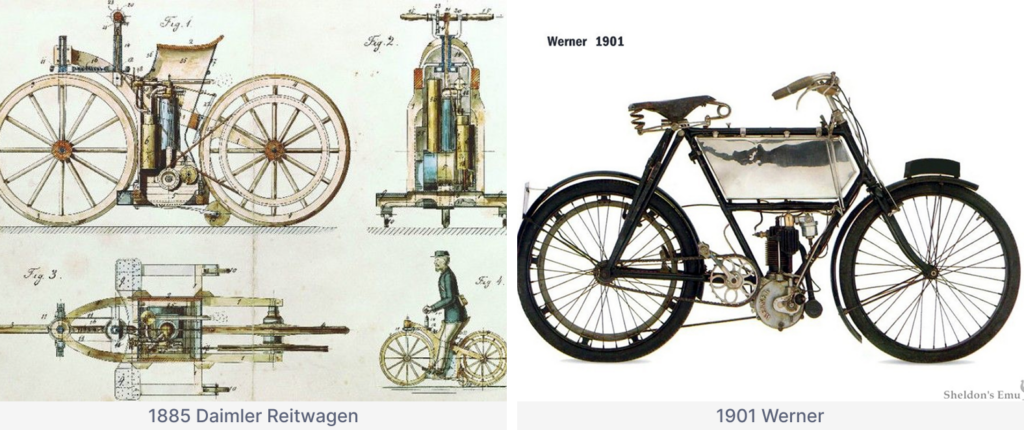
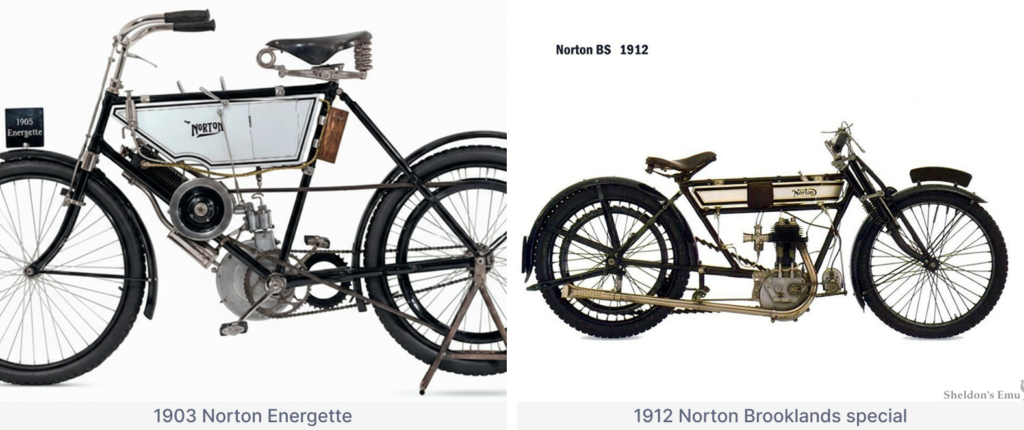
The earliest motorcycles were essentially bicycles fitted with small engines. These early machines retained pedal systems and lightweight bicycle frames, which were not designed to handle the additional weight, vibration, and torque of an engine. As engine power increased, these frames often bent, cracked, or failed.One of the first motorcycles, the Daimler Reitwagen (1885), used a wooden frame similar to that of a bicycle. While it was not commercially successful, it demonstrated the basic concept of a motor-driven two-wheeler. In 1901, the New Werner motorcycle placed the engine lower in the frame, improving balance and stability. This engine placement became a foundational layout for future motorcycle designs.

Purpose-Built Frames (1900s–1920s)

As motorcycle engines became heavier and more powerful, manufacturers recognized that bicycle-style frames were inadequate. During this period, especially before World War I, companies began developing frames specifically for motorcycles.

These purpose-built frames were stronger and designed to support larger engines, rear swingarms, and early suspension systems. This transition marked the move away from pedal-based designs toward motorcycles capable of higher speeds and more reliable road use.

Frame and Suspension Refinement (1920s–1950s)

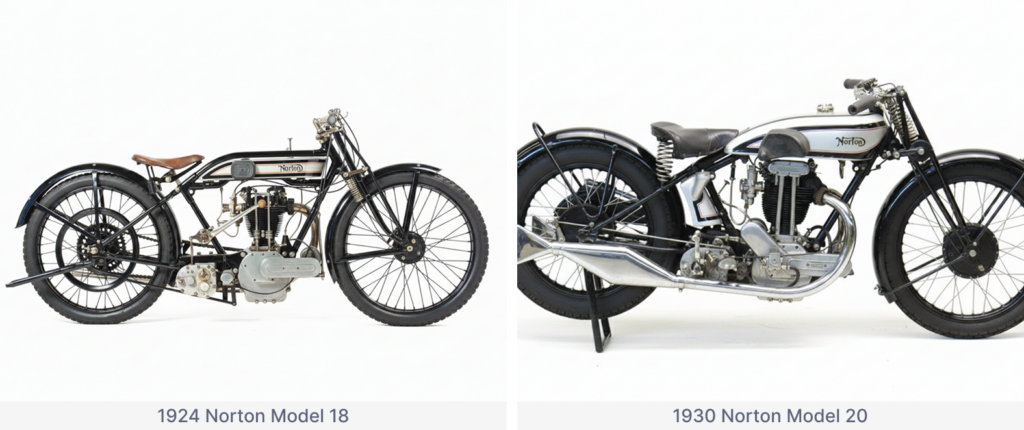
Between the two World Wars, motorcycle chassis design advanced significantly. Frames evolved from simple steel loops into more rigid and better-engineered structures.

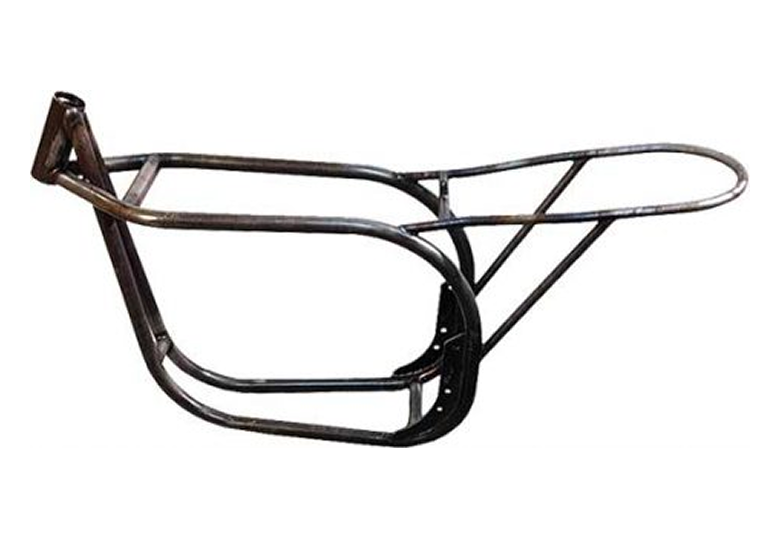
Cradle frames, which wrapped around and supported the engine from below, became common due to their improved strength and stability. At the front, telescopic forks replaced older spring or girder designs, offering better damping and control. At the rear, swingarm suspension systems paired with shock absorbers replaced rigid frames, greatly improving ride comfort and road handling.

Manufacturers such as Harley-Davidson, Indian, Triumph, and Norton refined these designs for both everyday motorcycles and racing applications.

Mid-20th Century Innovations (1950s–1970s)
Image description

As motorcycle performance increased, chassis design began focusing more heavily on handling and rigidity. A major development was the Norton Featherbed frame, introduced around 1950. Its twin-loop steel design provided excellent stiffness and predictable handling, setting a benchmark for motorcycle frames.

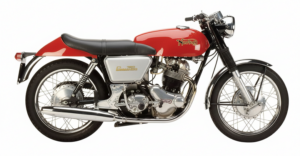
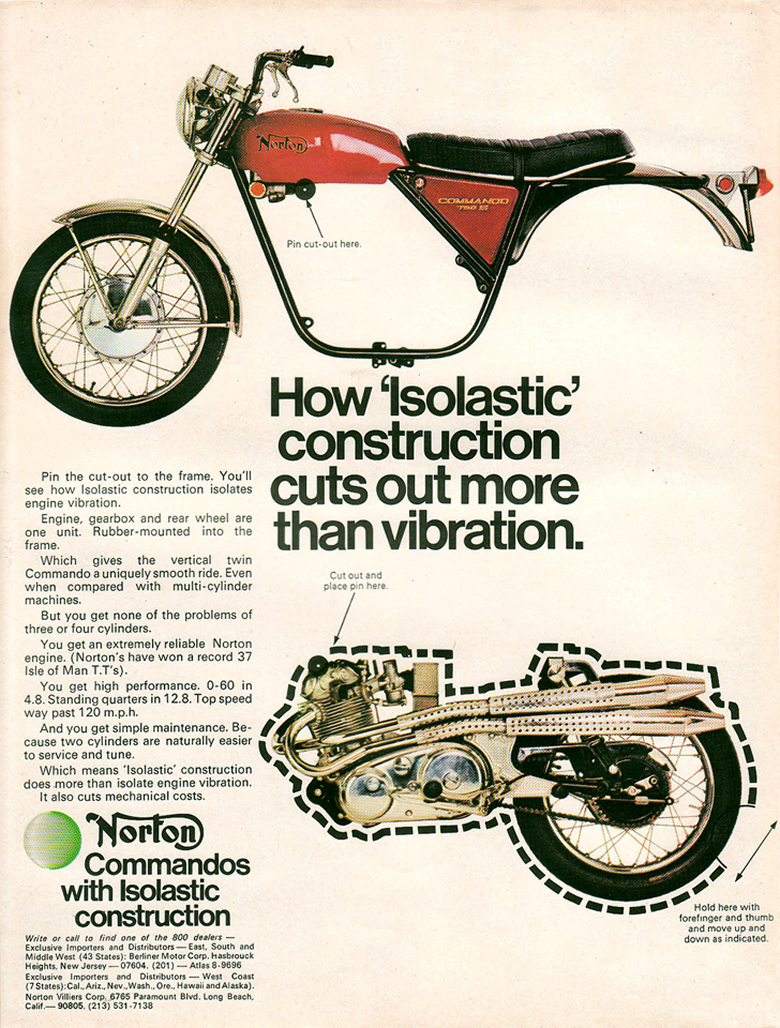
Later, Norton introduced the Isolastic frame, which used rubber mounts to isolate engine vibrations from the chassis and rider. This approach represented an early attempt at managing vibration while maintaining stability at higher speeds

1970 Norton Commando Fastback

.

Aluminum Frames and Performance Focus (1970s–2000s)
Aluminum Frames and Performance Focus 1
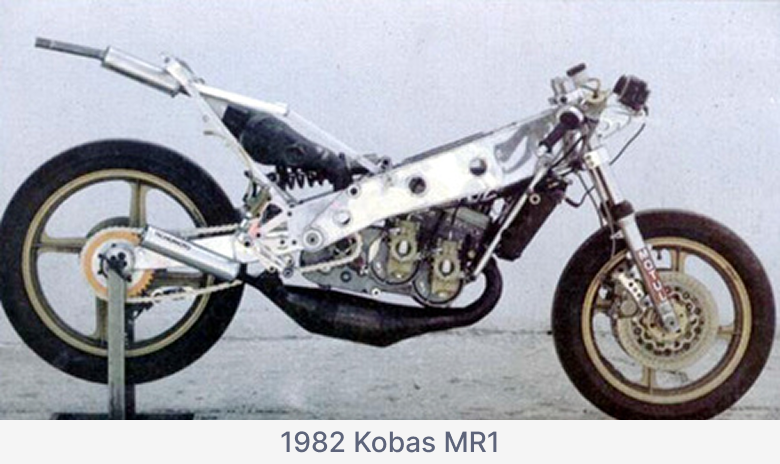
1982 Kobas MR1
Aluminum Frames and Performance Focus 2
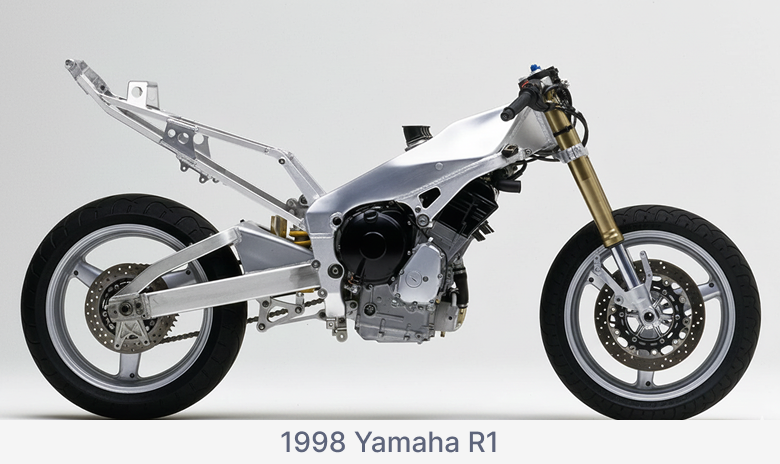
1998 Yamaha R1

Several major changes in motorcycle technology placed new demands on chassis design, including the introduction of disc brakes, high-grip racing tyres, and increasingly powerful engines.

In the early 1980s, Spanish designer Antonio Cobas pioneered the modern aluminum twin-spar (perimeter) frame for racing motorcycles. This design used two large aluminum beams connecting the steering head directly to the swingarm pivot, providing high stiffness with reduced weight. The concept was rapidly adopted in racing and later in high-performance street motorcycles.

This period also saw experimentation with new materials and manufacturing techniques, including cast aluminum components, early carbon fiber use, and advanced welding methods.

Modern Era (2000s–Present)
Modern Era 1
Modern Era 2

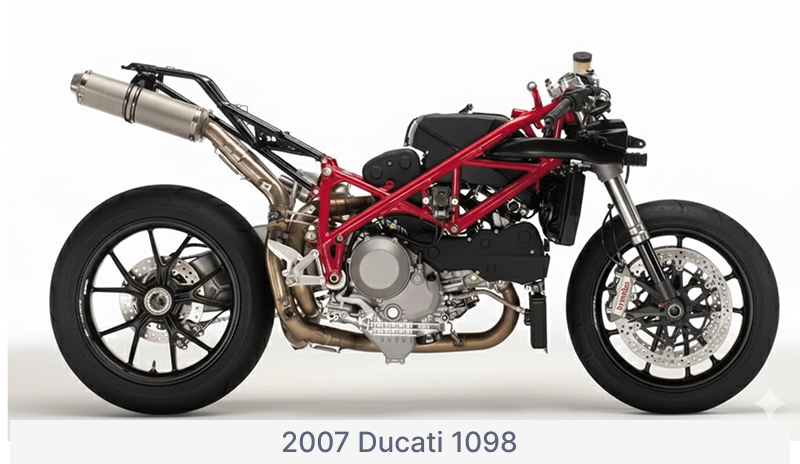
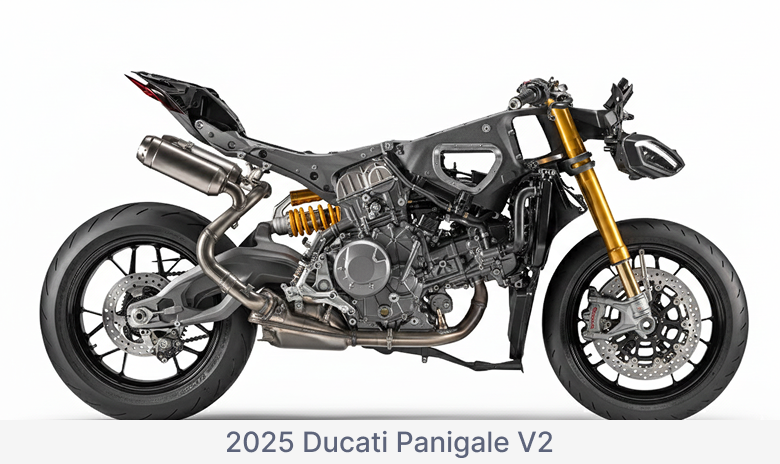
Modern motorcycle chassis are highly integrated systems. Rather than serving only as a support structure, the chassis now works in close coordination with the engine, suspension, electronics, and aerodynamics.

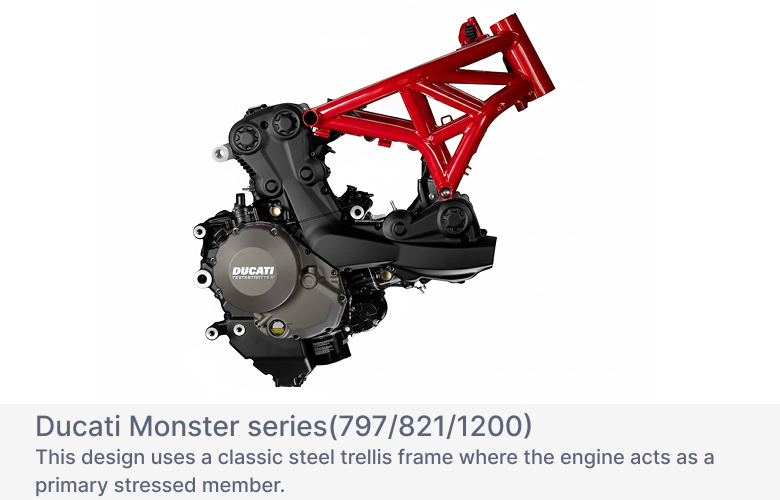
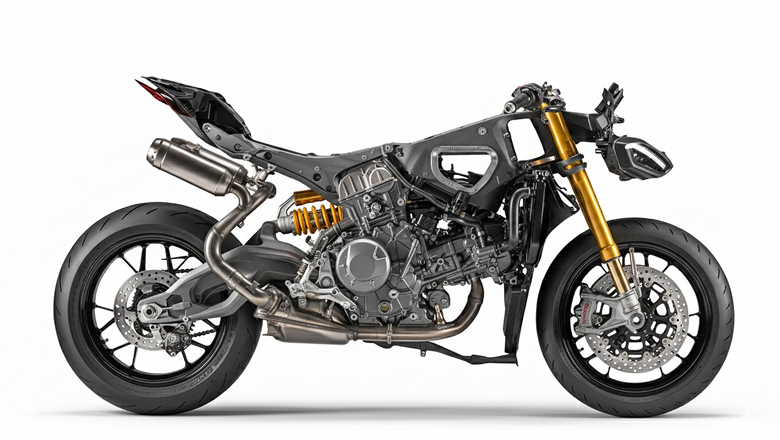
Many contemporary motorcycles use the engine as a stressed member, meaning it carries part of the structural load. This approach reduces frame weight while allowing engineers to carefully control stiffness. Chassis geometry is designed to change dynamically as suspension moves and electronic systems intervene, allowing the chassis to actively influence handling, stability, grip, and rider feedback.

Key Factors in Chassis Design

Materials
Key Factors-Materials 1
Key Factors-Materials 2

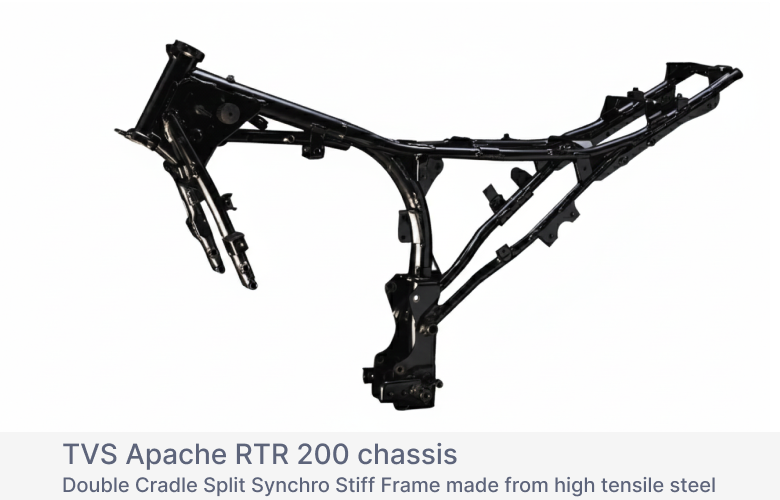
Material choice plays a major role in chassis performance and cost. Mild steel is widely used in commuter motorcycles due to its low cost, durability, and ease of repair. High-tensile and alloy steels offer improved strength and fatigue resistance while reducing weight and are common in tubular and trellis frames.

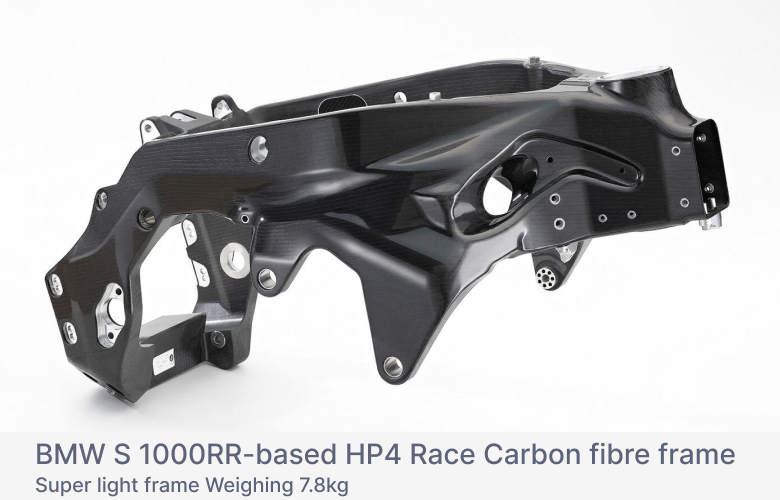
Aluminum alloys provide excellent stiffness-to-weight ratios and corrosion resistance, making them popular in sport and performance motorcycles. Magnesium alloys offer further weight reduction but are costly and complex to manufacture, limiting their use. Carbon fiber composites provide exceptional lightness and stiffness but are typically reserved for racing and high-end applications due to expense and repair difficulty.

Strength and Stiffness
Key Factors-Strength and Stiffness1
Key Factors-Strength and Stiffness2

Chassis strength is not about maximum rigidity but about having the correct stiffness in specific directions. A frame must resist bending, twisting, fatigue, and impact forces while remaining responsive. Excessive flexibility can cause instability, while excessive stiffness can reduce tyre grip and rider feedback. As a result, higher-performance motorcycles use more advanced frame designs to manage forces precisely.

Image description
Stressed Member Design

When the engine is used as a stressed member, fewer frame components are needed, reducing weight and increasing stiffness. However, this can transmit more vibration to the rider and place additional stress on the engine casing. Non-stressed designs isolate vibration more effectively but are heavier. Many modern motorcycles use a hybrid approach to balance these factors.

Weight, Cost, and Complexity

Chassis weight is closely linked to performance, cost, and intended use. Performance-oriented motorcycles prioritize low weight and precise handling, often using advanced materials and designs that increase cost. In contrast, commuter motorcycles emphasize durability and affordability, using simpler steel frames.

As performance requirements rise, chassis designs become more complex, incorporating multiple load paths, tighter manufacturing tolerances, and integration with electronic systems.

Intended Use

The motorcycle’s purpose strongly influences chassis design. Commuter and utility motorcycles focus on comfort, durability, and load capacity. Sport motorcycles prioritize stiffness and low weight for precise handling. Adventure and off-road motorcycles balance strength, flexibility, and serviceability to handle rough terrain and long-distance travel.

Types of Motorcycle Frames

Modern motorcycle frames are rarely pure examples of a single traditional type. Instead, they often combine elements from multiple designs to meet specific performance, packaging, and cost goals. Traditional classifications remain useful as general descriptions but do not fully capture the complexity of modern chassis engineering.

Single Cradle Frame
Key Factors-Strength and Stiffness1
Key Factors-Strength and Stiffness2

A single cradle frame uses one main tube that runs from the steering head and loops under the engine. The engine is not used as a stressed member. This design is simple, durable, and cost-effective, making it suitable for everyday motorcycles, though it lacks the stiffness required for high-power applications.

Double (Duplex) Cradle Frame
Key Factors-Strength and Stiffness1
Key Factors-Strength and Stiffness2

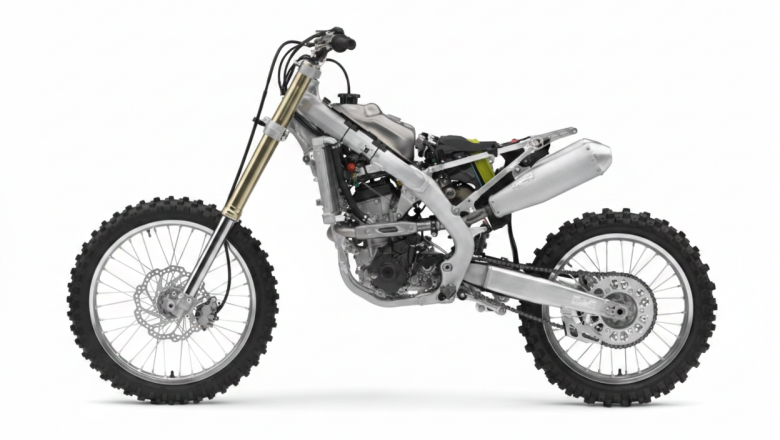
A double cradle frame uses two tubes running along both sides of the engine, forming a complete cradle beneath it. This design provides increased strength and stability, especially on rough roads. It is heavier than modern performance frames but remains popular in off-road and adventure motorcycles due to its robustness and engine protection.

Backbone Frame
Key Factors-Strength and Stiffness1
Key Factors-Strength and Stiffness2

A backbone frame uses a single central tube running from the steering head to the rear, with the engine suspended below. It is lightweight and inexpensive, offering adequate stability for commuter motorcycles but limited performance for aggressive riding.

Underbone Frame

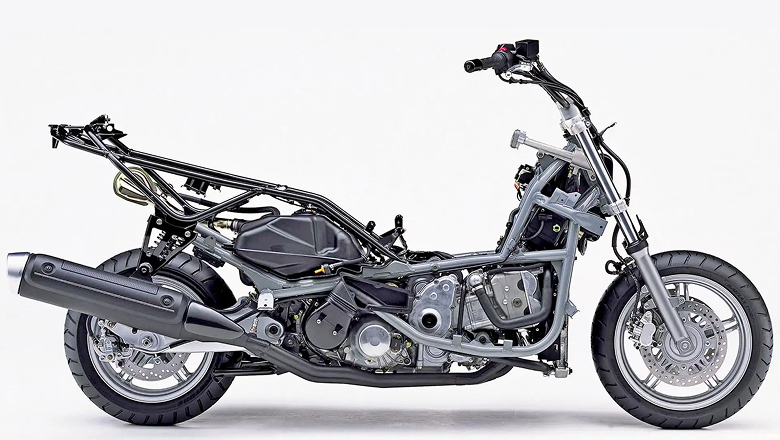
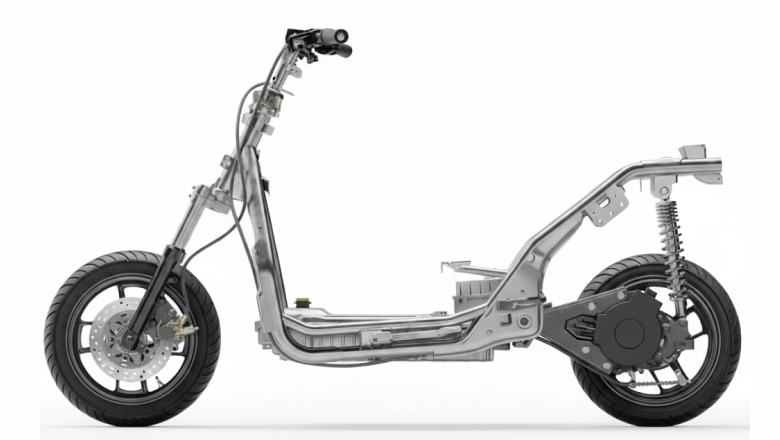
An underbone frame features a low central spine and a step-through layout. The engine is mounted low and often contributes structurally. This design allows easy mounting, low seat height, and good weight distribution, making it common in scooters and small commuter motorcycles.

Diamond Frame

In a diamond frame, the engine acts as a stressed member, completing the load path between the steering head and swingarm pivot. This results in improved stiffness and reduced weight compared to simpler frames, making it suitable for modern commuter and mid-capacity motorcycles.

Twin-Spar (Perimeter) Frame

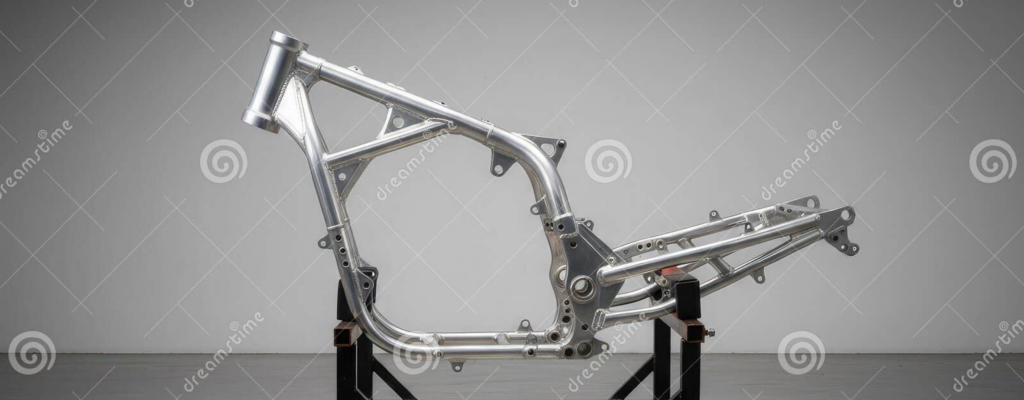
A twin-spar frame uses two large structural beams running directly from the steering head to the swingarm pivot. This layout provides high stiffness and precise handling, making it the dominant choice for sport and high-performance motorcycles. Aluminum is the most common material used.

Trellis Frame
Trellis Frame01
Trellis Frame01

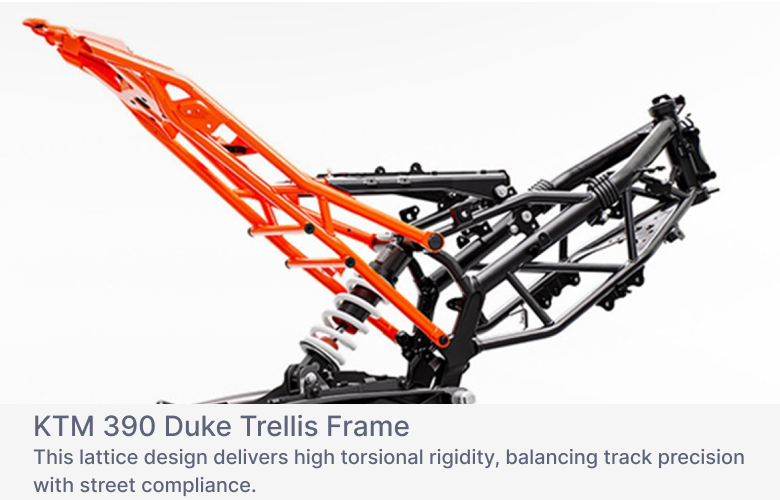
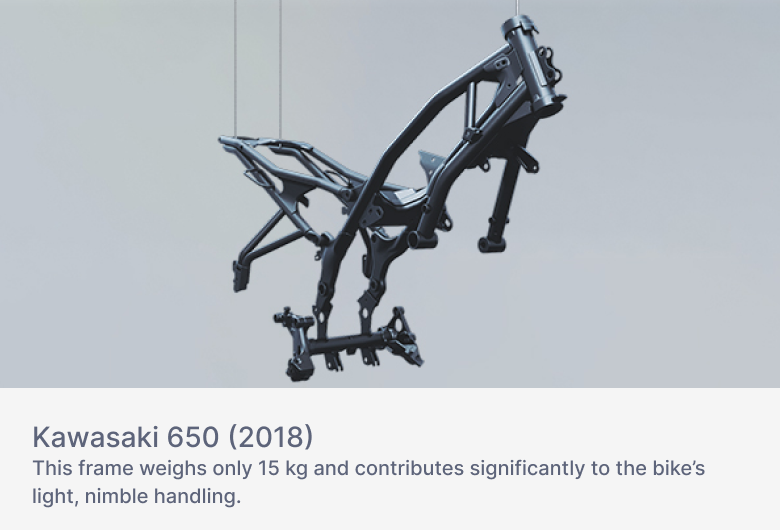
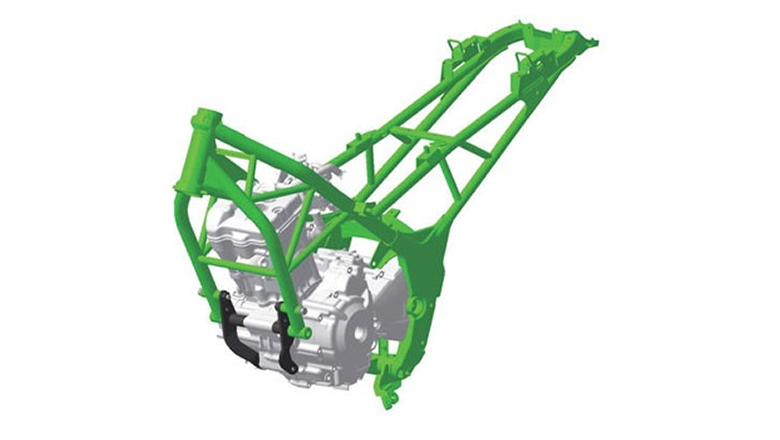
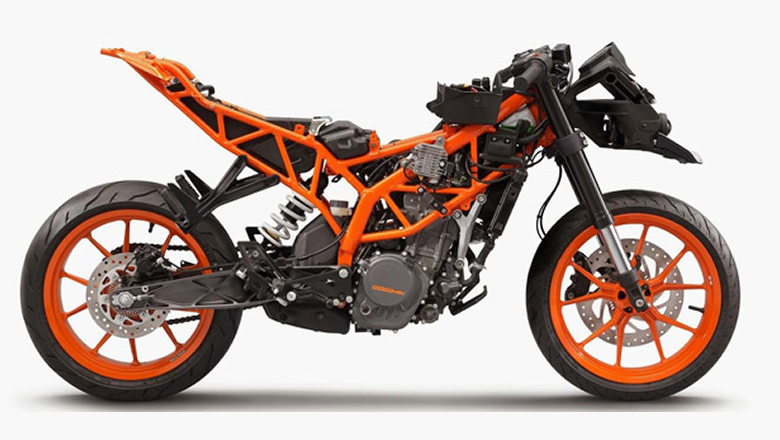
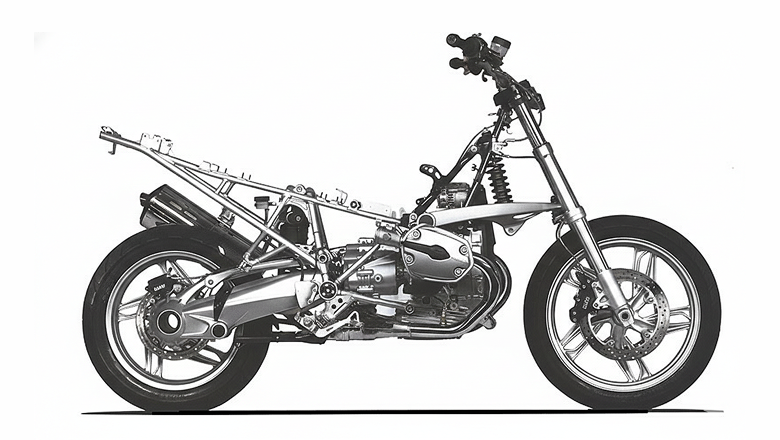
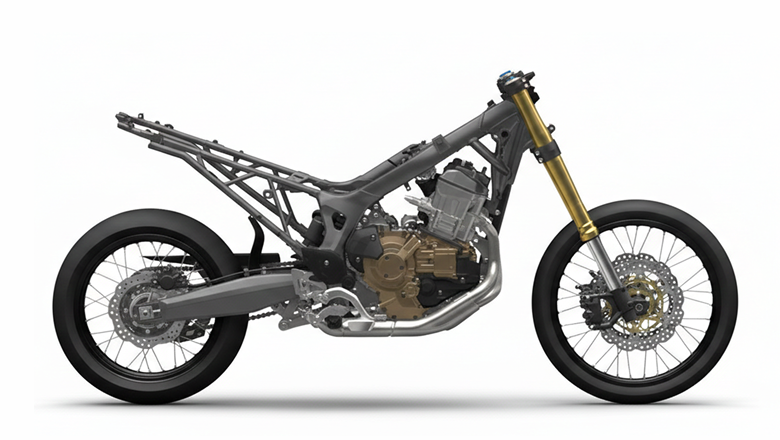
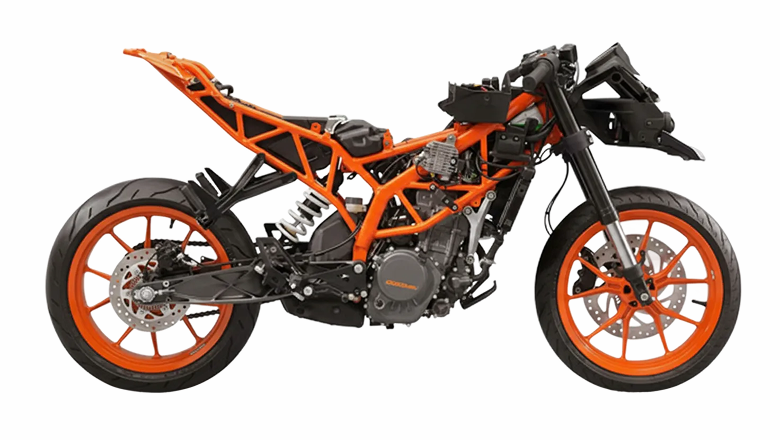
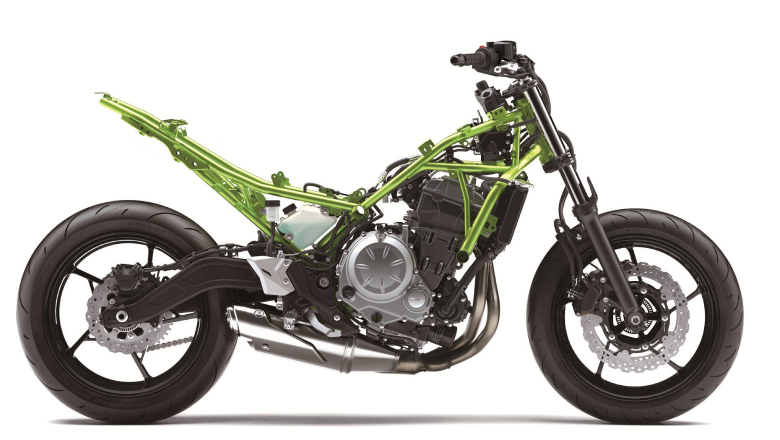
A trellis frame consists of multiple short tubes arranged in triangular patterns. This structure efficiently distributes loads and allows controlled flex. The engine often acts as a stressed member, contributing to stiffness while keeping weight low. Trellis frames are common in performance street and adventure motorcycles.

Monocoque and Semi-Monocoque Frames
Monocoque and Semi-Monocoque Frames01

In monocoque designs, structural loads are carried by a single shell rather than a separate frame. Semi-monocoque designs combine shell structures with additional frame elements. These designs offer excellent stiffness-to-weight ratios and are typically found in high-performance or racing motorcycles.

Pressed-Steel Frames
Rectangle 7602
Image description
Rectangle 7602
Image description

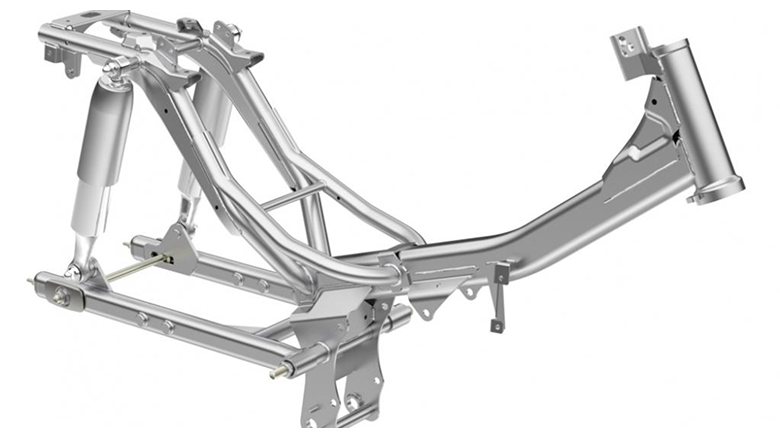
Pressed-steel frames use stamped steel panels as load-bearing structures and are widely used in scooters. This approach is durable, cost-effective, and space-efficient, though heavier and less performance-focused than tubular or aluminum frames.

Components of a Motorcycle Chassis

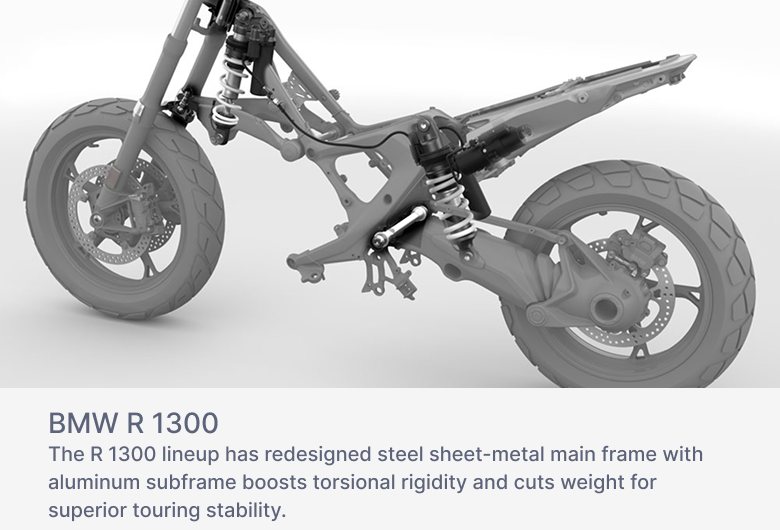
The motorcycle chassis consists of several key structural and functional components. The main frame provides the primary load-bearing structure. A subframe, where present, supports the rider, passenger, and luggage.

The steering head defines the steering axis and influences stability and turning behavior. Structural members such as the top tube and down tube carry bending and torsional loads. The swingarm and swingarm pivot control rear wheel movement and suspension geometry.

Additional components include engine mounting points, front suspension forks, and rear suspension systems, all of which work together to define how the motorcycle rides, handles, and responds to rider inputs.

Effect of vehicle type on Chassis(Frame)

SCOOTER/MOPEDS
COMMUTER
MOPEDS
Rectangle 7602
Pressed-steel underbone / Monocoque chassis

Affordable, durable, easy to use, and suitable for everyday city riding.

Single cradle/ Double cradle/ Backbone chassis

Low cost, durable, easy to manufacture, and suitable for rough roads and everyday commuting.

CRUISERS/MOTOCROSS
ADVENTURE BIKE
Rectangle 7602
ADVENTURE BIKE
Steel double cradle / Backbone-type chassis

High strength, stable, comfortable, and designed to carry heavy loads with a smooth ride.

Single cradle/ Double cradle/ Backbone chassis

High strength, stable, comfortable, and designed to carry heavy loads with a smooth ride.

ADVENTURE BIKE
SPORTS TOURING BIKE
ADVENTURE BIKE01
Sports Touring bike
Steel trellis/ Reinforced backbone-type frames

Strong, durable, repairable, and stable for long-distance travel on roads and rough terrain.

Aluminum or steel twin-spar (perimeter) frames

Stiff and precise for sporty handling, yet stable and comfortable for long-distance touring.

Sports/ Track bike
Naked bike
Track bike
Naked bike
Steel double cradle/ Single cradle frames

Traditional proportions, comfortable ride, durable, and visually authentic with modern safety.

Underbone / Tubular single-cradle designs

Agile, cost-efficient, durable, and visually exposed as a key styling element.

Maxi scooter
EV Bike
ADVENTURE BIKE01
Sports Touring bike
Aluminum twin-spar (perimeter) frames

Lightweight, very stiff, and precise for high-speed stability and track performance.

Steel trellis/  Steel diamond / Aluminum twin-spar frames

Agile, cost-efficient, durable, and visually exposed as a key styling element.

E-cycle
M-Kick scooters
ADVENTURE BIKE01
Sports Touring bike
Underbone / Tubular single-cradle designs

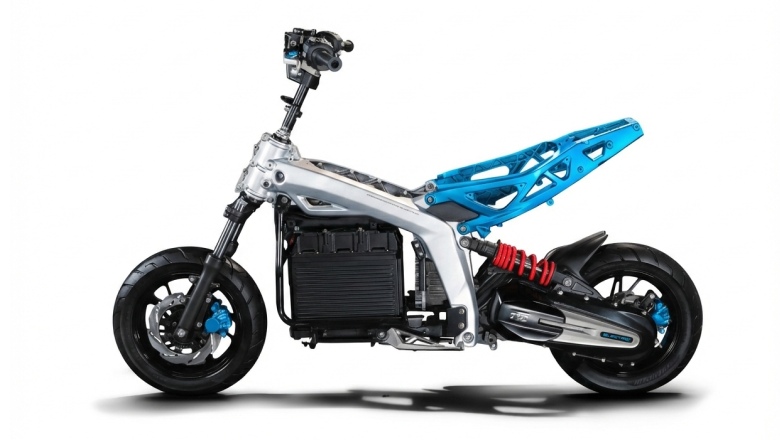
Battery supports the frame, while twin tubes neatly house motors and electronics.

Previous New Ways of the New Start Ups;
What Are the Big Brands Up to
Next Materials and Structures in Two Wheeler Frames
Chassis Design Fundamentals
Scroll to top