A Definitive Guide to Motorised Two Wheelers

Introduction to Suspension Systems

A A

Overview

Suspension in motorised two wheelers is a fundamental subsystem responsible for managing the dynamic interaction between the vehicle and the riding surface.

Suspension connects the wheels to the frame, absorbing road irregularities and isolating the rider from shocks. Its function is twofold: comfort (by cushioning bumps) and control (by maintaining tyre-road contact). Modern systems balance both, thanks to advancements from early sprung seats to electronically controlled setups.
Front and Rear Suspension Systems

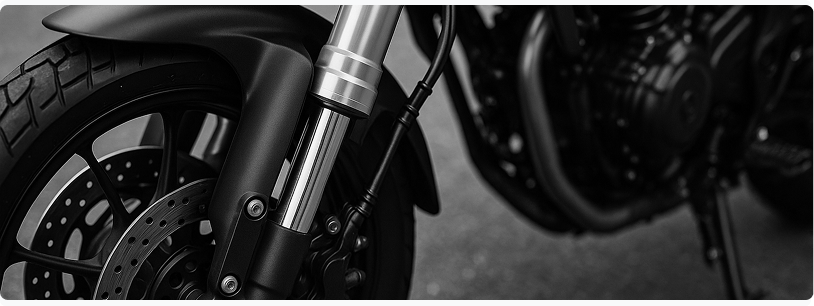
Front suspension absorbs shocks transmitted through the front wheel, preserves consistent tire contact with the road surface, and maintains the motorcycle’s steering angles.

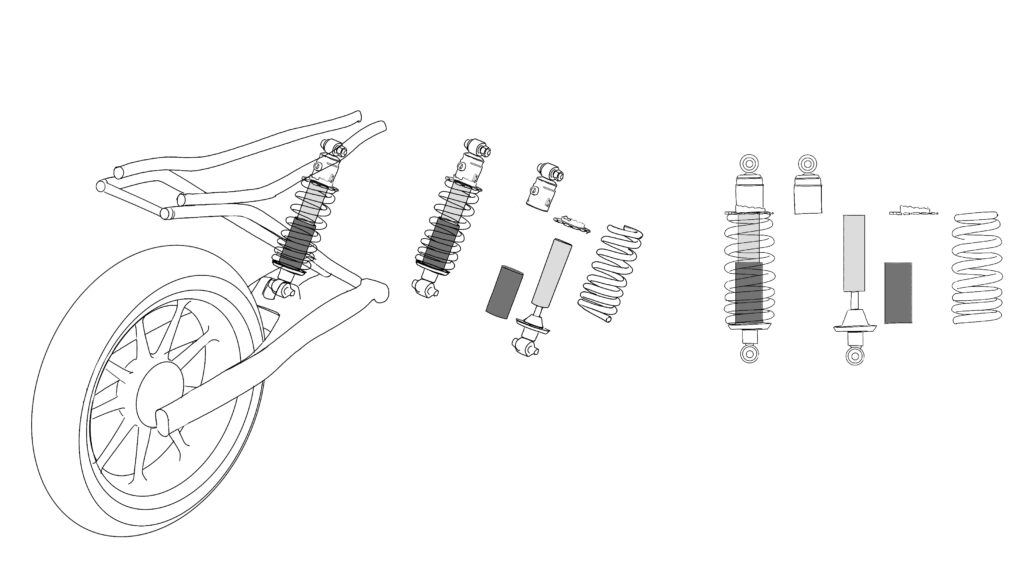
Rear suspension is a mechanical system that supports and controls the movement of the rear wheel in a motorcycle or scooter. It absorbs road irregularities, maintains tire contact with the surface, and enhances overall stability, handling, and rider comfort.

Key Concepts and Terminologies

SPRUNG AND UNSPRUNG MASSES

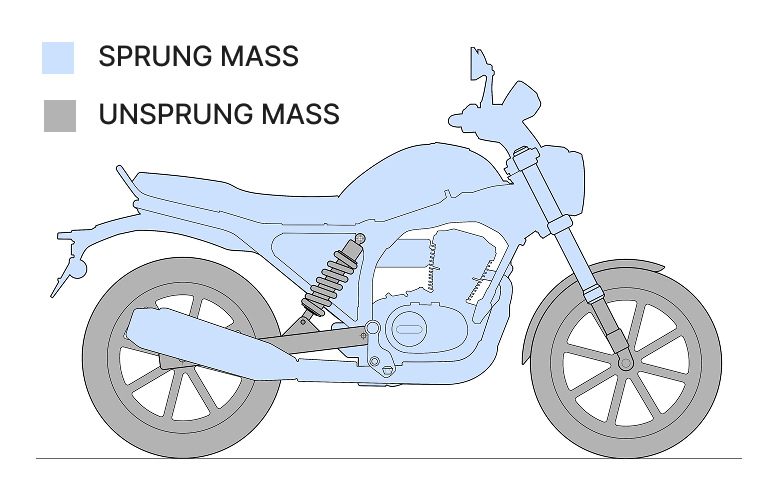
The portion of the vehicle supported by the suspension, including frame, engine, bodywork, rider, and passenger is called Sprung Mass.

Components not cushioned by suspension, such as wheels, tyres, brakes, and parts of the suspension itself are together called Unsprung Mass. A lighter unsprung mass improves suspension response and handling precision.

SAG

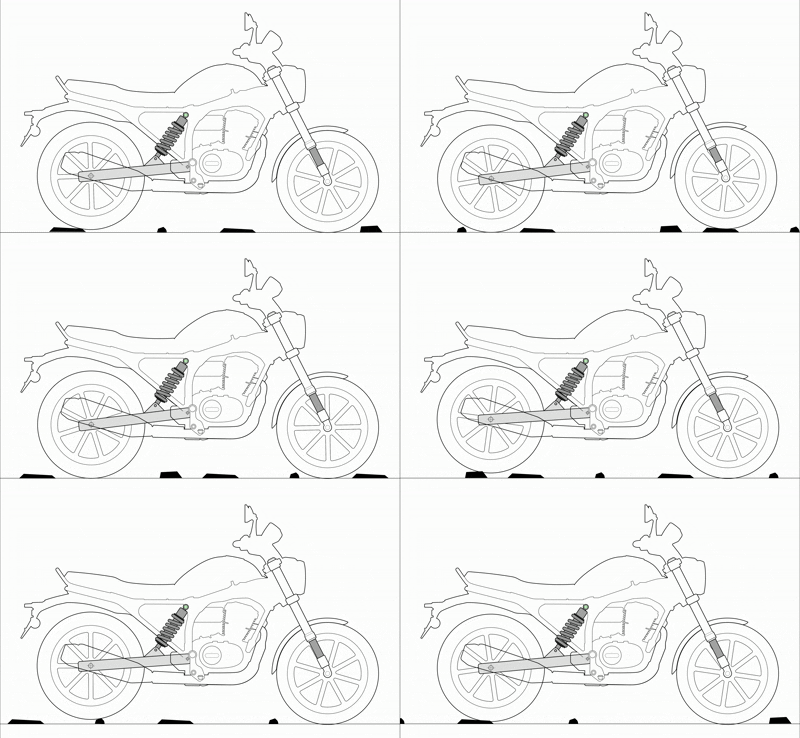
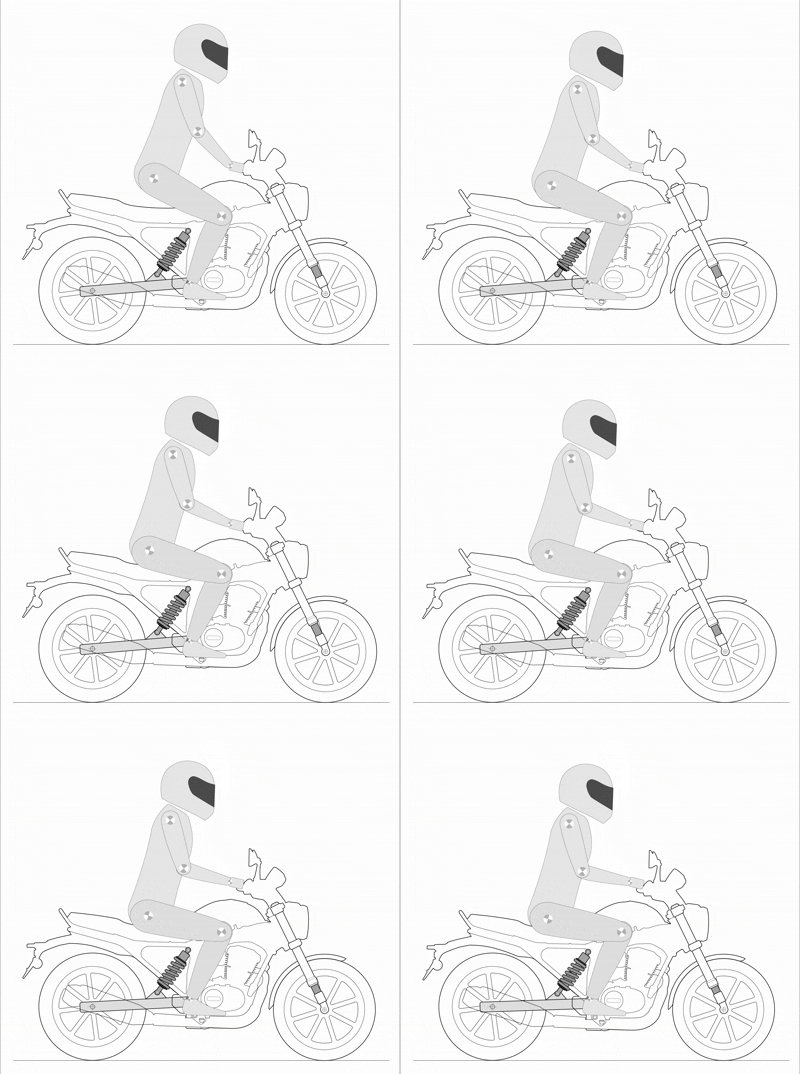
Sag is the amount a vehicle’s suspension sinks when weight is applied. It includes static sag, which is how much the bike settles under its own weight, and rider sag, which is how much it settles with the rider and gear. Sag helps the wheels stay in contact with the ground and lets the suspension absorb bumps smoothly. Too much sag makes the suspension too soft and likely to bottom out, while too little sag makes it too stiff, causing a harsh ride and reducing traction.

Sag with rider
DAMPING

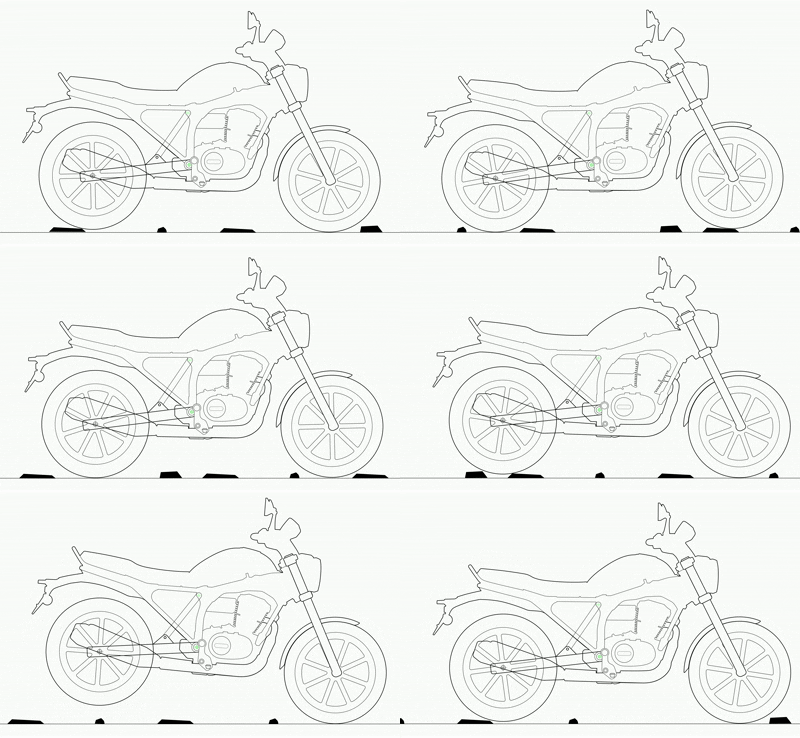
Damping is the resistance that controls suspension movement and prevents the spring from oscillating excessively after a bump. In most two wheelers, this is achieved through hydraulic suspension,(fluid based) where a piston forces oil through valves to create controlled resistance. This process slows both compression and rebound, reduces repeated bouncing, and stabilises the motorcycle or scooter.

With Damping
Without Damping

The suspension allows the unsprung parts to move over irregularities while keeping the sprung parts steady, with springs absorbing shocks and dampers controlling bounce.

Historical Perspective

EARLY ORIGINS

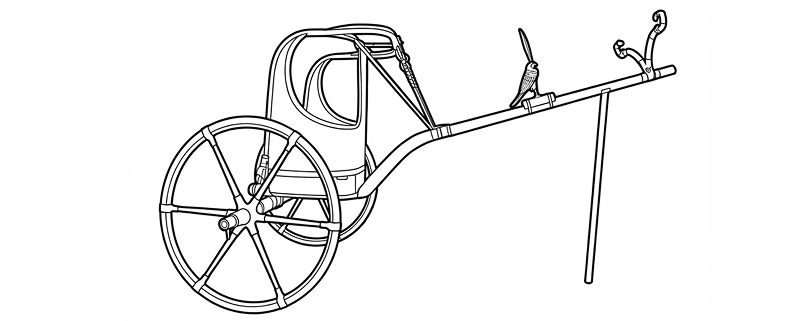
The concept of suspension can be traced to ancient chariots and horse-drawn carts, which used flexible materials such as leather straps to reduce shock.

Tutankhamun's chariot was a marvel of ancient its sophisticated suspension system featured flexible components absorbed shocks, allowing for a smoother ride across rough terrain. Exemplified the ingenuity of Egyptian craftsmanship in royal transportation.

Tutankhamun's Chariot
EARLY MOTORISED TWO WHEELERS

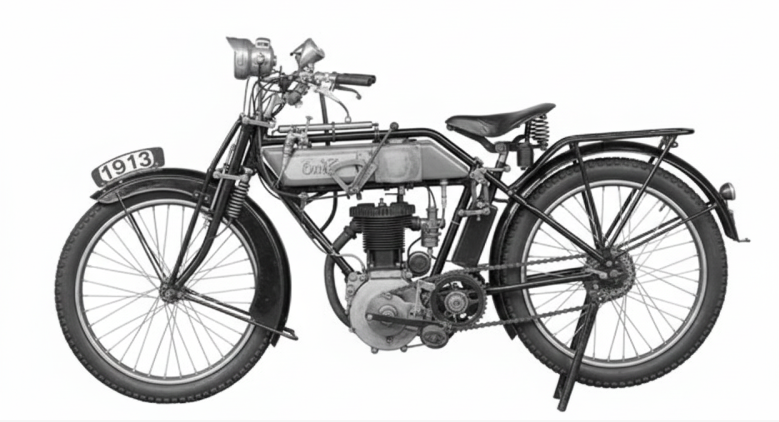
The earliest motorised
two wheelers often relied on rigid frames with minimal suspension. Spring-mounted saddles were the only source of comfort. By the 1930s, manufacturers began adopting rudimentary front suspension systems such as girders and leaf-spring forks.

1913 Ariel
POST WAR INNOVATIONS

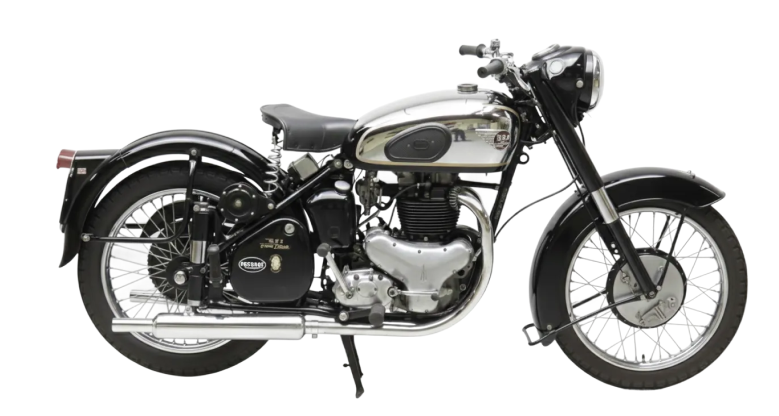
The period following World War II saw the widespread adoption of telescopic front forks and twin-shock rear suspensions. This marked the foundation of modern suspension layouts, improving both comfort and handling.

BSA A10
CONTEMPORARY ADVANCEMENTS

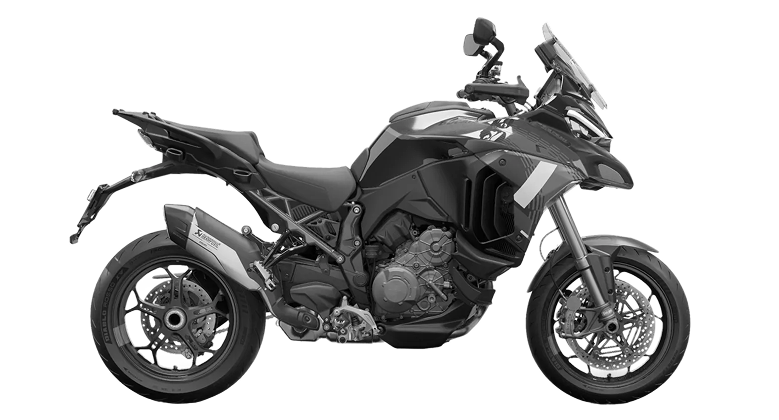
Since the late 20th century, motorised two wheeler suspension has adopted monoshocks, USD forks, progressive springs, and electronic damping. Modern systems can now adjust in real time using semi-active or fully active controls guided by sensors and algorithms.

2025 Ducati Multistrada V4 Pikes Peak

Components of a Typical Suspension System

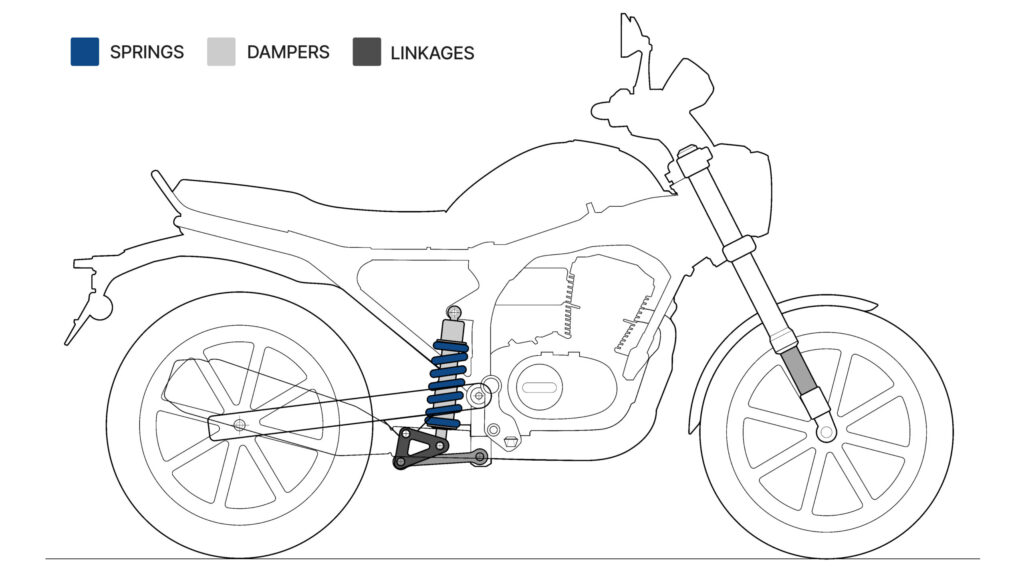
The suspension system in motorised two wheelers is made up of several key components, (springs, dampers, linkages, and secondary parts) that work together to absorb shocks, control movement, and provide a comfortable and safe ride. Understanding these parts helps explain how different types of bikes handle and why suspension tuning is important for performance and comfort.

Parts such as bushings and bearings, which reduce friction and guide moving parts; seals and fork oil, which prevent leakage and enable proper lubrication and damping; and adjusters, which allow modification of preload, compression, and rebound—collectively contribute to the smooth operation and tunability of the suspension system.

Types of Front and Rear Suspension Systems

There are two main categories of suspension: Front & Rear. Within each, are different types of suspension which have different mechanics and design based on their purpose or when they were developed.

FRONT SUSPENSION SYSTEMS
Telescopic Forks:

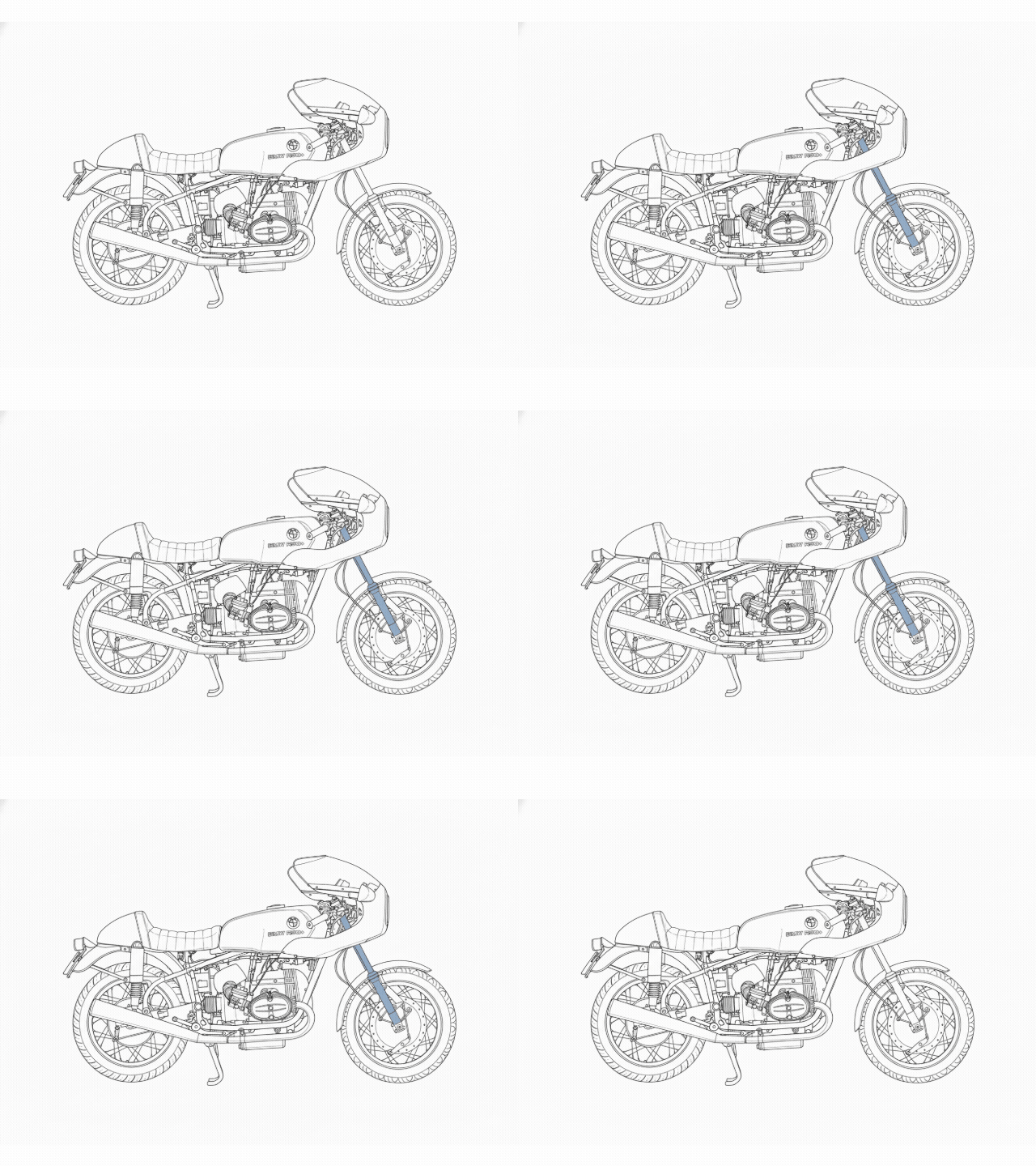
Telescopic forks feature a standard layout where inner tubes (stanchions) slide into outer tubes (sliders), providing the front suspension for most motorised 2-wheelers. There are two main variants: conventional forks, commonly used in commuter and standard bikes for reliable performance, and upside-down (USD) forks, which mount the thicker part at the top for increased rigidity and better handling in performance-oriented two wheelers.

BMW R5069S
Leading-Link forks:

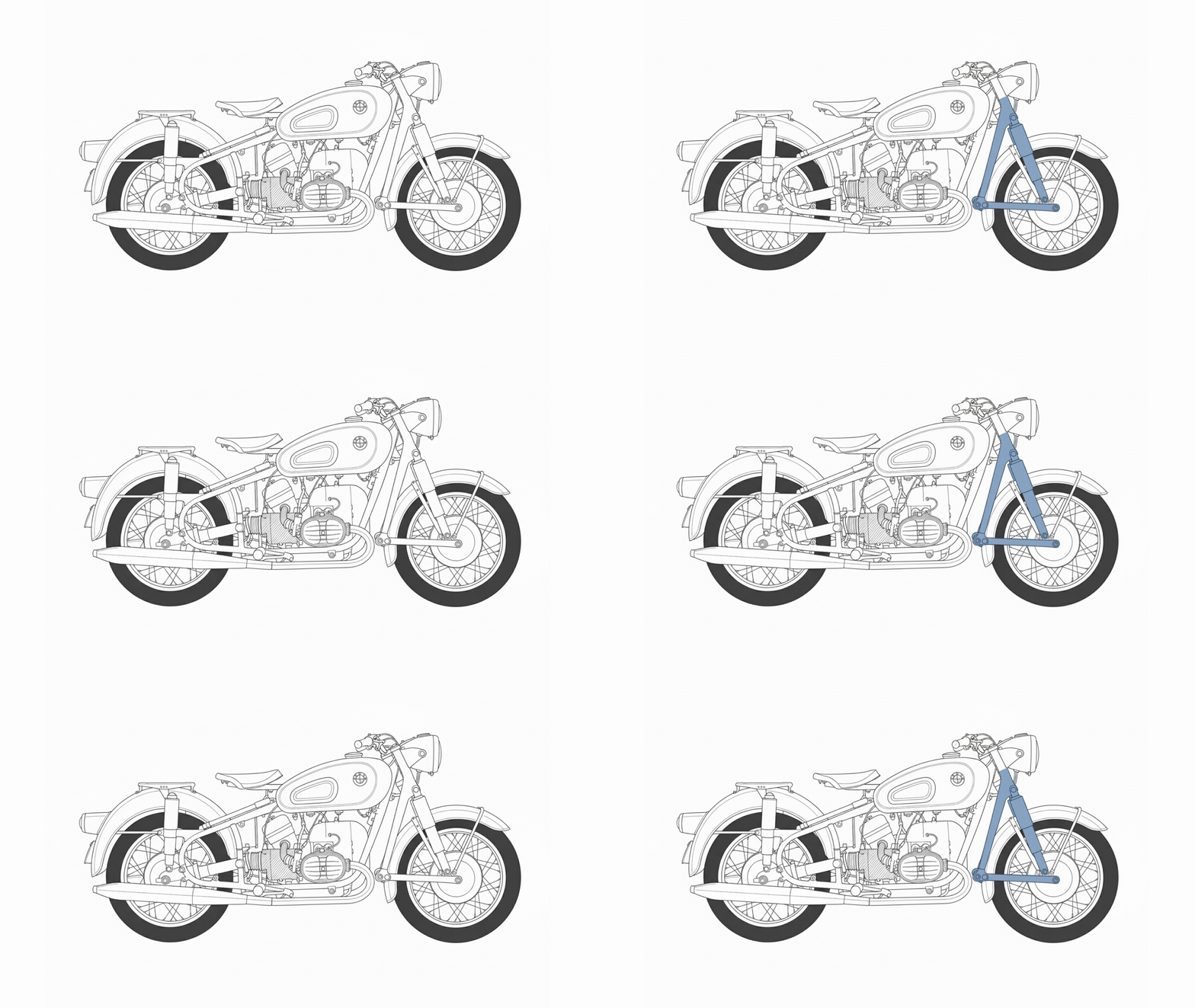
Telescopic forks feature a standard layout where inner tubes (stanchions) slide into outer tubes (sliders), providing the front suspension for most motorised 2-wheelers. There are two main variants: conventional forks, commonly used in commuter and standard bikes for reliable performance, and upside-down (USD) forks, which mount the thicker part at the top for increased rigidity and better handling in performance-oriented two wheelers.

1959 BMW R50
Trailing-Link forks:

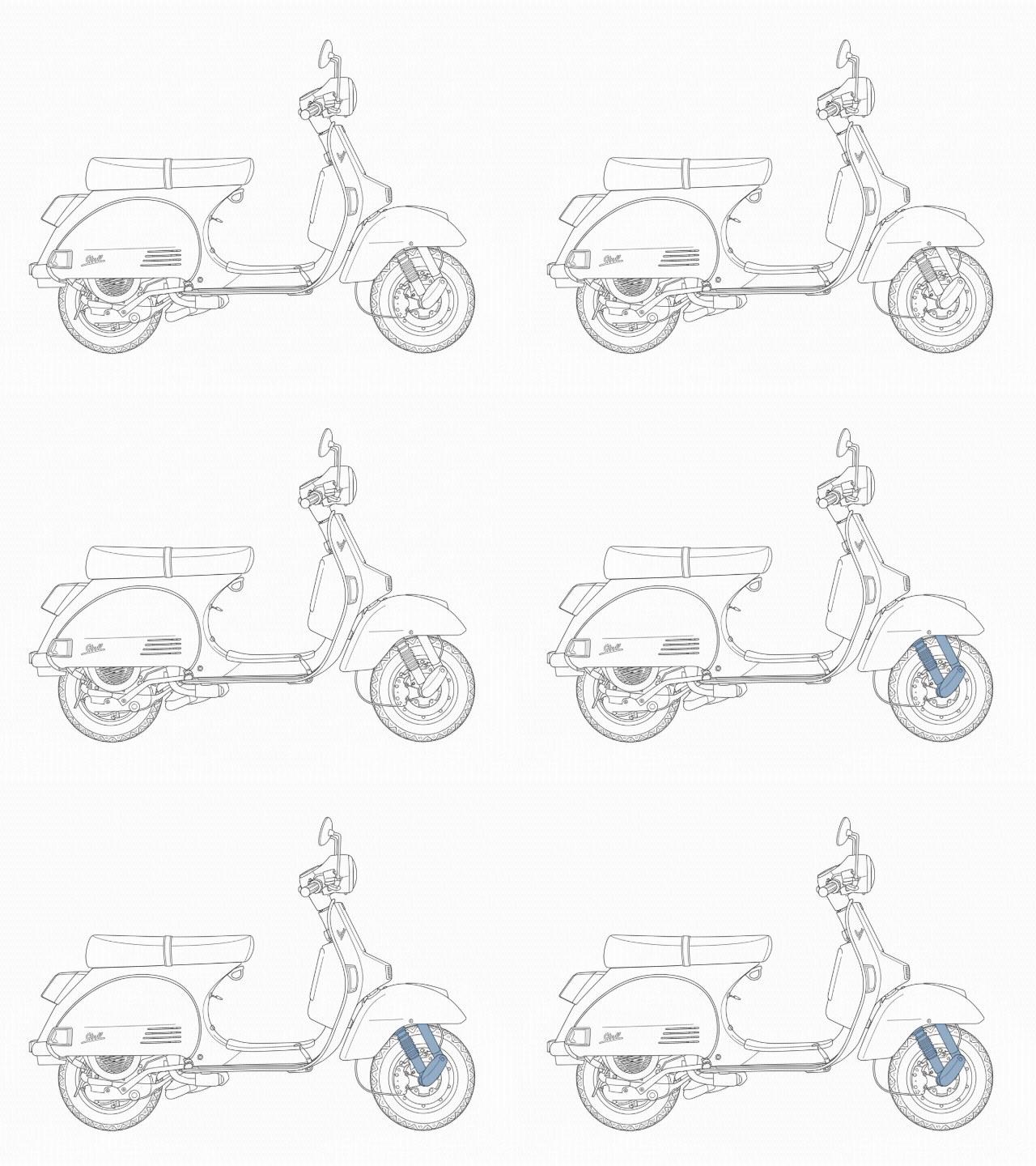
A front suspension with an arm positioned behind the wheel, allowing it to swing backward over bumps. It provides comfort, simple construction, and is commonly used on scooters.

1983 LML Vespa
Girder Forks:

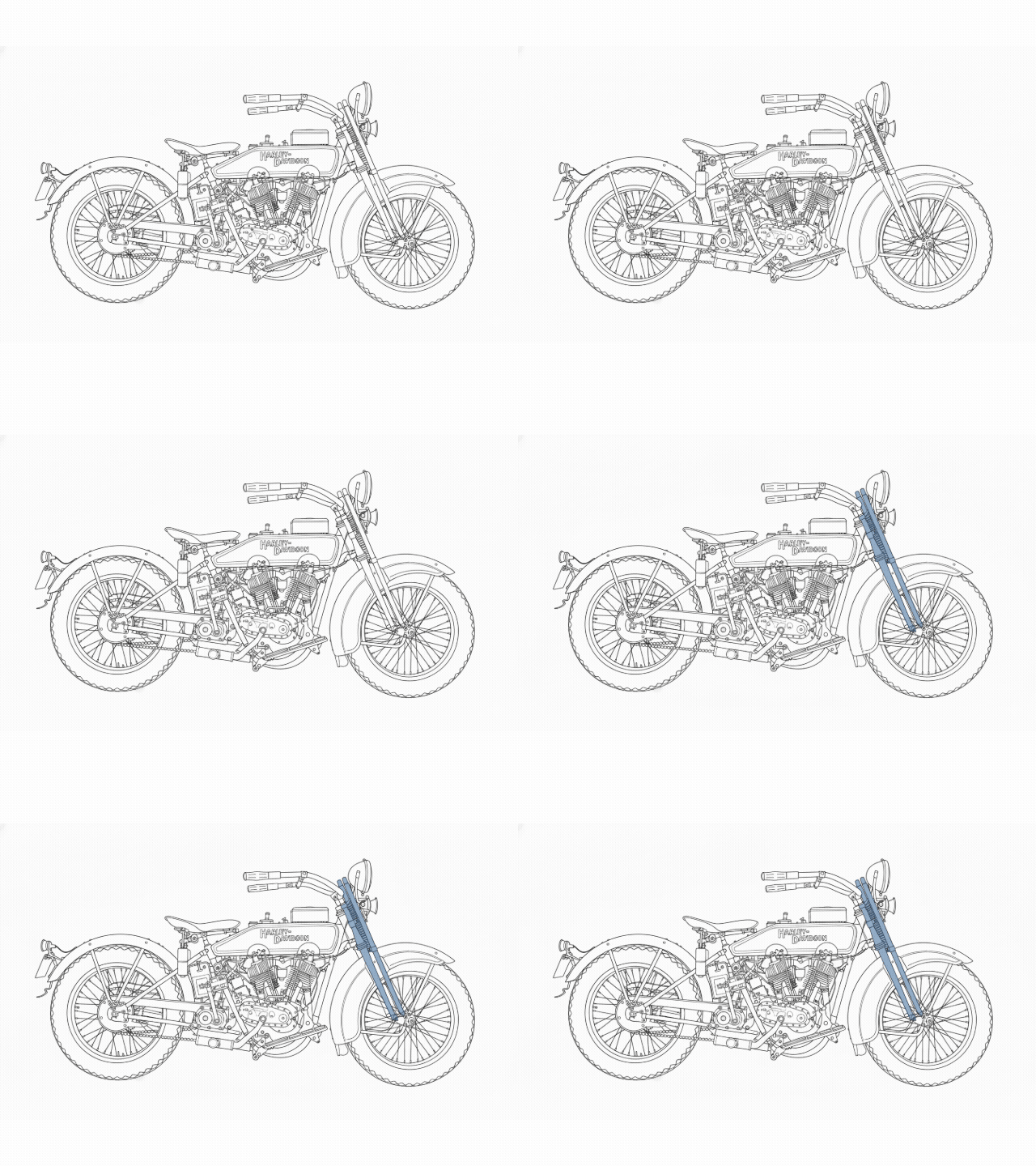
Utilized in pre-WWII designs, employing parallel arms and springs. Occasionally revived in modern custom builds.

1920 Harley Davidson Model J
REAR SUSPENSION SYSTEMS
Rigid Frame (Hardtail):

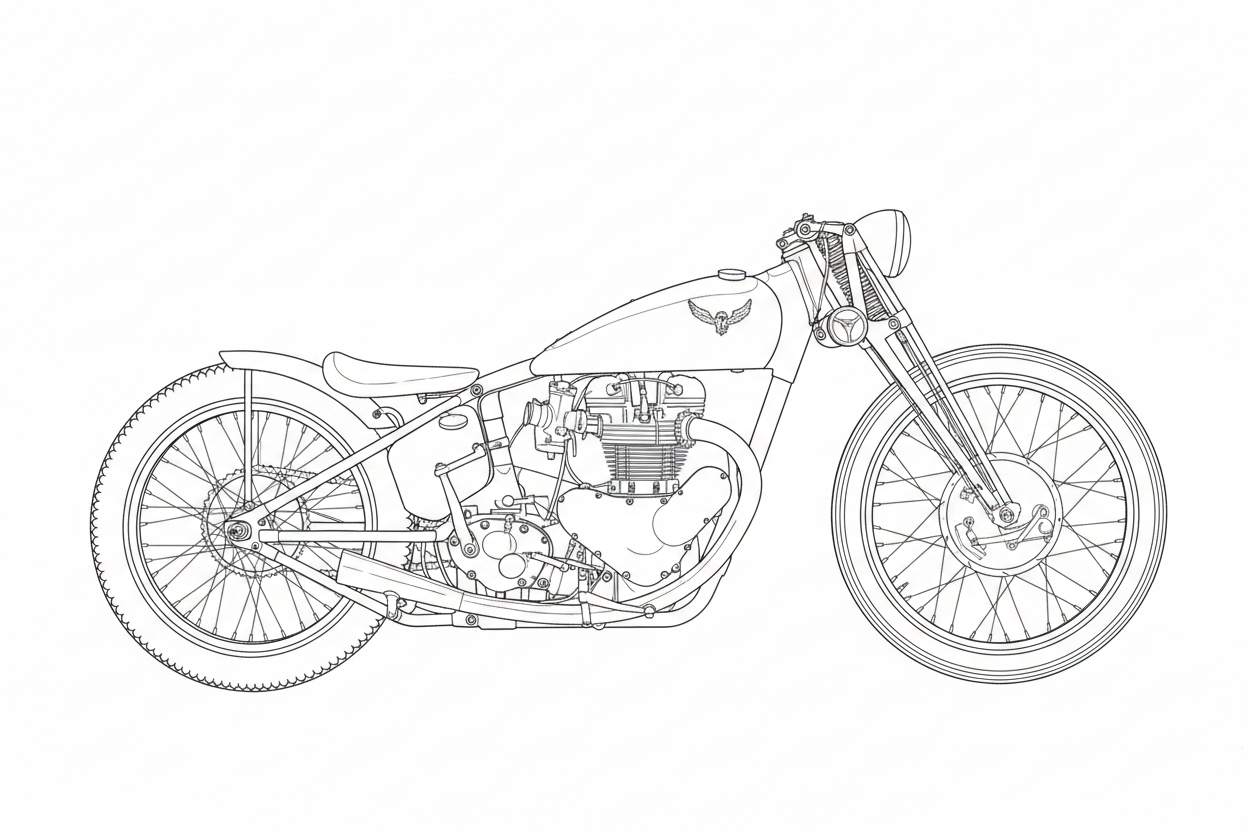
A hardtail is a motorcycle frame design where the rear wheel is rigidly mounted with no rear suspension. Used on early motorised two-wheelers and modern custom builds, it offers simplicity and classic style but reduced ride comfort and traction.

Triumph Hardtail Falcon
Twin Shock:

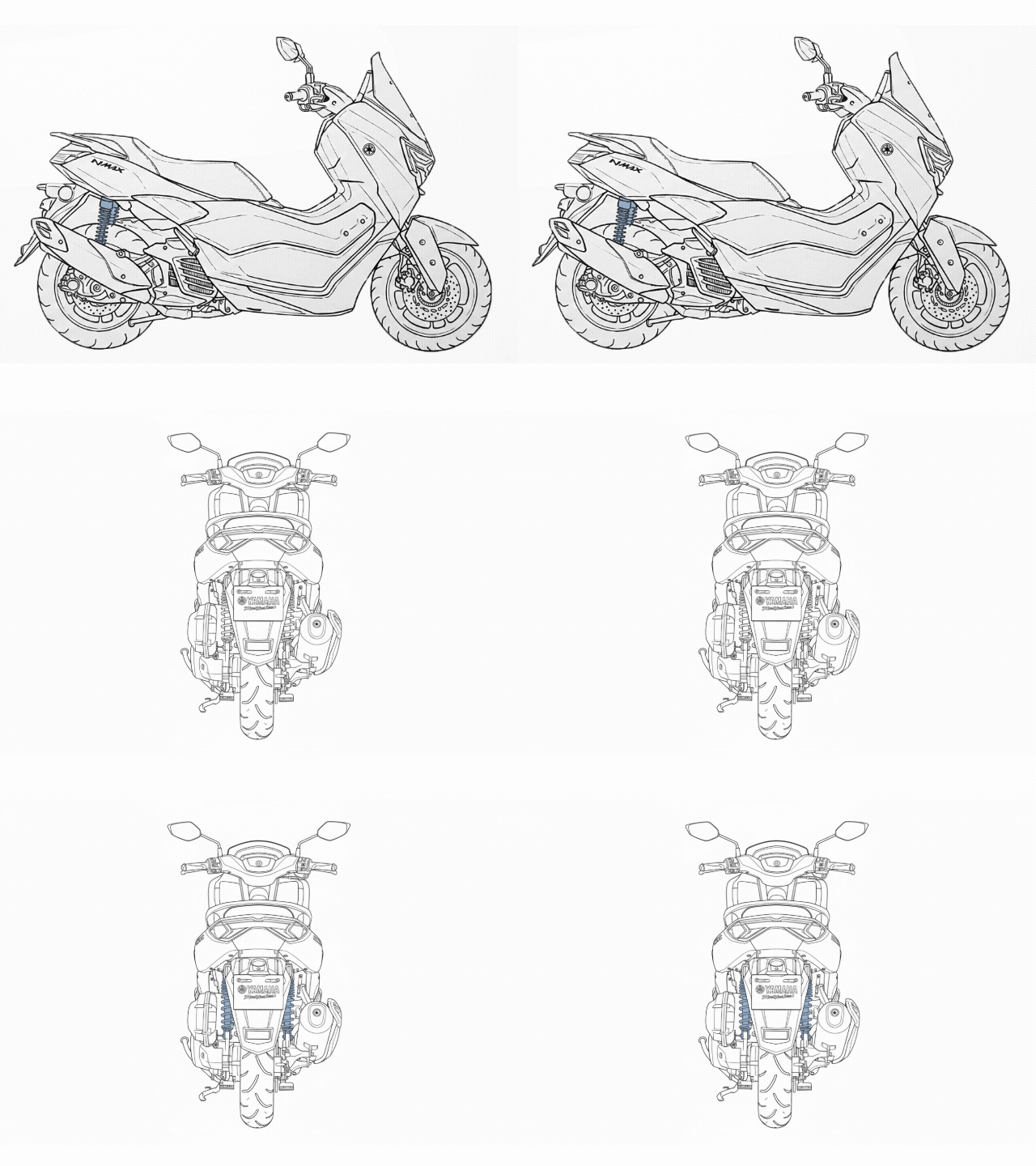
Twin shocks use two rear shock absorbers mounted on either side of the swingarm. Common on mid-20th-century motorcycles, many scooters, and some modern retro designs, they offer simplicity and balanced load distribution but limited adjustability compared to monoshock systems.

Yamaha N-Max
Monoshock:

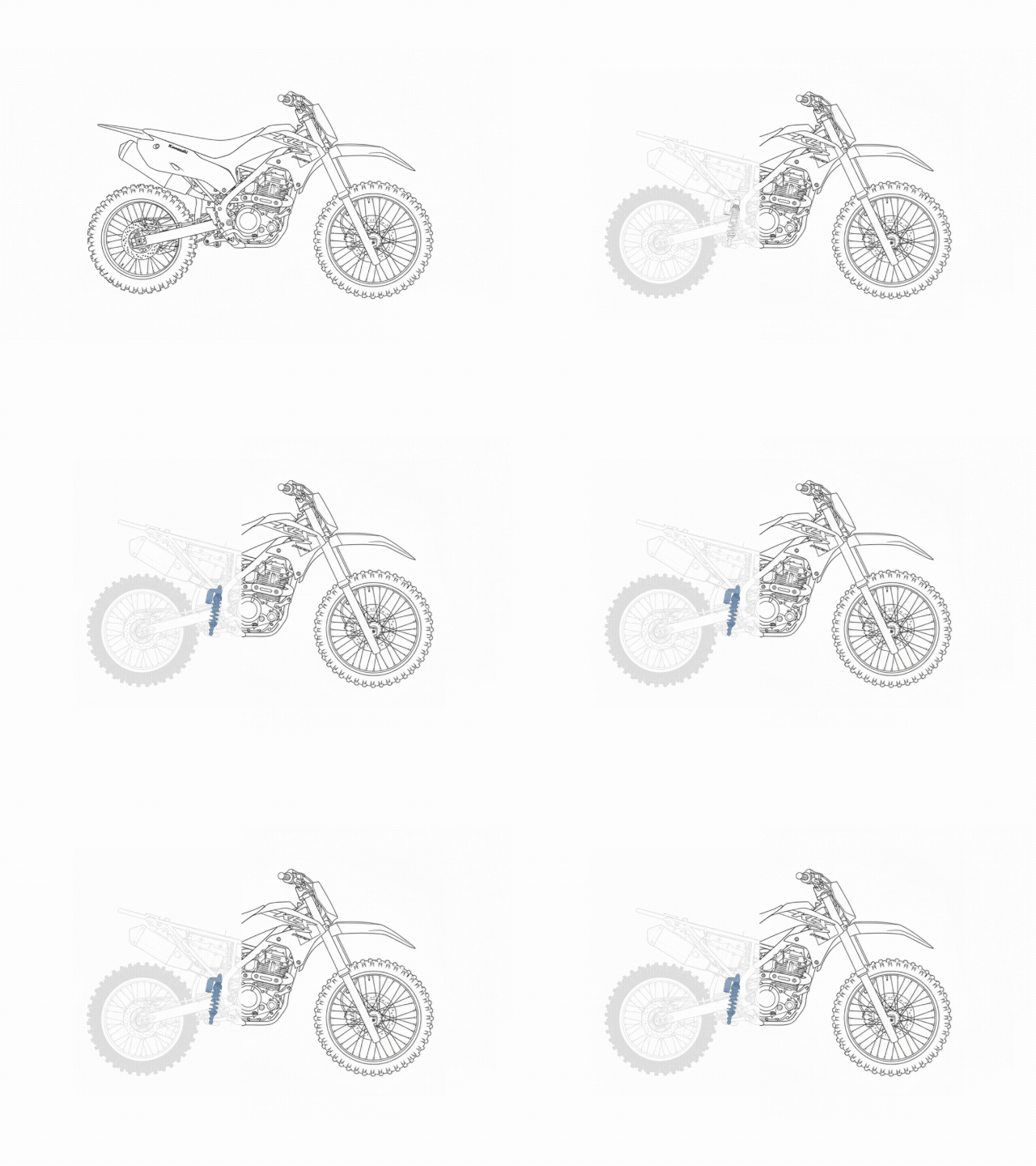
A monoshock is a rear suspension system using a single, centrally mounted shock absorber, often linked to provide progressive action. It is standard on most modern motorised two wheelers for improved handling and space efficiency.

KLX 230R
Plunger suspension

Plunger suspension was an early system using two vertical plungers instead of a swingarm. Wheel motion pushed them upward to absorb bumps, but limited travel and poor stability led to its eventual replacement.

1959 BMW R50

Effect of Suspension on Vehicle Types

Different types of motorised two wheelers have different types of stance, design, handling, performance and ergonomics. They therefore have different requirements of suspension. Below is a brief description of each of these use cases.

Frame 1984083528 (11)
Frame 1984083528 (17)

CRUISERS

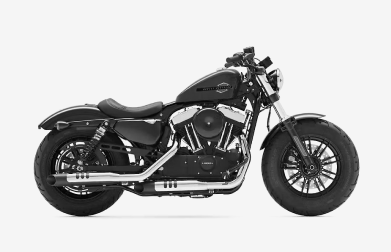
Cruisers usually have long, raked telescopic forks at the front for stability and twin shocks or hidden monoshocks at the rear for comfort. The suspension is soft, giving a smooth ride on long journeys, though it reduces quick handling.

SPORT-ORIENTED

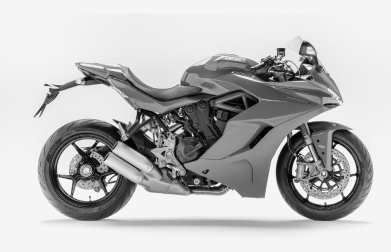
Sport bikes use USD forks with adjustability at the front and a rear monoshock with progressive linkage. This setup improves cornering stability, precision, and control, making the bikes suitable for high-speed and track use.

Frame 1984083528 (14)
Frame 1984083528 (13)

OFF-ROAD/MOTORCROSS

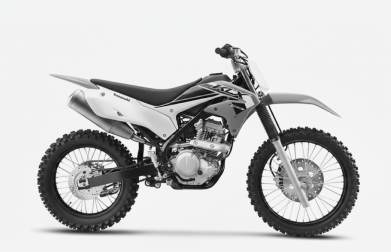
Off-road bikes use long-travel suspension with USD forks and a high-clearance monoshock with linkage, allowing wide compression and extension to absorb jumps and rough terrain, improving control, comfort, and durability in demanding conditions for off-road riding.

TOURING/ ADVENTURE

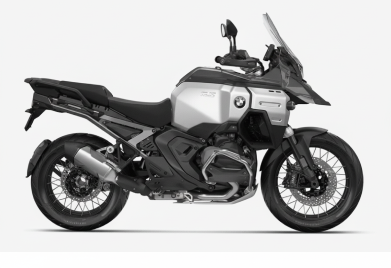
Adventure tourers use adjustable forks at the front and monoshocks at the rear, with some premium motorcycles offering electronically adjustable rear monoshocks. This design balances comfort and stiffness while adapting to loads and mixed surfaces during long-distance travel.

Frame 1984083528 (16)

SCOOTERS

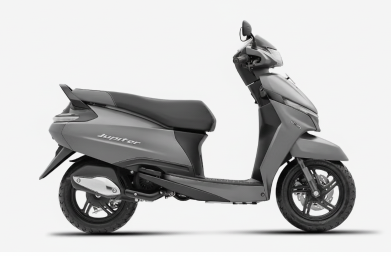
Scooters often use telescopic or leading-link forks in front and single or twin shocks at the rear. These simple, low-cost systems focus on comfort, easy handling, and practicality for city riding.

Details of Modern Suspension Systems

A telescopic suspension system is what is found commonly on all modern motorised two wheelers. It comprises the front and rear suspension system. We will now go deeper into each of them.

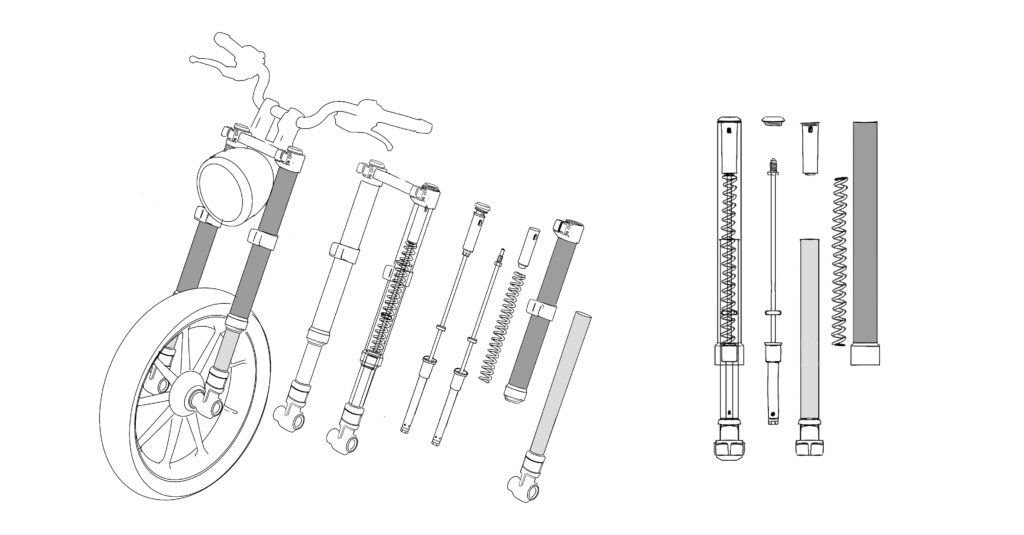
Components of Front Telescopic Suspension
1. Outer Tubes (Fork Legs):
Fixed to the frame and steering head. They act as the structural support for the sliding mechanism.
2. Inner Tubes (Stanchions):
Slide inside the outer tubes as the wheel moves up and down.
3. Springs:

Store and release energy when compressed, reducing the direct impact felt by the rider.
4. Hydraulic Oil:
Provides resistance to the spring’s motion. It works like fluid in a shock absorber, ensuring compression and rebound happen in a controlled manner.
5. Seals and Bushes:
Maintain oil inside the system and reduce friction between moving parts, ensuring consistent performance.
Components of REAR Telescopic Suspension
1. Coil Springs:

Absorbs vertical loads by compressing when the wheel encounters uneven surfaces.
2. Damper (Oil/Gas Chamber):

Works alongside the spring to regulate rebound, preventing oscillations that would otherwise reduce stability.
3. Mounting Points:
Provide mechanical linkage between the frame and the swingarm, transmitting road forces through the suspension.
4. Adjusters (in advanced systems):
Allow tuning of preload or damping characteristics to match load conditions or rider preference, giving more precise control over ride comfort and handling.

Moving forward The concepts described above outline the fundamental structure and function of suspension in motorised two-wheelers. Beyond these essentials, suspension design encompasses more detailed principles, refined mechanisms, and broader engineering considerations. These aspects will examined further in the future articles on Suspension Geometry, Damping and Tuning.

Previous Introduction to Braking Systems
Next Suspension Geometry,
Damping and Tuning
Introduction to Suspension Systems
Scroll to top