A Definitive Guide to Motorised Two Wheelers

New Ways of Startups: How Are They Working and What Are the Big Brands Up To?

A A

Introduction

What Does “New Ways” Mean?

In the motorized two-wheeler industry, “new ways” refers to changes in how vehicles are designed, built, sold, and used. Traditionally, motorcycles and scooters were petrol-powered machines sold through dealership networks, with a strong focus on mechanical engineering.

Today, many companies — especially startups — are working differently. They are building electric vehicles, integrating software and mobile apps, selling online, and experimenting with new ownership models such as subscriptions and battery leasing.

Examples of companies working in these new ways include Ather Energy, Ultraviolette Automotive, Simple Energy, and Gogoro. Established manufacturers such as TVS Motor, Hero MotoCorp, and Bajaj Auto are adapting their strategies to remain competitive.

How the Industry Worked Earlier

For many decades, two-wheelers followed a predictable structure. Companies designed petrol engines, manufactured vehicles at large factories, and distributed them through dealership networks.

Customers visited showrooms, compared models, and purchased vehicles through a one-time transaction.
For example, motorcycles like the Hero Splendor, Bajaj Pulsar, and scooters like the Honda Activa became widely popular using this traditional model. Service and maintenance were handled through authorized service centers.

Innovation mainly focused on fuel efficiency, engine
performance, and durability. Technology inside the vehicle was largely mechanical rather than digital.

This traditional system still exists, but it is now being reshaped.

Lorem Ipsum

How Are Startups Working Today?

Many modern two-wheeler startups design electric vehicles from the ground up. Since electric vehicles do not require complex internal combustion engines, startups can focus more on battery systems, electric motors, and software integration.

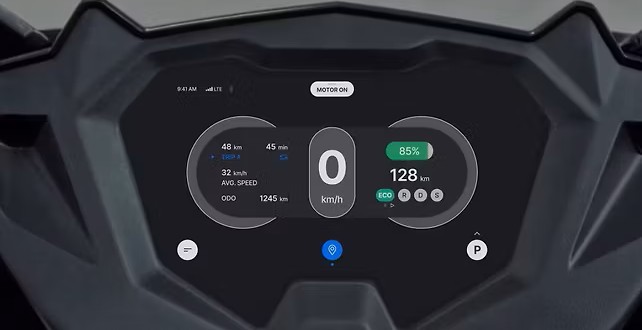
Software plays a central role in their approach. Many new electric scooters and motorcycles include digital dashboards, smartphone connectivity, GPS tracking, and over-the-air (OTA) updates.

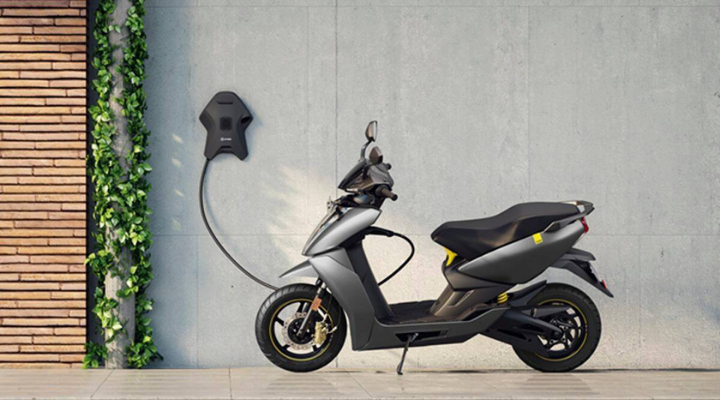
For example, Ather Energy’s Ather 450X features a touchscreen dashboard, built-in navigation, and app-based ride statistics. Similarly, Simple Energy’s Simple One electric scooter integrates a digital display, mobile connectivity, and long-range battery options.

Startups also experiment with how vehicles are sold. Instead of depending entirely on large dealership networks, many use direct-to-consumer models. Customers can book vehicles online, customize features digitally, and interact with the brand through experience centers.

For instance, Ather created Ather Space, which serves as a product experience and demonstration center rather than a conventional dealership showroom. Simple Energy has also adopted an online booking model supported by brand-owned experience centers.

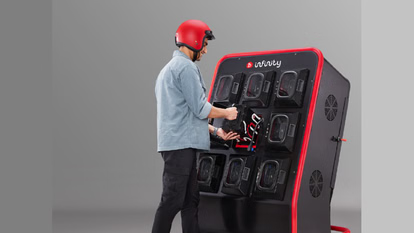
Another innovation is battery-as-a-service and battery swapping. In this model, customers may not fully own the battery but subscribe to a usage plan or swap batteries at dedicated stations.

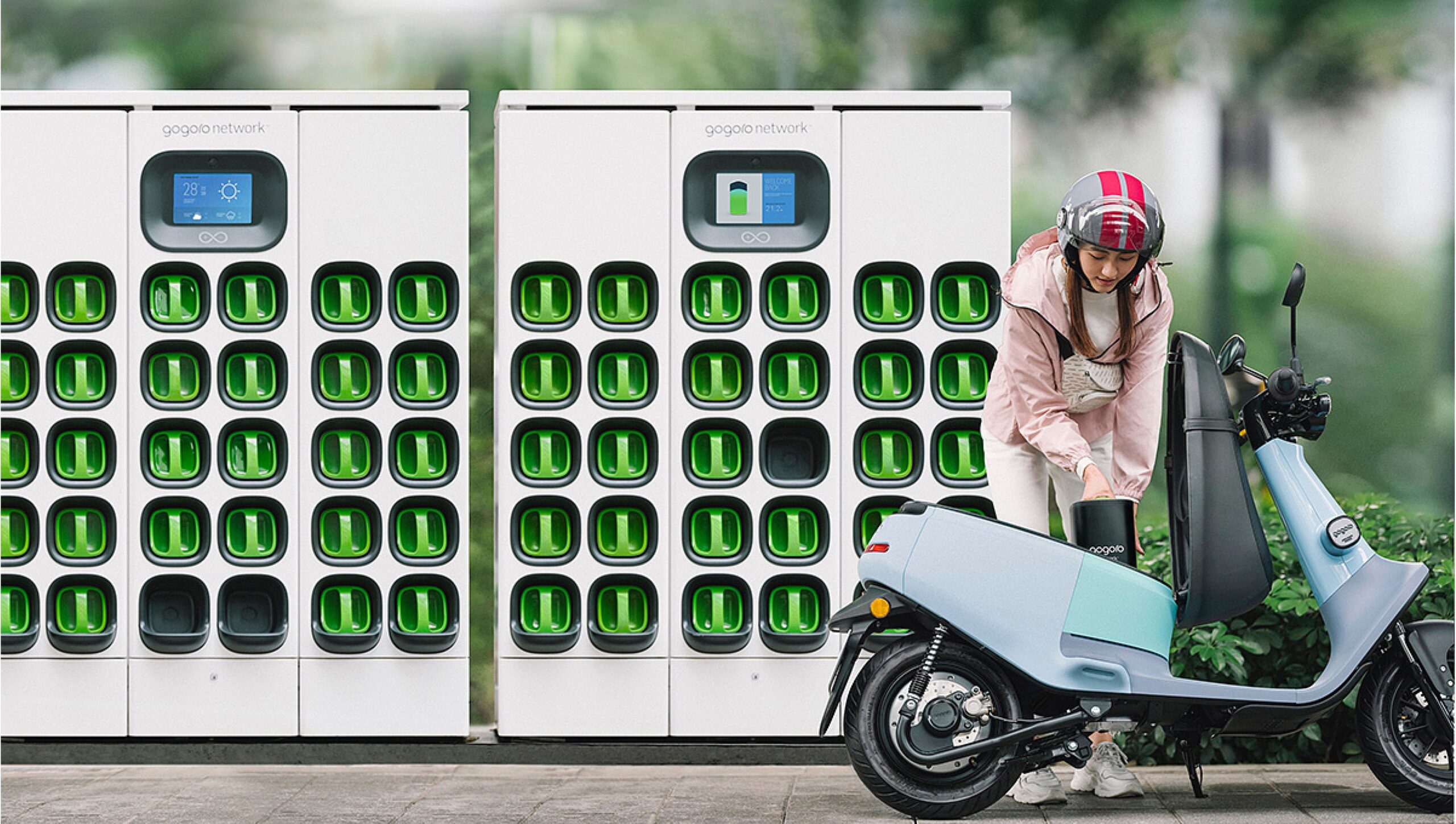
Gogoro in Taiwan has built one of the world’s largest battery-swapping networks, where riders exchange discharged batteries for charged ones within minutes. In India, companies such as Bounce Infinity have introduced scooters that support battery subscription and swapping options.

Gogoro's Battery Swapping Network

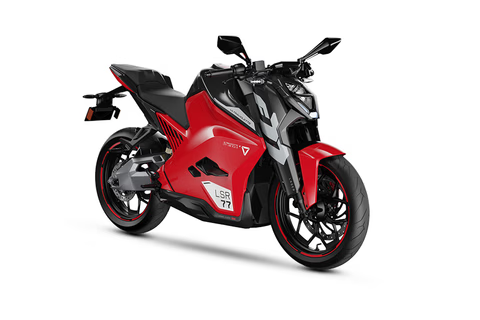
Startups often target specific segments to differentiate themselves. For example, Ultraviolette Automotive’s F77 electric motorcycle focuses on performance-oriented riders and offers high acceleration and long riding range.

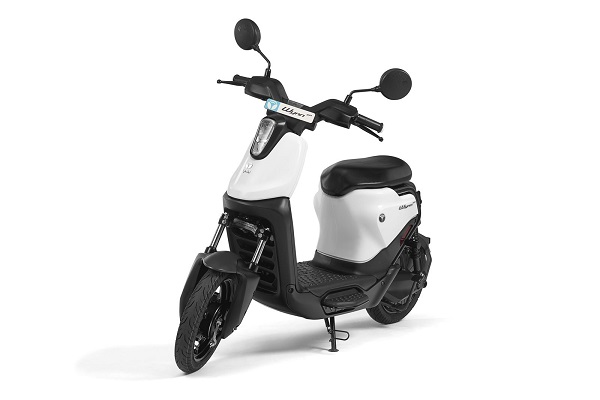
On the other hand, shared mobility companies such as Yulu focus on low-speed electric scooters designed for short urban trips and delivery fleets.

How Are Big Brands Responding?

Established manufacturers such as TVS Motor, Hero MotoCorp, Bajaj Auto, and Royal Enfield are adapting to these changes. Their transition is usually gradual because they already operate large petrol vehicle businesses and extensive dealer networks.
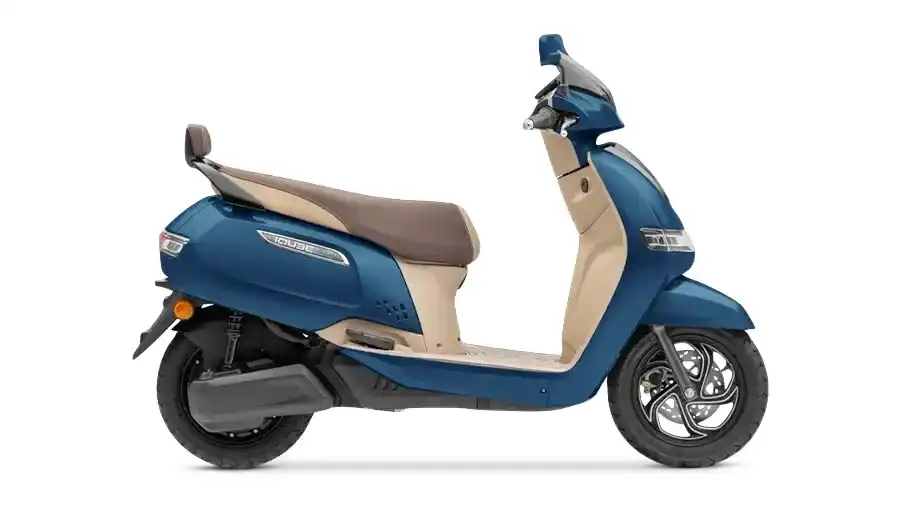
Many big brands have launched electric sub-brands or new electric models. For example, TVS Motor introduced the iQube electric scooter, designed for urban commuting with connected features and multiple battery range options

Lorem Ipsum

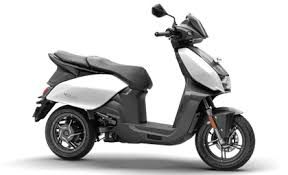
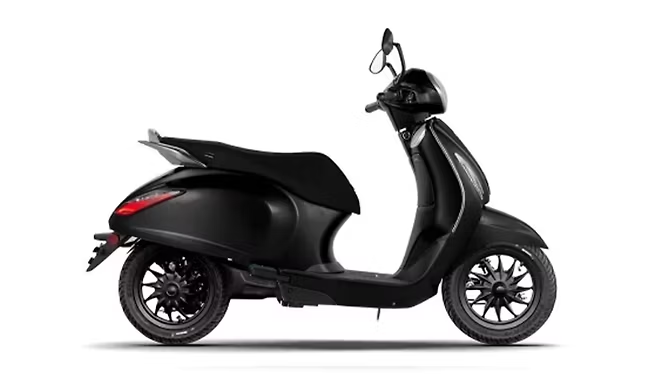
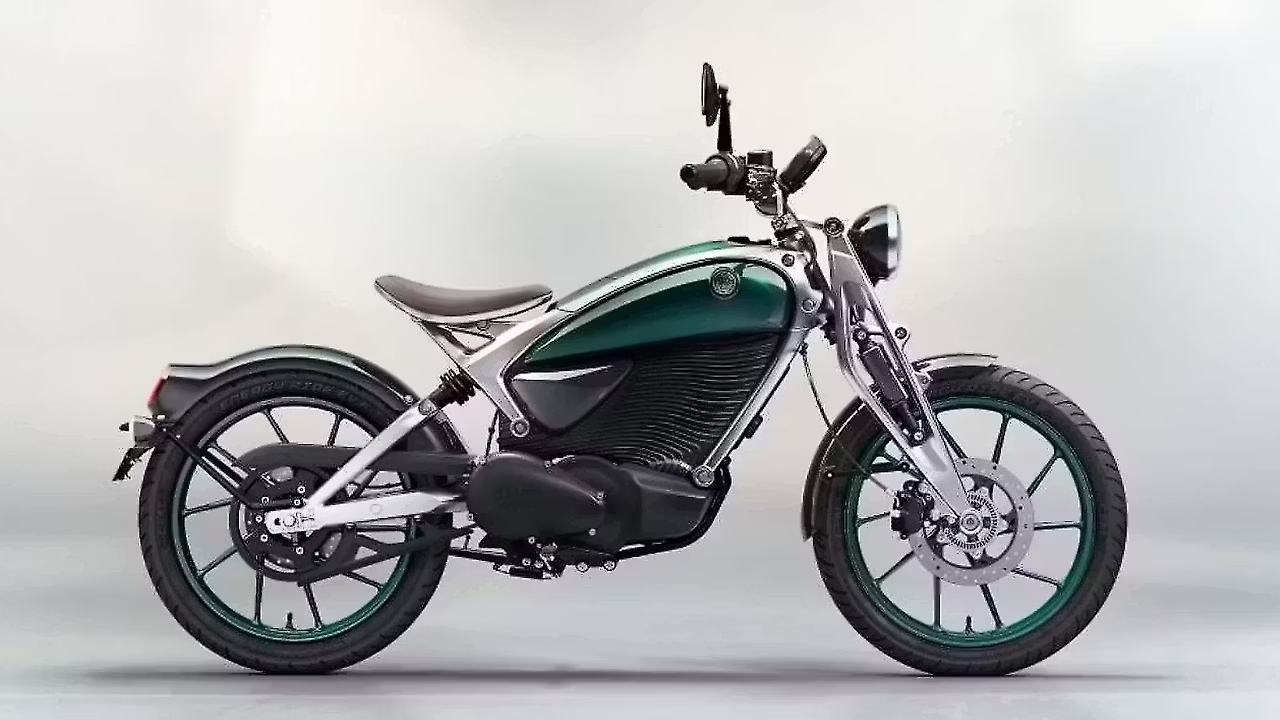
Hero MotoCorp launched the Vida V1 electric scooter, marking its entry into the EV market. Bajaj Auto revived the Chetak brand as an electric scooter that combines retro styling with modern electric technology.

Rectangle 7602
Lorem Ipsum
Rectangle 7602
Lorem Ipsum

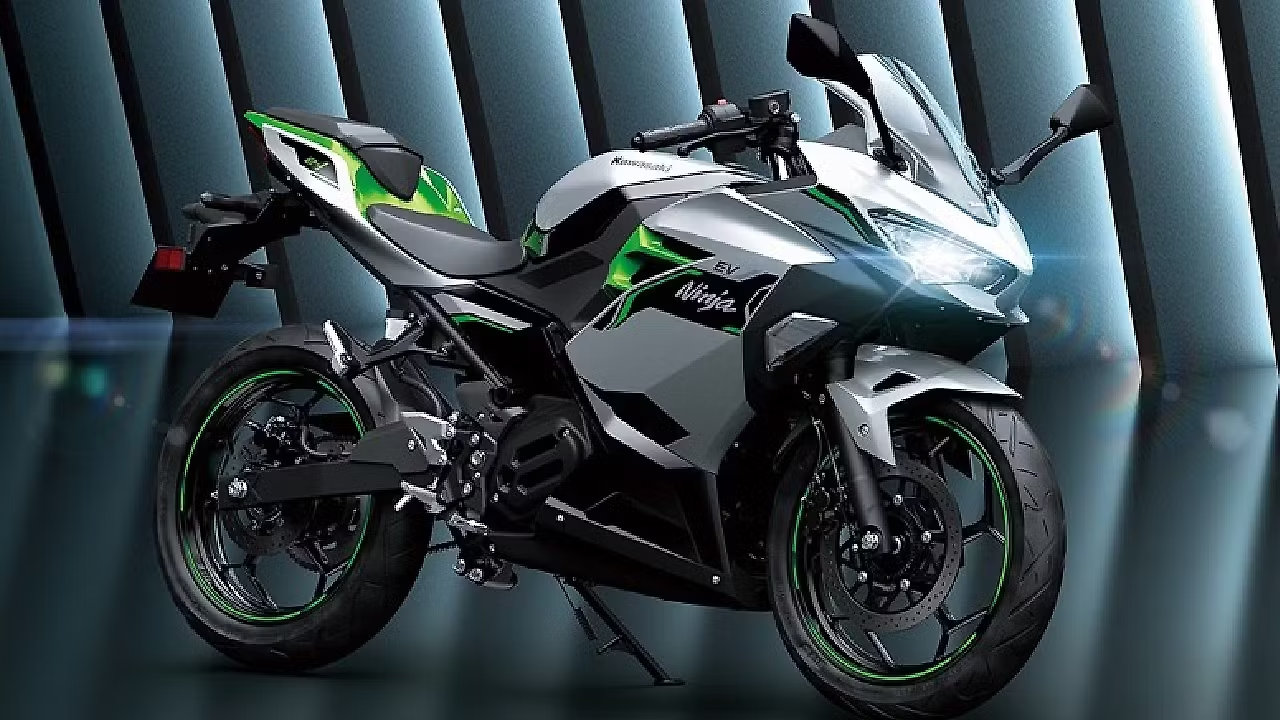
Global manufacturers are also shifting. Kawasaki has introduced the Ninja e-1 electric motorcycle, while Royal Enfield is working on future electric motorcycle platforms expected to combine classic styling with EV technology.

Rectangle 7602
Lorem Ipsum
Rectangle 7602
Lorem Ipsum

Unlike startups, big brands benefit from large-scale manufacturing capacity, established service networks, and strong brand trust. While startups may innovate quickly, established companies can produce vehicles at higher volumes and provide widespread after-sales support.

At the same time, big brands are increasingly integrating digital features such as Bluetooth connectivity, ride tracking, and smartphone integration. For example, the TVS iQube and Hero Vida scooters both include mobile application support for ride monitoring and vehicle diagnostics.

A Clear Comparison

Startups typically begin with electric platforms, digital-first systems, and online sales strategies. Companies like Ather, Simple Energy, and Ultraviolette represent this approach.
They are flexible and experiment with new ideas such as subscription battery models or connected vehicle ecosystems.

Big brands usually transition from petrol to electric gradually. Companies like TVS, Hero, and Bajaj rely on established dealer networks, large manufacturing scale, and service infrastructure.
They combine new technology with proven reliability and brand trust. Both approaches aim to serve the same evolving customer base but differ in speed, structure, and risk-taking.

Why Does This Matter for Riders?

For consumers, these changes affect how two-wheelers are purchased, maintained, and experienced. Electric vehicles can reduce fuel costs and emissions.
For example, riders using electric scooters such as the Ather 450X or Simple One may benefit from lower running costs compared to petrol scooters.
Connected systems allow riders to monitor battery status, navigation, and vehicle health through mobile apps. Subscription and battery-leasing models may lower initial purchase prices, making electric vehicles more accessible.
The relationship between customer and manufacturer is becoming continuous rather than one-time. Software updates, service alerts, and app-based communication create ongoing interaction even after purchase.

What Is Fundamentally Changing?

Three major shifts define this transformation. First, electrification is replacing petrol engines in many segments, as seen with models like the Bajaj Chetak Electric and TVS iQube.
Second, digital integration is turning vehicles into connected devices, demonstrated by platforms such as Ather’s connected dashboard ecosystem.
Third, new business models such as battery swapping, used by Gogoro and Bounce Infinity, are changing ownership and usage patterns.
Earlier, two-wheelers were primarily mechanical products sold through physical showrooms. Today, they are increasingly electric, software-enabled mobility devices that may be booked online, updated digitally, and supported through ecosystem services.

Conclusion

Startups in the motorized two-wheeler industry are working with flexibility, technology-first thinking, and experimental business models. Companies such as Ather, Simple Energy, Ultraviolette, and Gogoro demonstrate how innovation can reshape vehicle design, sales, and usage.
Big brands such as TVS Motor, Hero MotoCorp, Bajaj Auto, and global manufacturers are responding by investing in electric platforms, digital integration, and new product lines while leveraging their scale and service infrastructure.
For beginners, the key idea is simple: the two-wheeler industry is shifting from mechanical petrol machines sold through traditional dealerships to electric, connected vehicles supported by digital platforms. Startups are driving rapid innovation, and established manufacturers are adapting to remain competitive in this evolving mobility landscape.

Previous Emergence and Evolution of Global Two Wheeler Brands
Next Chassis Design Fundamentals
New Ways of the New Start Ups;
What Are the Big Brands Up to
Scroll to top